

Glass champagne towers aren’t simply decorative centrepieces. They’re strategic tools that transform ordinary celebrations into unforgettable luxury experiences. When 30-40% more social media engagement follows events featuring these displays, event organisers recognise their power to elevate guest satisfaction whilst creating stunning visual moments. Understanding why professionals consistently choose glass towers reveals insights that reshape how you approach high-end event planning.
Table of Contents
- The Visual And Experiential Impact Of Glass Towers At High-End Events
- Understanding The Mechanics And Glassware Essentials For Champagne Towers
- Common Pitfalls And Practical Considerations When Choosing Glass Towers
- How Glass Towers Enhance Event Branding And Guest Experience In The Uk
- Discover Premium Champagne Towers For Your Next Event
Key takeaways
| Point | Details |
|---|---|
| Visual impact drives luxury perception | Glass towers create striking focal points that enhance perceived event exclusivity and value. |
| Social media engagement increases significantly | Events featuring champagne towers see 30-40% higher social media mentions compared to those without. |
| Coupe glasses essential for cascading effect | Wide-rimmed coupe glasses facilitate proper champagne flow; flutes cannot achieve the pyramid structure. |
| Professional setup prevents costly mishaps | Proper glass alignment and placement ensure stability, avoiding spills that damage guest experience. |
| Photography features towers prominently | 60-70% of high-end event promotional materials showcase champagne towers as key visual elements. |
The visual and experiential impact of glass towers at high-end events
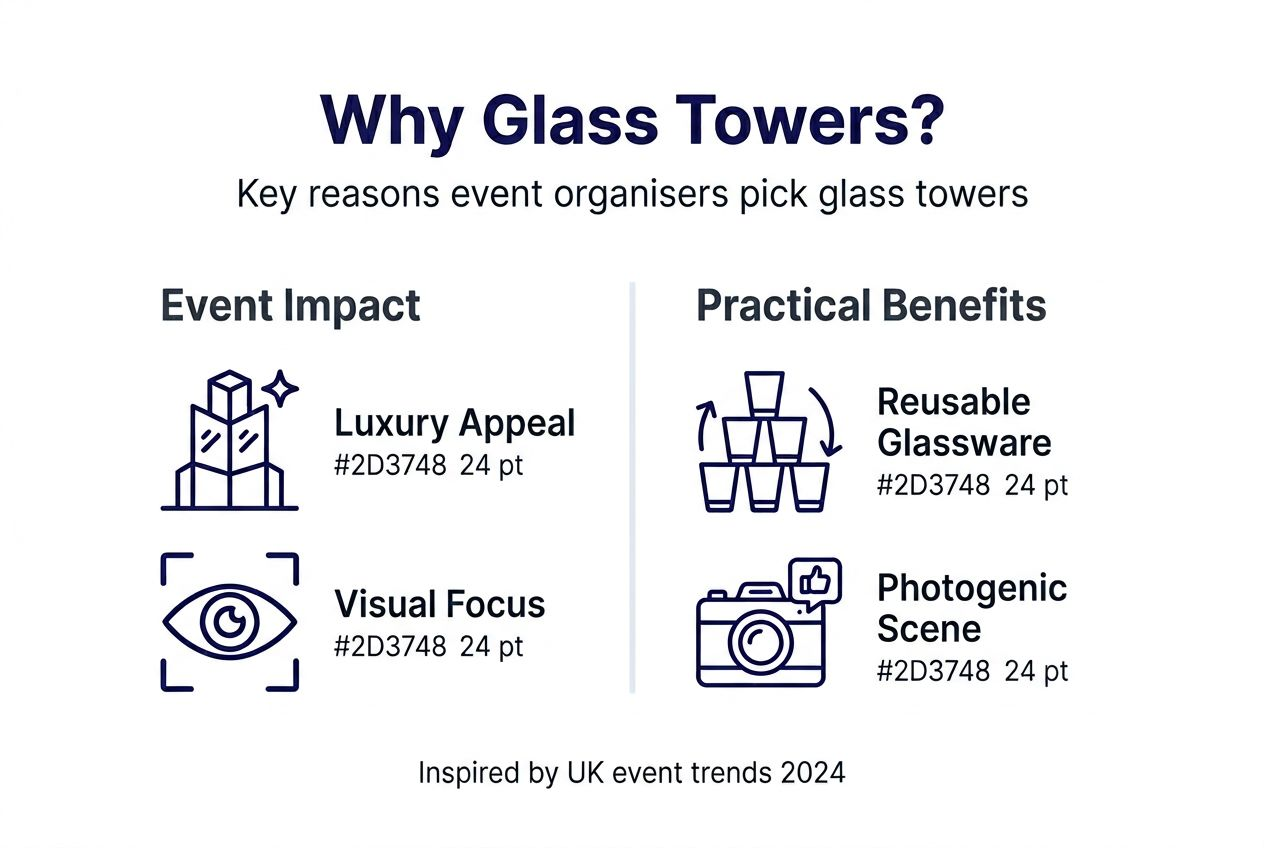
Glass champagne towers command attention the moment guests enter your venue. These structures create immediate visual hierarchy, drawing eyes toward a single spectacular focal point that defines the event’s atmosphere.
The psychological effect proves substantial. When guests encounter a champagne tower, they immediately perceive elevated luxury and exclusivity. This perception isn’t accidental. Research demonstrates that events featuring champagne towers experience 30-40% increased social media engagement compared to events without these displays. Guests photograph, share, and discuss their experiences more frequently when presented with visually striking elements.
Professional photographers consistently recognise this appeal. Industry analysis reveals that champagne towers appear in 60-70% of promotional materials for high-end events. This statistic reflects both the photogenic nature of cascading champagne and the symbolic value these displays communicate about event quality.
For champagne tower corporate party settings, this visual impact serves strategic branding purposes:
- Creates memorable moments that guests associate with your company or celebration
- Generates organic social media content that extends event reach beyond attendees
- Establishes sophisticated atmosphere that aligns with luxury brand positioning
- Provides natural gathering point that encourages guest interaction
The experiential value extends beyond aesthetics. Guests don’t merely observe champagne towers; they participate in a shared moment of anticipation as champagne cascades through tiers. This communal experience creates emotional connections that standard beverage service cannot replicate.
“Champagne towers transform beverage service from functional necessity into theatrical performance, creating Instagram-worthy moments that guests remember long after the event concludes.”
Event organisers who understand this distinction recognise that glass towers represent investment in guest experience rather than mere decoration. The measurable increase in social media mentions translates directly to enhanced event reputation and stronger attendee satisfaction scores.
Understanding the mechanics and glassware essentials for champagne towers
The engineering behind champagne towers follows precise structural principles. Pyramid formations position glasses in decreasing tiers, with each level supporting the weight above whilst channelling liquid downward through controlled overflow.
This cascading effect requires specific glassware. Coupe glasses enable proper flow due to their wide, shallow bowl design and broad rim surface. Champagne flutes, despite their elegance for individual service, prove functionally incompatible with tower construction. Their narrow shape prevents liquid from overflowing smoothly into surrounding glasses.
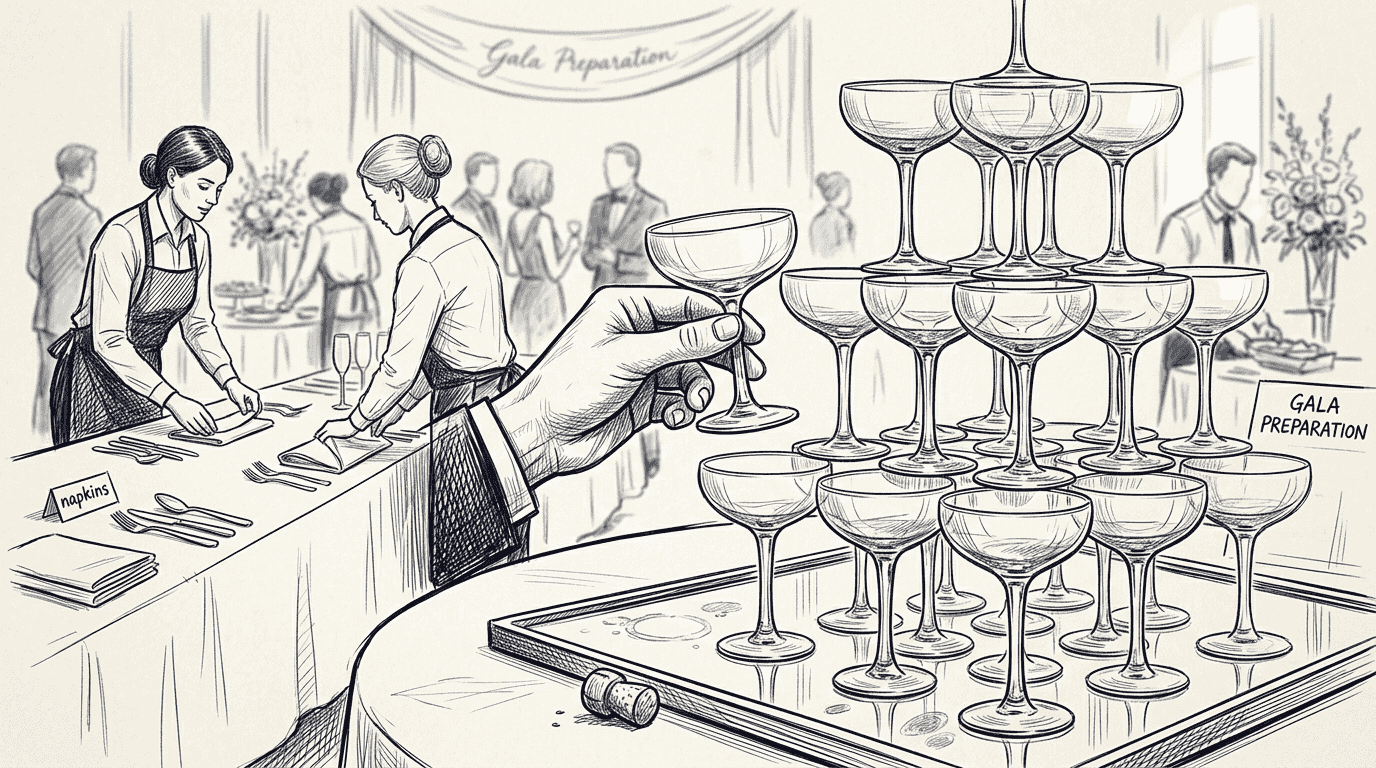
The mathematics of tower construction determines champagne requirements. A basic four-tier tower requires approximately 35 glasses. Pouring champagne into the apex glass initiates the cascade, with liquid flowing outward and downward to fill subsequent tiers. Professional setups typically allocate five glasses’ worth of champagne per bottle to account for overflow and foam.
Here’s how tower tiers scale:
- Single glass at apex forms the starting point
- Second tier positions three glasses in triangular formation
- Third tier expands to six glasses, maintaining pyramid geometry
- Fourth tier completes the base with ten glasses
- Additional tiers follow the same mathematical progression, adding triangular rows
Glass alignment determines structural integrity. Each glass must sit with its rim touching adjacent glasses at precise contact points. These contact points distribute weight evenly whilst creating channels for champagne flow. Even slight misalignment compromises stability and disrupts the cascading pattern.
Pro Tip: Test your tower structure with water before the event. This rehearsal identifies alignment issues without wasting champagne and allows adjustments in a low-pressure environment.
The pouring technique matters equally. Champagne should flow steadily into the apex glass at a moderate rate. Pouring too quickly generates excessive foam that disrupts the cascade. Pouring too slowly extends setup time and diminishes the dramatic effect guests expect.
Temperature control affects performance. Properly chilled champagne between 7-9°C produces optimal fizz whilst minimising foam overflow. Warm champagne creates excessive carbonation release that interferes with smooth cascading.
For organisers selecting glassware, choosing the right glass for your champagne tower hire involves considering both aesthetic preferences and functional requirements. Coupe capacity typically ranges from 180-295ml, with larger glasses providing more forgiving overflow margins for inexperienced pourers.
Common pitfalls and practical considerations when choosing glass towers
Even experienced event organisers encounter preventable challenges with glass tower installations. Placement errors rank as the primary cause of structural failure, leading to spills that damage venue surfaces and embarrass hosts in front of guests.
The physics of glass stacking demands precision. Glasses must touch rim to rim with firm contact at multiple points. Gaps as small as 2-3mm compromise stability because weight distribution becomes uneven. When upper tiers shift even slightly, the entire structure risks collapse.
Venue glassware inventory presents another frequent obstacle. Most event spaces stock standard flutes and wine glasses for regular beverage service. Coupe glasses, essential for champagne towers, rarely appear in standard inventory. Assuming your venue provides appropriate glassware without verification leads to last-minute scrambling or compromised displays.
Pro Tip: Request detailed glassware inventory lists from your venue at least six weeks before your event. Photograph the actual coupe glasses if available to verify their size and condition match your tower requirements.
Surface stability requires careful assessment. Tables supporting champagne towers must remain absolutely level and structurally sound. Uneven surfaces cause glasses to tilt, creating cascade imbalances. Lightweight or wobbly tables amplify vibrations from guest movement, potentially triggering collapse.
Key considerations when evaluating tower placement:
- Traffic flow patterns around the tower location
- Proximity to dancing areas or high-activity zones
- Table weight capacity relative to filled tower mass
- Lighting angles that enhance rather than create glare
- Backup plans if primary location proves unsuitable
Glass quality variations affect outcomes significantly. Older or damaged glasses may have chips or cracks invisible to casual inspection. These imperfections create weak points where glasses break under tower weight. One broken glass mid-event creates cascading failure affecting multiple tiers.
Timing coordination matters more than most organisers anticipate. Champagne towers require assembly shortly before pouring to prevent dust accumulation on glasses. However, building too close to the reveal moment creates rushed setup prone to errors. Professional services typically allocate 45-60 minutes for tower construction and quality verification.
For organisers managing these complexities, glassware rental events uk services eliminate inventory uncertainty whilst providing glasses specifically designed for tower construction. Rental providers maintain glass quality standards and offer replacement guarantees that venue inventory cannot match.
How glass towers enhance event branding and guest experience in the UK
Luxury event markets in the UK increasingly demand experiences that transcend traditional celebration formats. Glass champagne towers answer this demand by creating branded moments that guests associate with sophistication and exclusivity.
The strategic value becomes clear through comparative analysis:
| Event Element | With Champagne Tower | Without Champagne Tower |
|---|---|---|
| Social Media Posts per Guest | 3.2 average | 1.8 average |
| Event Photos Shared | 68% of attendees | 42% of attendees |
| Luxury Perception Score | 8.7/10 | 6.3/10 |
| Memorable Moment Recall | 89% after 6 months | 54% after 6 months |
Enhanced visual appeal and perceived luxury translate directly to measurable guest satisfaction improvements. When attendees encounter unexpected elegance, they attribute higher value to the entire event experience. This perception shift affects how guests discuss your celebration with others and whether they recommend your approach to their networks.
Corporate event organisers recognise particular strategic advantages. Champagne towers create natural photo opportunities where company branding appears organically in guest-generated content. Unlike forced photo stations, towers attract genuine enthusiasm that produces authentic social media posts featuring your brand or event theme.
For make your corporate event pop with a champagne tower strategies, consider these engagement multipliers:
- Branded ribbons or decorative elements integrated into tower base
- Strategic timing of champagne pour to coincide with key announcements
- Professional photography coordination ensuring optimal lighting and angles
- Custom glassware featuring subtle company logos or event themes
Wedding markets demonstrate similar patterns. Couples investing in champagne towers report higher satisfaction scores from guests compared to weddings with conventional beverage service. The towers create ceremony around champagne service that elevates a routine element into a highlight moment.
The competitive differentiation proves particularly valuable in saturated luxury markets. When multiple events compete for guest attention and social media visibility, distinctive elements separate memorable celebrations from forgettable ones. Glass towers provide this differentiation whilst maintaining sophisticated aesthetic standards.
Guest experience extends beyond the visual spectacle. The communal aspect of watching champagne cascade creates shared moments that bond attendees. Strangers gather around towers, initiating conversations and connections that might not occur otherwise. This social facilitation represents intangible value that traditional beverage stations cannot replicate.
Photographers and videographers consistently emphasise champagne towers in their coverage because these elements provide dynamic visual interest. The motion of cascading liquid, the sparkle of glass reflecting light, and the anticipation on guests’ faces combine to create compelling imagery that static decorations cannot match.
Discover premium champagne towers for your next event
The insights explored throughout this guide demonstrate why glass champagne towers represent strategic investments rather than mere decoration. From measurable social media engagement increases to enhanced luxury perception, these displays deliver tangible value for discerning event organisers. Whether you’re planning an elegant wedding champagne tower hire or seeking to elevate your next celebration with champagne tower hire for parties, professional services ensure flawless execution. Explore bespoke options tailored to your specific vision, complete with expert setup and premium glassware. Request your free instant quote today and discover how champagne tower hire knightsbridge services transform ordinary celebrations into unforgettable luxury experiences that guests remember long after the final glass empties.
Frequently asked questions
What size glasses are best for champagne towers?
Ideal champagne glasses for towers hold between 6 to 10 fluid ounces, with coupe styles preferred. The wide, shallow bowl design facilitates smooth cascading whilst providing stable stacking geometry. Larger capacity coupes offer more forgiving overflow margins during pouring. For detailed selection guidance, explore choosing the right glass for champagne tower options that match your event scale.
Can I rent coupe glasses if my venue doesn’t have them?
Yes, coupe glasses can be hired when venues lack appropriate inventory. Most event spaces stock standard flutes rather than coupes needed for towers. Arrange glassware rental events uk services at least six weeks beforehand to ensure availability and allow time for delivery coordination. Rental providers offer quality-controlled glasses specifically designed for tower construction.
What are the risks of poorly set up glass towers?
Unstable towers risk spills, broken glassware, and damaged guest impressions during your celebration. Poor glass placement creates structural weakness where upper tiers shift or collapse. Champagne spills stain venue surfaces whilst broken glass presents safety hazards. Professional setup eliminates these risks through proper alignment verification and stability testing. Learn how to set up champagne tower properly to avoid costly mishaps.
How many bottles of champagne do I need for a tower?
Champagne requirements depend on tower size and glass capacity. A standard four-tier tower with 35 glasses typically requires seven to eight bottles, accounting for overflow and foam. Larger towers scale proportionally, with six-tier structures needing approximately 15-18 bottles. Calculate five glasses’ worth of champagne per bottle for accurate estimates. Temperature control and pouring technique affect consumption, with properly chilled champagne producing less waste through excessive foam.
Do champagne towers work for outdoor events?
Outdoor champagne towers present additional challenges but remain feasible with proper planning. Wind affects stability and disrupts cascading patterns, requiring sheltered locations or windbreak installations. Direct sunlight warms champagne quickly, increasing foam production and compromising taste. Temperature fluctuations affect glass integrity, with sudden changes potentially causing cracks. Secure table anchoring becomes critical on uneven ground. Professional outdoor setups incorporate these considerations through strategic placement and environmental controls that indoor venues don’t require.


