

More than 60 percent of british wedding planners now select glass beverage displays to create a sense of high-end style and enduring quality. In the world of prestigious UK events, every detail counts, and the choice between glass and plastic impacts both aesthetic and guest experience. This comparison highlights how glass setups not only achieve visual sophistication but also reinforce your brand values, guest satisfaction, and environmental responsibility.
Table of Contents
- Glass Versus Plastic: Core Differences Explained
- Aesthetic Appeal and Guest Experience
- Eco-Friendly Advantages of Using Glass
- Safety, Hygiene, and Practicality Concerns
- Cost Implications and Event Value
Key Takeaways
| Point | Details |
|---|---|
| Material Composition | Glass is an inorganic material offering durability and elegance, while plastic, an organic polymer, provides versatility but poses environmental risks. |
| Aesthetic Value | Glass enhances guest experience by projecting sophistication and quality, making it ideal for high-end events. |
| Environmental Responsibility | Glass is infinitely recyclable and more eco-friendly compared to plastic, which contributes to pollution and waste. |
| Long-Term Cost Efficiency | Although glass has a higher upfront cost, its durability and reusable nature lead to lower long-term expenses and increased guest satisfaction. |
Glass Versus Plastic: Core Differences Explained
When exploring materials for event displays, understanding the fundamental differences between glass and plastic becomes crucial for making informed decisions. At their core, these materials diverge significantly in composition, performance, and environmental impact. Chemical composition fundamentally distinguishes these two materials, presenting unique characteristics that influence their suitability for different applications.
Glass represents an inorganic solid material formed through cooling molten silica, creating a robust yet brittle substance with remarkable stability. In contrast, plastic emerges as an organic polymer with extraordinary versatility but potential environmental drawbacks. Mechanical properties reveal dramatic differences between these materials. Glass exhibits high hardness and strength but remains prone to catastrophic fracture, while plastics offer greater flexibility and impact resistance.
Key distinctions between glass and plastic include:
- Chemical Structure: Glass is inorganic silicate, plastic is organic polymer
- Mechanical Properties: Glass is rigid and brittle; plastic is flexible and adaptable
- Environmental Impact: Glass is infinitely recyclable; plastics often degrade and pollute
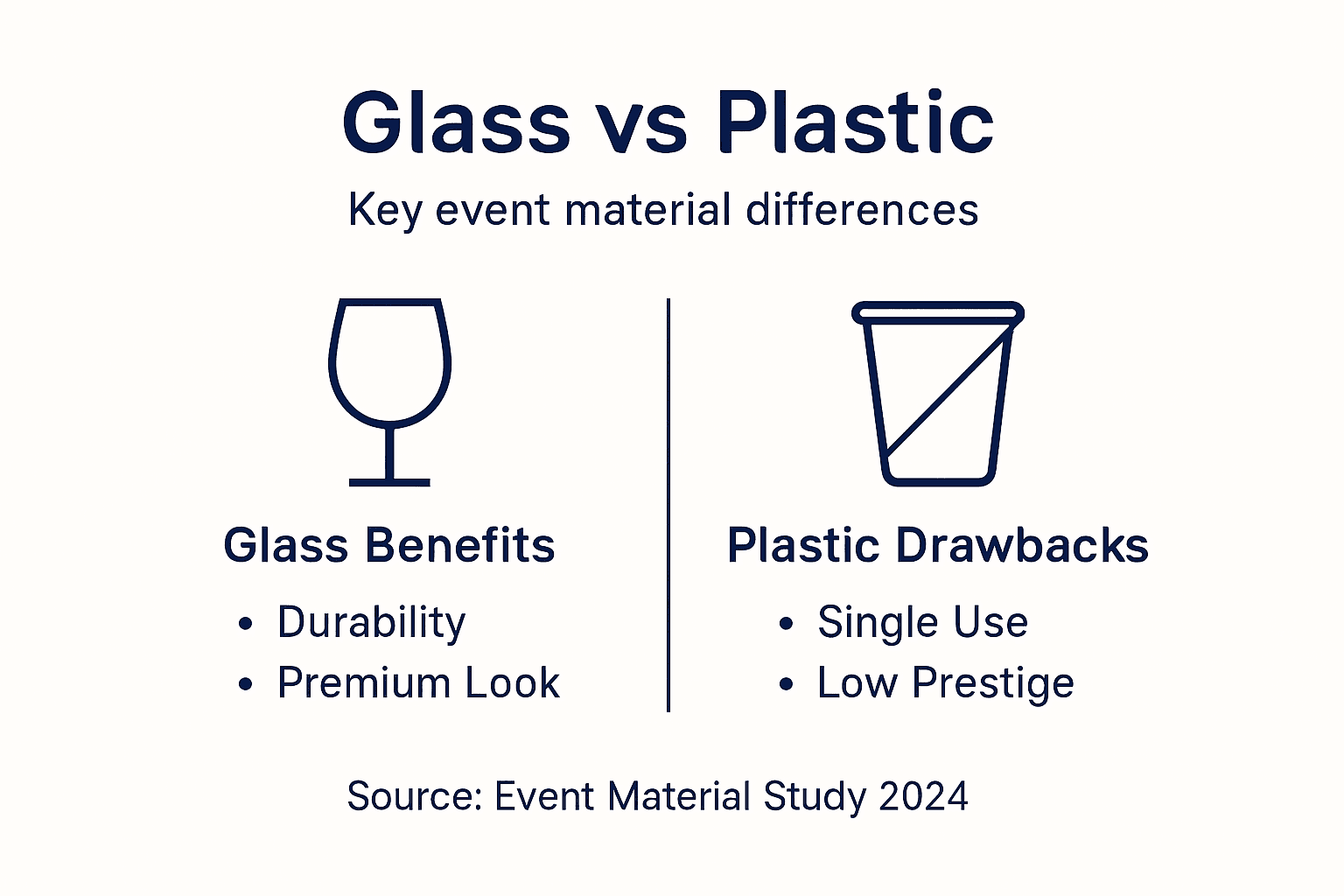
- Aesthetic Quality: Glass provides premium, transparent appearance; plastic can look cheap
For event professionals, these differences translate into critical decision-making factors. Glass communicates elegance, durability, and sophistication, making it superior for high-end corporate and wedding events where visual presentation matters profoundly.
Pro tip: When selecting materials for event displays, always prioritise long-term visual quality and environmental sustainability over immediate cost considerations.
Here is a structured comparison of glass and plastic for event displays:
| Aspect | Glass | Plastic |
|---|---|---|
| Durability | Resistant but prone to breakage | Highly impact-resistant |
| Sensory Experience | Premium feel, clarity, and weight | Lightweight, less tactile appeal |
| Environmental Impact | Fully recyclable, sustainable | Pollution risk, less recyclable |
| Hygiene & Safety | Non-porous and easy to sterilise | Can retain odours or bacteria |
| Initial Investment | Higher upfront costs | Lower initial price |
| Long-Term Value | Multiple reuse opportunities | More frequent replacement needed |
Aesthetic Appeal and Guest Experience
In the world of event hosting, visual presentation goes far beyond mere functionality. Guest satisfaction depends heavily on the sensory experiences created through thoughtful material selection. Glass emerges as a superior choice for events seeking to elevate their aesthetic appeal and create memorable moments.

The visual and tactile qualities of glass communicate an immediate sense of sophistication and luxury. Glass products provide a high-end aesthetic that transforms ordinary drink services into extraordinary experiences. Unlike plastic, which often appears cheap and disposable, glass drinkware offers a premium feel characterised by its weight, clarity, and brilliant light reflection. The subtle sound of glass clinking and its substantial presence contribute to an atmosphere of refinement that plastic simply cannot replicate.
Key aesthetic advantages of glass include:
- Transparency: Crystal-clear presentation that showcases beverages
- Reflective Quality: Captures and refracts light beautifully
- Weight and Texture: Communicates quality through substantial feel
- Versatility: Complements various event design styles
For event professionals, choosing glass is not just about aesthetics but about crafting an immersive guest experience. The material signals attention to detail, suggesting that every aspect of the event has been carefully considered. From wedding receptions to corporate gatherings, glass drinkware elevates the perceived value of the entire occasion.
Pro tip: Consider mixing glass types and shapes to create visual interest and enhance your event’s design narrative without compromising on sophistication.
Below is a summary of how glass enhances guest experience and event branding:
| Benefit | Event Value | Guest Perception |
|---|---|---|
| Visual Elegance | Reinforces premium event positioning | Guests feel valued and impressed |
| Quality Association | Supports upscale brand identity | Heightened trust in event quality |
| Environmental Message | Demonstrates commitment to sustainability | Increases satisfaction and loyalty |
| Enhanced Hygiene | Contributes to safer hospitality environment | Guests enjoy peace of mind |
Eco-Friendly Advantages of Using Glass
In an era of increasing environmental consciousness, material selection becomes a critical decision for responsible event planning. Plastic pollution represents a significant environmental threat that demands urgent attention from event professionals seeking sustainable alternatives. Glass emerges as a superior ecological choice, offering remarkable environmental benefits that extend far beyond single-use convenience.
The recycling potential of glass makes it a standout material for environmentally minded event organisers. Glass packaging recycling demonstrates remarkable circular economy benefits in the UK, with an infrastructure that supports comprehensive waste reduction. Unlike plastic, which degrades in quality and often ends up in landfills, glass can be endlessly recycled without compromising its intrinsic properties. This means that every glass item used at an event has the potential to be transformed into new glassware, creating a sustainable loop of material usage.
Key environmental advantages of glass include:
- 100% Recyclable: Can be reprocessed indefinitely without quality loss
- Inert Material: Does not release harmful toxins into the environment
- Wildlife Protection: Reduces microplastic pollution affecting ecosystems
- Resource Conservation: Supports sustainable material management
For event professionals committed to ecological responsibility, choosing glass represents more than an aesthetic decision. It is a powerful statement about environmental stewardship and a commitment to reducing the ecological footprint of celebrations and corporate gatherings.
Pro tip: Partner with local recycling facilities to ensure your glass event materials are properly processed and contribute to the circular economy.
Safety, Hygiene, and Practicality Concerns
Navigating the complex landscape of event material selection requires a nuanced understanding of safety and hygiene considerations. Plastic products pose significant safety risks through chemical leaching and environmental contamination, making glass an increasingly attractive alternative for discerning event professionals who prioritise guest wellbeing.
Glass provides superior hygiene and sterilisation capabilities that set it apart from other materials. Unlike porous plastics that can harbour bacteria and retain unwelcome odours, glass remains an impermeable, non-reactive surface that can be thoroughly cleaned and sanitised. Its non-absorbent nature means no lingering flavours or chemical residues, ensuring a pure drinking experience that maintains the integrity of beverages and protects guest health.
Key safety and hygiene advantages of glass include:
- Non-Porous Surface: Prevents bacterial growth and contamination
- Easy Sterilisation: Can be completely sanitised between uses
- Chemical Inertness: Does not leach harmful substances
- Odour Neutrality: Preserves beverage taste and quality
While glass’s fragility requires careful handling, its long-term safety benefits far outweigh the minor risks of breakage. Professional event management involves strategic planning, such as using tempered glass and implementing careful handling protocols to mitigate potential accidents.
Pro tip: Invest in professional-grade tempered glassware and train staff in proper handling techniques to maximise safety while enjoying glass’s superior hygiene benefits.
Cost Implications and Event Value
Event professionals constantly navigate the delicate balance between budget constraints and creating memorable experiences. Glass product costs involve complex considerations that extend far beyond initial purchase price. While glass may present a higher upfront investment, its long-term value proposition often outweighs the immediate financial considerations.
Understanding the true economic impact requires a comprehensive lifecycle analysis. Reusable materials offer nuanced environmental cost benefits that savvy event planners must carefully evaluate. Glass represents an investment in quality that translates directly into enhanced guest perception, brand reputation, and overall event sophistication. The durability of glass means fewer replacements, reduced waste management costs, and a more sustainable approach to event resource allocation.
Key economic advantages of choosing glass include:
- Long-Term Durability: Reduces replacement frequency
- Enhanced Brand Perception: Communicates quality and attention to detail
- Reduced Waste Management: Lower environmental handling costs
- Potential Rental and Reuse: Multiple event applications
Beyond pure financial metrics, glass delivers intrinsic value through its ability to elevate event experiences. The marginal additional cost becomes insignificant when weighed against the sophisticated atmosphere and memorable impressions created by high-quality glassware.
Pro tip: Consider negotiating bulk rental rates or partnering with event supply companies to offset initial glassware investment while maintaining premium quality standards.
Elevate Your Event with Glass Champagne Towers That Impress and Inspire
Choosing glass over plastic for your event is about more than just material selection. It answers the challenge of delivering elegance, sustainability, and a premium guest experience all in one. Glass embodies sophistication through its stunning transparency and durability while signalling a strong environmental commitment that guests appreciate. For event organisers seeking to avoid the drawbacks of plastic, such as hygiene risks and a cheap aesthetic, glass champagne towers offer a flawless solution.
At Champagne Tower Hire, we specialise in creating exquisite glass champagne and prosecco towers that perfectly align with the values highlighted in the article, including superior hygiene, recyclability, and long-lasting beauty. Whether for weddings or corporate occasions, our bespoke towers are designed to captivate guests and reinforce your event’s luxurious brand identity. Discover how our fully staffed, custom-built towers transform your event into an unforgettable celebration that honours both style and sustainability.
Ready to enhance your event with a glass champagne tower that stands for quality and care? Visit Champagne Tower Hire now to explore our offerings, receive an instant quote, and take the first step towards a sophisticated, eco-conscious event that truly shines.
Frequently Asked Questions
Why is glass a better choice than plastic for events?
Glass offers a premium aesthetic, is fully recyclable, and provides superior hygiene compared to plastic, making it ideal for upscale events.
How does glass contribute to sustainability at events?
Glass is 100% recyclable and can be reused indefinitely without losing its quality, significantly reducing environmental impact compared to single-use plastic.
What are the safety and hygiene benefits of using glass over plastic?
Glass has a non-porous, easy-to-clean surface that doesn’t retain bacteria or odours, ensuring a safer and more hygienic drinking experience.
Is glass worth the higher initial investment for event displays?
While glass has a higher upfront cost, its durability, reusable nature, and ability to enhance guest experiences often lead to greater long-term value and reduced replacement costs.


