

TL;DR:
- Over 50% of UK couples overspend their wedding budget due to regional costs and hidden fees.
- Accurate tracking, clear priorities, and contingency funds are essential to stay within budget.
- Prioritizing meaningful elements allows for memorable details without overspending.
Planning a wedding in the UK is one of the most exciting things you’ll ever do, but it can quickly become financially overwhelming. Over 50% of UK couples spend more than their original budget, often because hidden costs and regional price differences catch them off guard. A structured checklist changes everything. This article gives you a practical, UK-specific framework covering every major expense category, how guest numbers and location affect your total, and the steps to keep your spending on track from the first deposit to the final invoice.
Table of Contents
- Why most couples overspend their wedding budget in the UK
- The complete UK wedding budget checklist: Categories and expected costs
- Understanding the impact of guest numbers, region, and VAT
- How to stay on track: Tracking, revising, and avoiding common budgeting mistakes
- A wedding budget isn’t just numbers: The mindset you need for stress-free planning
- Take your UK wedding to new heights with unforgettable details
- Frequently asked questions
Key Takeaways
| Point | Details |
|---|---|
| Beware hidden costs | VAT and extras like corkage can tip you over budget if not anticipated early. |
| Personalise your budget | Adjust your checklist for your region and guest numbers for more accuracy. |
| Track and revise | Regularly update your budget and keep a 5-10% buffer for unexpected expenses. |
| Focus on priorities | Decide what matters most to you so you can spend wisely and stress less. |
Why most couples overspend their wedding budget in the UK
The gap between a dream wedding and a realistic budget is often wider than couples expect. It is not simply a matter of splashing out on luxuries. Many couples overspend because they underestimate how dramatically costs vary across the UK and how quickly small extras accumulate into significant sums.
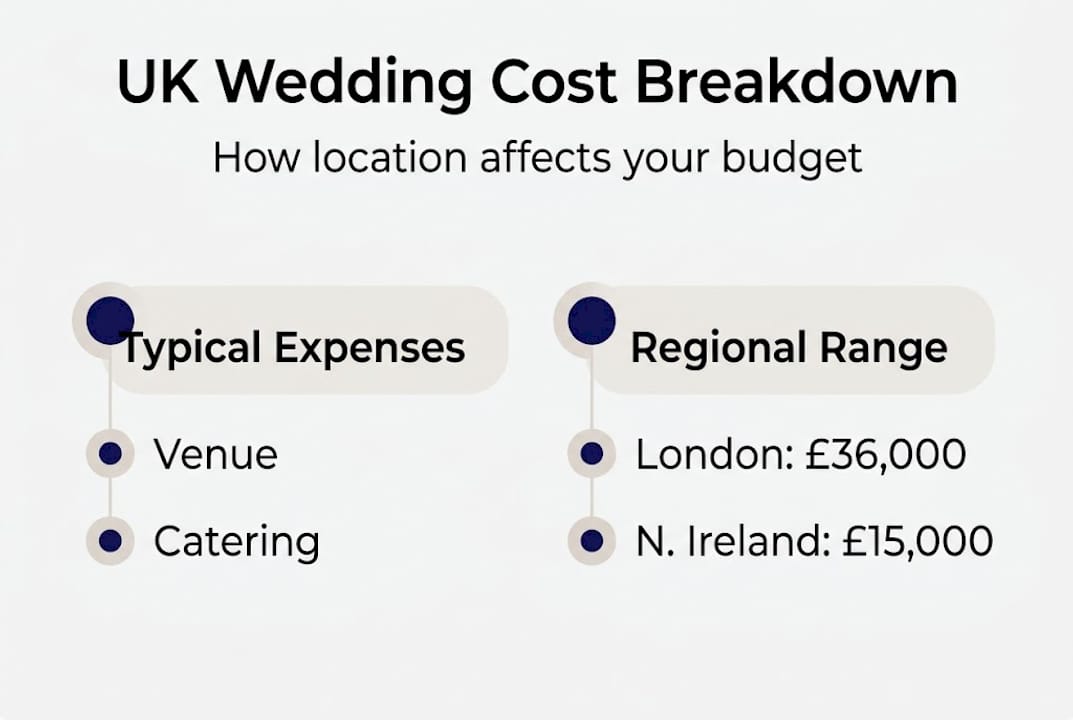
Regional pricing is one of the biggest surprises. London weddings average £36,000, while those in Northern Ireland average just £17,800. Adding more than 100 guests can inflate your total by as much as 40%. If you are planning a celebration in the South East without factoring in these regional premiums, your initial budget figure will almost certainly fall short.
Guest numbers have a multiplier effect that many couples underestimate at the outset. Every additional guest increases catering costs, venue capacity requirements, stationery, favours, and even transport logistics. A wedding for 80 people and a wedding for 150 people are not just slightly different in cost. They can be an entirely different financial undertaking.
Hidden fees are another common culprit. These include:
- VAT (20%): Not all supplier quotes include VAT, so always confirm whether the figure is inclusive or exclusive.
- Corkage charges: Many venues charge per bottle if you bring your own wine or champagne.
- Overtime fees: Venues and caterers often charge significant premiums if your event runs beyond the agreed finish time.
- Dry cleaning and damage deposits: Easily forgotten, but frequently charged after the event.
- Delivery and set-up costs: Florists, decorators, and entertainment suppliers may charge separately for logistics.
“The couples who stay on budget are not the ones with the most money. They are the ones who know exactly what questions to ask before signing any contract.”
Before you commit to any supplier, review your wedding essentials list to ensure nothing is overlooked. Staying informed about luxury wedding trends also helps you decide where to invest for maximum impact without overspending across the board.
The complete UK wedding budget checklist: Categories and expected costs
Armed with an understanding of what drives overspending, here is your comprehensive UK wedding budgeting framework. Breaking your budget into clear categories makes it far easier to allocate funds sensibly and spot where you might be stretching too thin.

Typical UK wedding venues range from £3,000 to £15,000, while catering costs run from approximately £40 to £125 per head, with significant regional variation. Use the table below as your starting reference point.
| Category | Typical UK cost range |
|---|---|
| Venue hire | £3,000 to £15,000 |
| Catering (per head) | £40 to £125 |
| Wedding attire | £1,000 to £4,500 |
| Photography and video | £1,500 to £4,000 |
| Flowers and décor | £800 to £3,500 |
| Entertainment (band/DJ) | £800 to £3,000 |
| Wedding cake | £300 to £900 |
| Transport | £400 to £1,200 |
| Stationery | £200 to £600 |
| Favours | £100 to £500 |
| Honeymoon | £2,000 to £8,000 |
| Contingency fund (5 to 10%) | Variable |
Here is a checklist you can work through directly:
- Confirm venue hire includes tables, chairs, and linen or cost these separately
- Get catering quotes inclusive of VAT and service charges
- Budget for alterations and accessories alongside attire
- Ask photographers for full-day packages versus hourly rates
- Include floristry delivery and set-up in your flowers quote
- Confirm entertainment includes sound equipment and travel
- Factor in postage costs for stationery
- Set aside funds for tips and gratuities
Pro Tip: Ask every supplier for a written breakdown of exactly what is included in their quote. This single habit prevents the most common budgeting surprises and gives you a clear basis for comparison.
For beverage planning, explore champagne tower ideas as a fixed-cost, show-stopping addition that is straightforward to budget for. You can also browse wedding beverage display inspiration to see how drinks presentation can elevate your reception without hidden extras.
Understanding the impact of guest numbers, region, and VAT
Once you are clear on the essential costs, it is important to tailor your plan to your personal numbers and location. The same wedding concept can cost vastly different amounts depending on where you are in the UK and how many people you invite.
Costs in London and the South East can run 20 to 50% higher than the national average, and every 100 additional guests can add up to 40% to your total spend. These are not small adjustments. They are budget-defining variables.
Here is how to adapt your base budget step by step:
- Start with a national average baseline. Use published UK averages as your starting figure before applying any adjustments.
- Apply a regional multiplier. If you are in London or the South East, increase your baseline by 20 to 50%. In the Midlands or North, you may find costs closer to or below the national average.
- Calculate your guest list multiplier. For every 50 guests above 100, add approximately 20% to your catering and venue estimates.
- Check every quote for VAT. VAT at 20% is a legal requirement for VAT-registered businesses, but not all initial quotes include it. Always ask.
- Revisit your total after each supplier is confirmed. Your budget is a living document, not a one-time calculation.
The table below illustrates how region and guest count interact:
| Location | 80 guests (est. total) | 150 guests (est. total) |
|---|---|---|
| Northern Ireland | £15,000 to £20,000 | £22,000 to £30,000 |
| North of England | £18,000 to £25,000 | £26,000 to £36,000 |
| South East | £28,000 to £40,000 | £40,000 to £58,000 |
| London | £32,000 to £50,000 | £46,000 to £70,000 |
For couples planning celebrations in the capital, reviewing London wedding costs in detail is well worth your time. If you want to create impact without inflating every line item, discover ways to create wow factor that deliver memorable moments for a predictable spend.
How to stay on track: Tracking, revising, and avoiding common budgeting mistakes
Now that you know what to include and how much to expect, staying on course requires consistent habits throughout your planning journey. 50 to 60% of couples still overshoot their original budget, often by neglecting extras or failing to revisit figures as plans evolve. The solution is a disciplined tracking system, not willpower alone.
Follow these steps to manage your spend effectively:
- Create a master spreadsheet or use a budgeting app. Tools such as Google Sheets, Bridebook, or Hitched allow you to record estimates alongside actual costs in real time.
- Log every payment immediately. Do not rely on memory or bank statements at the end of the month. Record deposits, instalments, and final payments as they happen.
- Schedule a monthly budget review. Set a recurring date each month to compare your running total against your original allocation. Adjust categories as needed.
- Prioritise ruthlessly. If one category is running over, identify where you can reduce elsewhere rather than simply expanding your overall budget.
- Maintain a contingency fund of 5 to 10%. This is non-negotiable. Unexpected costs are not a possibility; they are a certainty.
The most commonly forgotten line items include:
- Wedding insurance
- Hair and make-up trials (in addition to the wedding day itself)
- Rehearsal dinner or pre-wedding gathering costs
- Gifts for the wedding party
- Postage for thank-you cards
- Parking fees for guests
Pro Tip: Keep your contingency fund in a separate savings account. When it is mixed with your general wedding fund, it disappears into everyday spending far too easily.
For further guidance, explore insider wedding planning tips from professionals who work with couples every day. A thorough catering checklist is also invaluable for ensuring your food and drinks budget is watertight.
A wedding budget isn’t just numbers: The mindset you need for stress-free planning
Here is something most budgeting guides will not tell you: the couples who enjoy their planning process are rarely the ones with the biggest budgets. They are the ones who get clear on their priorities early and stop apologising for their choices.
Before you build a single spreadsheet, sit down with your partner and agree on the two or three elements that matter most to you both. Perhaps it is the venue, the music, or a show-stopping visual moment. Allocate generously to those priorities and trim confidently elsewhere. This is not compromise; it is clarity.
Outside pressure is real. Family opinions, social media, and supplier up-sells can all push you toward spending you never intended. Learning to say a calm, firm no is one of the most valuable skills you will develop during this process. The splurge-worthy trends worth considering are the ones that genuinely reflect your taste, not someone else’s expectations.
Budgeting together, openly and honestly, also strengthens your relationship. It is practice for every financial conversation you will have as a couple. Approach it as a shared project, expect some adjustments along the way, and negotiate with suppliers calmly and confidently.
Take your UK wedding to new heights with unforgettable details
A well-structured budget does not just prevent overspending. It creates space for the details that make your wedding genuinely unforgettable. When you know exactly where every pound is going, you can make a confident, considered decision to include something truly spectacular.
A champagne tower is one of those details. It delivers a fixed, predictable cost, a breathtaking visual centrepiece, and a moment your guests will talk about for years. At Champagne Tower Hire, we specialise in bespoke, fully staffed displays sized to suit your guest list and venue. When you are ready to add that magical finishing touch, hire a champagne tower and get an instant quote. You can also explore our beverage display checklist to plan every drinks detail with confidence.
Frequently asked questions
What are the biggest hidden costs in UK wedding budgets?
VAT and hidden fees such as venue overtime, corkage charges, and post-event dry cleaning are among the most frequently overlooked costs, often adding hundreds or even thousands of pounds to a final bill.
How much extra should I budget for a wedding in London or the South East?
Plan for costs that are 20 to 50% higher than other UK regions, with London weddings averaging around £36,000 compared to the national average.
How can I stop my wedding budget from spiralling out of control?
Track every expense in a dedicated spreadsheet or app, schedule monthly reviews, and maintain a 5 to 10% contingency fund from the very start of your planning.
Should I include a buffer in my wedding budget?
Absolutely. Over half of couples overspend their original figure, making a contingency buffer of at least 5% an essential part of any realistic wedding budget.


