

TL;DR:
- Drinks presentation influences guest perception by shaping taste experiences and setting emotional tones before service. Consistent styling and focal displays, like champagne towers, enhance perceived event quality and encourage social sharing. Properly designed displays trust guest trust, boost satisfaction, and improve overall event reputation.
Drinks presentation is defined as the visual and sensory design of beverages to shape guest perception before a single sip is taken. At any event, from a corporate reception to a wedding breakfast, how drinks look directly influences how guests feel about the occasion. Visual appeal reinforces quality perception as guests judge drinks before tasting, making presentation a core hospitality discipline rather than a decorative afterthought. Champagnetowerhire has built its entire service around this principle, creating bespoke champagne and prosecco displays that make an immediate, lasting impression. Understanding the role of drinks presentation gives event hosts a genuine competitive edge.
How does drinks presentation influence guest perception and taste?
Taste is not purely a function of the tongue. Neurogastronomy research finds that taste is a multimodal brain construction, shaped by visual stimuli including glassware weight, colour contrast, and ambient lighting. That means a drink served in a heavy crystal flute under warm lighting genuinely tastes better to most guests than the same liquid in a plastic cup under fluorescent strips. Presentation physically alters the flavour experience before tasting even begins.
“Welcome drinks are the emotional tone-setter of any event. They signal host care and set guest expectations for everything that follows.”
Industry experts on welcome drinks
The first drink a guest receives carries disproportionate weight. It signals the host’s attention to detail and communicates the overall quality of the event. A beautifully arranged welcome tray with garnishes, chilled glassware, and a clear visual theme tells guests they are in capable hands. A poorly presented tray of warm drinks in mismatched glasses does the opposite, and that first impression is very difficult to reverse.
Poor presentation also diminishes perceived value in measurable ways. Guests who receive drinks that look unremarkable tend to rate the overall event lower, regardless of the actual quality of the beverage. The drink aesthetics in hospitality are not superficial. They are a direct input into how guests remember and describe an event afterwards.
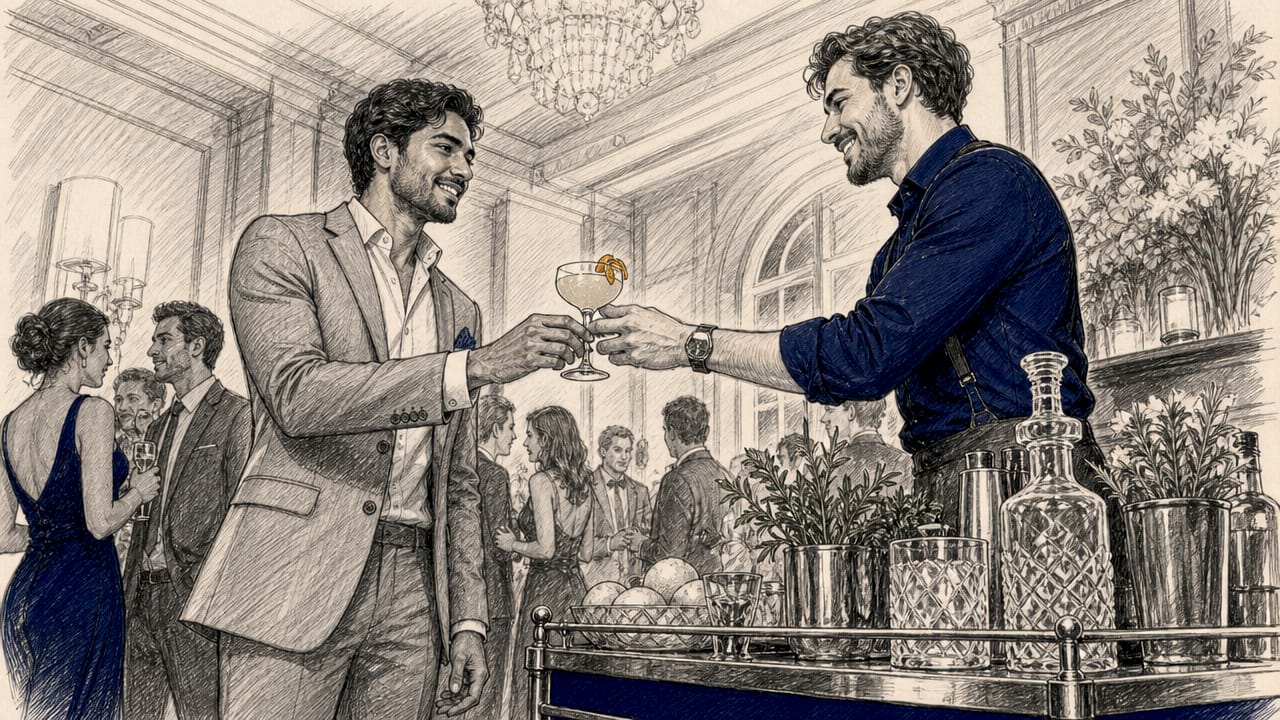
Pro Tip: Chill your glassware for at least 20 minutes before service. Cold glass signals care and quality before a guest has even looked at what is inside it.
What are effective drink presentation techniques for event hosts?
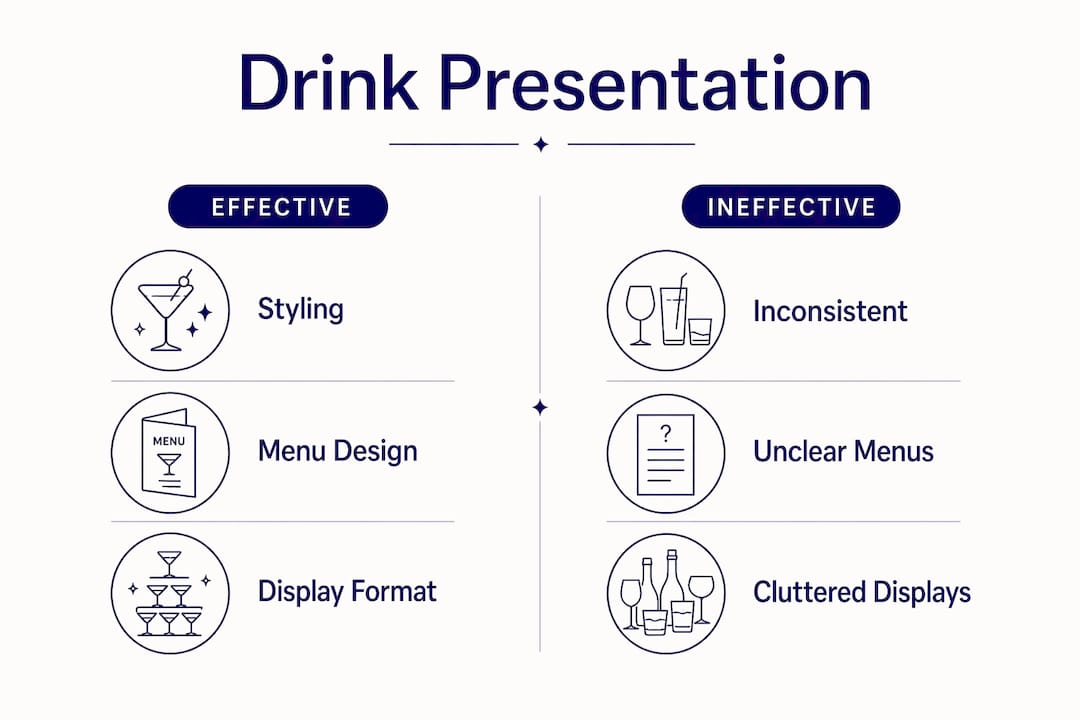
Practical drink presentation techniques fall into three broad categories: styling, menu design, and display format. Getting all three right creates a cohesive, impressive result.
Styling and visual consistency
Consistent styling across every element of a drinks display is the single most reliable way to lift perceived event quality. This means matching the colour palette of your signage, table labels, and menu frames to the wider event theme. Consistent design collateral subconsciously boosts guests’ perception of event control, trust, and value. A hand-written label on a mismatched card undermines even the finest champagne.
Framed menus and clearly printed table signs also serve a practical function. Clear, visible signage answers common guest questions before they interrupt service, improving event flow and reducing pressure on staff. Guests who can read what is available without asking feel more at ease and spend more time enjoying the event.
Menu design and flavour cohesion
Only 1 in 5 guests stick to one drink type throughout an event. That statistic means your menu needs to work across multiple drink categories without losing visual or thematic unity. A menu that harmonises coffee, cocktails, and soft refreshments under a single design language drives higher incremental spend and keeps guests satisfied across the full event duration.
Letting flavour lead rather than chasing visual trends also creates versatile menus that satisfy guests across different dayparts and preferences. A summer garden party menu might centre on elderflower and citrus notes, expressed through a prosecco tower, a garnished mocktail station, and a chilled coffee service, all presented with matching botanical signage.
Display format and focal points
The format of your drinks display is where presentation becomes theatre. Popular options include:
- Champagne towers: A tiered stack of coupes filled from the top, creating a cascading visual centrepiece that photographs beautifully and draws guests across the room.
- Prosecco fountains: A continuous-flow display that keeps glasses filled and creates a sense of abundance and celebration.
- Garnish and botanical stations: Displays where guests customise their drinks with fresh herbs, edible flowers, or fruit, adding interactivity to the visual appeal.
- Themed drink stations: Dedicated areas styled to match the event theme, from a vintage gin bar to a tropical cocktail cart, each with coordinated props and signage.
For creative drink station ideas, the key is balancing visual impact with service efficiency. A display that looks spectacular but creates a queue of frustrated guests defeats its own purpose.
Pro Tip: Place your most visually striking display, such as a champagne tower, where guests naturally congregate on arrival. The display does the work of drawing people together and sets the celebratory tone immediately.
Why does cohesion in drink display styling matter for luxury events?
A unified visual identity across all drink displays is not a luxury reserved for the largest budgets. It is the baseline expectation at any event that aims to feel professional and considered. Inconsistent signage, mismatched glassware, and clashing colour schemes subconsciously reduce perceived event quality, even when guests cannot articulate why.
The commercial case for cohesion is equally strong. Well-styled displays encourage guests to spend more time at the bar, try additional drinks, and share photographs on social media. Drinks that look good on screen often sell better, encouraging trial and extending the reach of your event beyond the room itself. For corporate hosts, that social sharing translates directly into brand visibility.
The table below shows how cohesion affects key event outcomes across different display elements.
| Display element | Effect of cohesion | Effect of inconsistency |
|---|---|---|
| Signage and menu frames | Builds trust, speeds decision-making | Confuses guests, increases staff interruptions |
| Glassware selection | Reinforces perceived drink quality | Undermines even premium beverages |
| Colour palette | Creates a unified, memorable atmosphere | Fragments the visual experience |
| Garnish and styling | Signals care and attention to detail | Suggests a lack of preparation |
For hosts planning beverage displays at weddings or corporate functions, the investment in cohesive styling pays back in guest satisfaction and post-event reputation. The role of visuals in drink serving extends well beyond aesthetics. It shapes the entire guest journey from arrival to departure.
How can hosts measure the impact of drinks presentation?
Measuring the impact of drinks presentation does not require formal research. Observation and a few deliberate practices give hosts clear, usable feedback.
- Watch where guests gather. A well-positioned drinks display naturally draws people. If guests cluster around it, photograph it, and return to it, the presentation is working. If they collect a drink and move away without engaging, the display lacks magnetism.
- Track social media activity during the event. Drinks that look good on screen generate organic sharing. Monitor your event hashtag or ask staff to note which displays guests photograph most frequently.
- Ask for specific feedback. Post-event surveys that ask about the drinks experience, not just the drinks themselves, reveal whether presentation landed. Questions like “How did the drinks display make you feel on arrival?” yield richer data than simple satisfaction scores.
- Monitor incremental spend. At ticketed or pay-bar events, displays that encourage guests to try additional drinks or upgrade their choices show up directly in revenue. A champagne tower that prompts guests to switch from house wine to sparkling is a measurable return on presentation investment.
- Audit low-alcohol options. 70% of consumers choose low-alcohol cocktails at events. Presenting these options with the same premium styling as full-strength drinks ensures no guest feels like an afterthought, and it broadens the appeal of your display to the full room.
Ongoing refinement matters as much as initial planning. An event host who reviews what worked and adjusts for the next occasion builds a reputation for consistently impressive hospitality. The event beverage display guide from Champagnetowerhire offers a structured framework for this kind of iterative improvement. Pairing that with tailored drink experiences ensures every event feels considered rather than generic.
The role of food and drink in hospitality is increasingly understood as a sensory and psychological discipline, not just a catering function. Hosts who treat drinks presentation as a strategic tool rather than a logistical necessity consistently produce more memorable events.
Key takeaways
Drinks presentation is the single most underused tool in an event host’s kit, and getting it right requires cohesion, sensory awareness, and deliberate design across every element of the beverage display.
| Point | Details |
|---|---|
| Presentation shapes taste | Visual cues like glassware and lighting alter flavour perception before guests take a sip. |
| Welcome drinks set the tone | The first drink a guest receives signals host care and defines event quality expectations. |
| Cohesion lifts perceived value | Consistent signage, glassware, and colour palette subconsciously increase guest trust and satisfaction. |
| Photo-worthy displays drive engagement | Visually striking drinks encourage social sharing, extending event reach beyond the room. |
| Low-alcohol options need premium styling | Presenting moderation-led choices with the same care as full-strength drinks satisfies the full guest demographic. |
Darren’s view: what most hosts get wrong about drinks presentation
After years of working with event hosts across the UK, the pattern I see most often is this: hosts spend weeks on the food menu and the floral arrangements, then treat the drinks as a last-minute logistics problem. The result is a beautifully decorated room with a trestle table of warm bottles and a stack of plastic cups in the corner. It is a jarring disconnect that guests notice immediately, even if they cannot name it.
The insight that changed how I think about this came from neurogastronomy research. The fact that taste is constructed multimodally means presentation is not decoration. It is an ingredient. A champagne tower does not just look impressive. It makes the champagne taste more celebratory to everyone in the room, because the visual context primes the brain before the glass reaches anyone’s lips.
The other thing hosts consistently underestimate is the power of the welcome drink. That first glass is not just a drink. It is a promise about the rest of the event. I have seen modest prosecco served in beautiful chilled coupes with a single edible flower create more goodwill than expensive champagne poured into warm, fingerprinted glasses. The quality of the liquid matters far less than the care taken in presenting it.
My honest advice: treat your drinks display as a design project, not a catering order. Brief your supplier on the event theme, the colour palette, and the emotional tone you want to create. Then let the display do the work of setting that tone the moment guests walk in.
— Darren
How Champagnetowerhire can enhance your event’s drink display
Champagnetowerhire specialises in bespoke beverage displays that make an immediate visual impact at weddings, corporate functions, and private parties across the UK. Every setup is fully staffed, styled to match your event theme, and built to photograph beautifully. From classic champagne tower hire to prosecco fountains adorned with flowers or fresh strawberries, each display is designed to set the celebratory tone the moment guests arrive. Optional additions and custom sizing mean the service works for intimate gatherings and large-scale corporate events alike. If you want a drinks display that guests remember and share, Champagnetowerhire delivers the expertise and the spectacle to make it happen.
FAQ
What is the role of drinks presentation at events?
Drinks presentation is the visual and sensory design of beverages to shape guest perception and set the emotional tone of an event. It directly influences how guests judge drink quality and overall hospitality before tasting.
How does glassware affect the taste of drinks?
Neurogastronomy research shows that glassware weight, shape, and temperature alter taste perception multimodally. Guests experience drinks as higher quality when served in heavy, chilled, well-chosen glassware.
Why are welcome drinks so important for guest experience?
Welcome drinks function as the emotional tone-setter for the entire event, signalling host care and setting guest expectations. Industry experts identify them as the single most influential moment in hospitality impression.
How can I make drinks displays more photo-worthy?
Use a focal point display such as a champagne tower or prosecco fountain, add fresh garnishes, and ensure consistent styling with your event colour palette. Drinks that look striking on screen encourage organic social sharing and extend your event’s reach.
Should low-alcohol options be presented differently?
Low-alcohol options should receive the same premium styling as full-strength drinks. With 70% of consumers choosing low-alcohol cocktails at events, presenting these choices with care ensures every guest feels equally valued.


