

TL;DR:
- Effective beverage display staffing relies on calculated ratios, clear roles, and thorough pre-event planning. Ensuring strong communication and compliance minimizes guest frustration and enhances the guest experience. Proper preparation and on-the-day adjustments are essential for maintaining high service standards during events.
Staffing for beverage displays is the process of organising and managing skilled personnel to operate and support drink service areas at events, from weddings and corporate functions to private parties. Get it right and your guests experience effortless, polished service. Get it wrong and even the most spectacular champagne tower becomes a source of frustration. This guide walks you through the staffing ratios, role definitions, recruitment practices, and on-the-day management strategies that separate a memorable beverage experience from a chaotic one. Whether you are planning a 50-person wedding breakfast or a 300-guest corporate reception, the principles here apply directly to your brief.
How to determine the right staffing levels for beverage displays
Beverage display staffing starts with a simple calculation, then gets more nuanced from there. UK event catering guidance recommends 1 server per 10 guests for plated dinners and 1 per 20 for standing receptions, with a 10% surplus buffer built in. That buffer is not optional padding. It is your insurance against no-shows, unexpected guest surges, and the inevitable moment when three things go wrong at once.
For bar-specific roles, the numbers shift. Current bartender-to-guest guidance recommends approximately 2 bartenders for 40 guests and 3 for 100 guests, with additional barbacks and runners for complex display formats. This means a 150-person corporate drinks reception could require 4 to 5 bartenders before you even account for support staff.
Event type shapes your staffing model significantly:
- Weddings typically require higher staffing ratios during the drinks reception and toasting moments, when demand spikes sharply and guests expect attentive, personal service.
- Corporate events often feature structured service windows with predictable peaks, making it easier to plan staffing around a defined programme.
- Private parties can be unpredictable. Guest behaviour, informal timings, and varied drink preferences mean you need flexible staff who can adapt quickly.
Peak service periods such as cocktail hours drive staffing demand far more than total event duration. A four-hour event with a 45-minute cocktail hour may need 30% more staff during that window alone. Plan your staffing around those peaks, not the average.
Pro Tip: Always appoint at least one supervisor or lead per 10 service staff. This person manages flow, handles guest complaints, and communicates directly with your event coordinator, keeping service consistent without you needing to intervene.
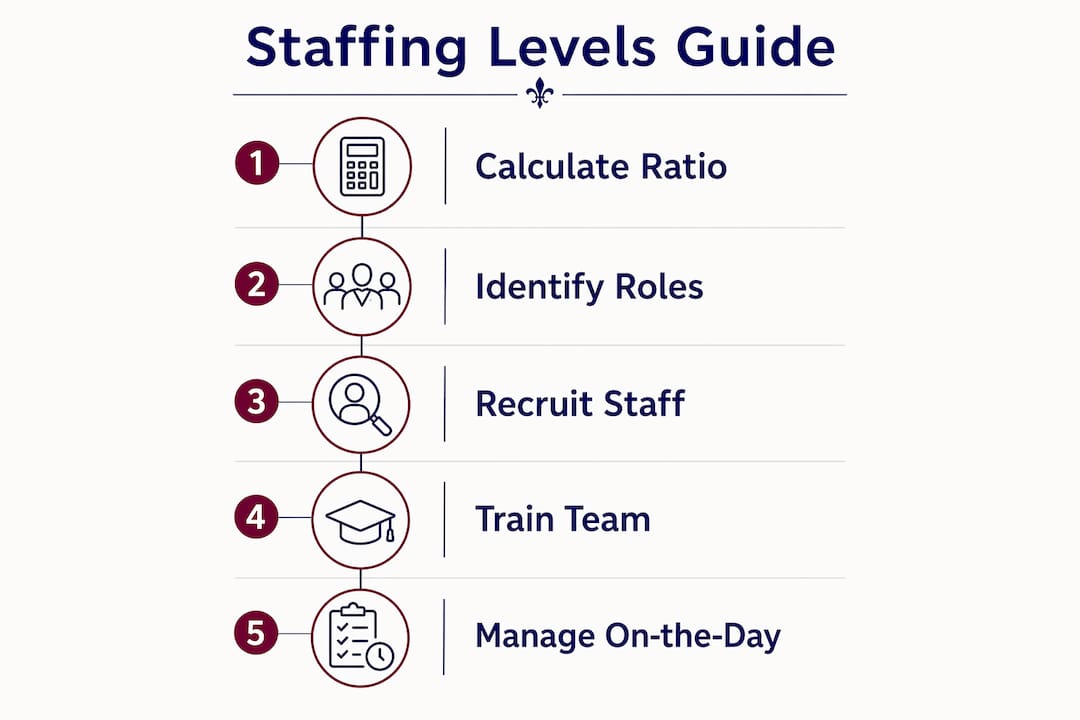
What are the key roles in beverage display staffing?
Effective drink display management depends on clearly defined roles, not a group of generalists hoping for the best. Each position serves a specific function, and gaps in any one area create bottlenecks that guests notice immediately.
- Bartender. The front-line professional responsible for preparing and serving drinks, managing the display, and maintaining licensed alcohol service. Bartenders must hold relevant personal licence awareness and operate within the conditions of your event licence or Temporary Event Notice.
- Barback. The bartender’s operational support. Barbacks restock glassware, replenish ice, manage garnishes, and keep the display area clean and functional. Dedicated barbacks prevent the most common bottleneck in bar service: the moment a bartender stops serving because they are hunting for a clean glass.
- Runner. Runners move between the display and the guest floor, collecting empties, delivering drinks to seated guests, and managing queue flow. At champagne tower displays, runners play a particularly visible role, carrying trays and maintaining the elegance of the presentation.
- Supervisor or bar lead. This person oversees the entire beverage operation, makes real-time staffing adjustments, and acts as the single point of contact between your bar team and the wider event management structure. A bar lead is advised for any event exceeding 80 guests.
- Guest-facing host. At premium displays, a dedicated host greets guests, explains the drinks on offer, and manages the experience around the display itself. This role is especially valuable at champagne tower setups where the visual spectacle deserves a confident, knowledgeable presence.
These roles do not operate in isolation. The bartender signals to the barback when supplies are low. The runner reports queue build-up to the supervisor. The host feeds guest feedback to the bar lead. When this communication chain works, service feels effortless. When it breaks down, guests queue, glasses run dry, and the display loses its impact.
Best practices for recruiting and preparing beverage display staff
Recruitment for drink displays requires more than posting a job and hoping for the best. The quality of your beverage merchandising staff directly determines the quality of the guest experience, and shortcuts at the hiring stage cost you far more on the day.
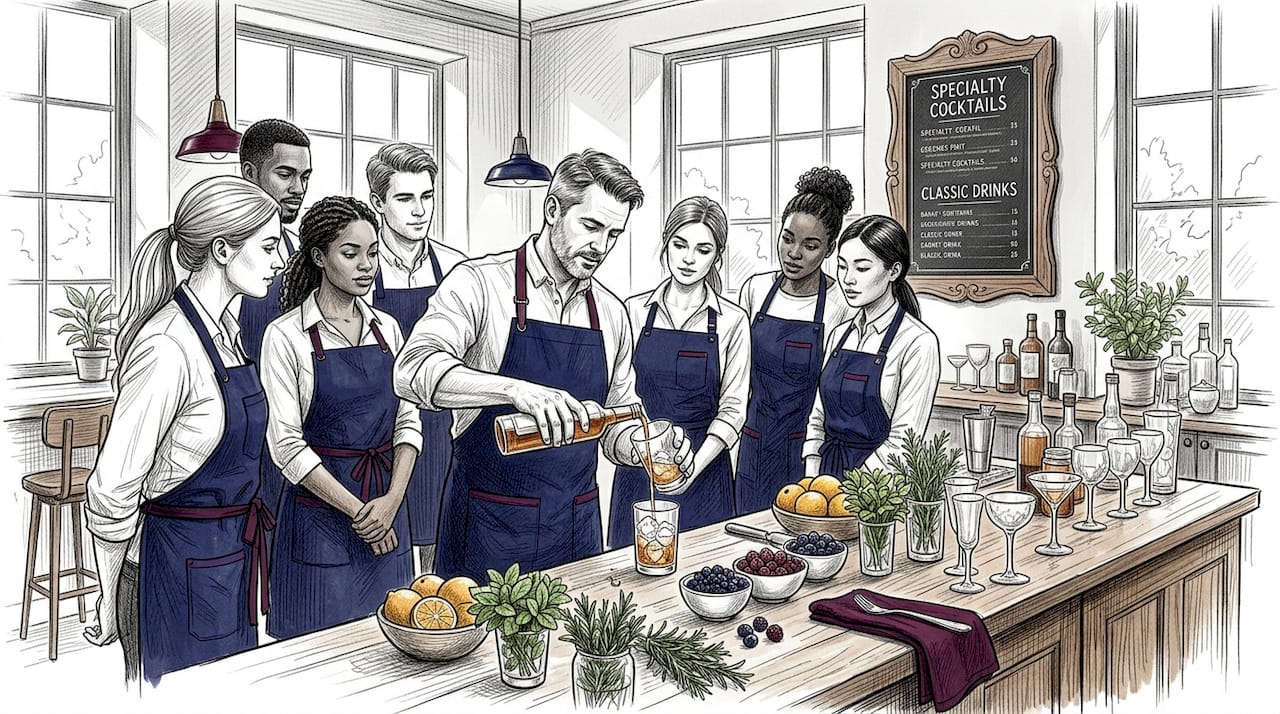
The first decision is whether to use a staffing agency or hire directly. Agencies offer speed, vetted candidates, and built-in compliance management. Direct hire gives you more control over selection and can build longer-term relationships with reliable staff. For one-off events, agencies are usually the more practical choice.
When evaluating any staffing provider, verify the following before signing a contract:
- Licensing compliance. Staffing providers supplying labour in regulated sectors may require a Gangmasters licence under UK law. Confirming this protects you from legal exposure.
- Food hygiene and allergen training. All front-of-house staff should hold a minimum Level 2 Food Hygiene certificate. Allergen awareness is not optional under UK food law.
- Risk assessments and site induction. Compliance expectations include documented risk assessments and a formal site induction for every member of staff before service begins.
- Statutory sick pay planning. New 2026 statutory sick pay regulations affect temporary staff availability. Build absence contingencies into your staffing plan from the outset.
- Soft skills. Communication, adaptability, and genuine warmth are not nice-to-haves. Staff quality in communication and guest engagement is a primary driver of event success, often more than technical skill alone.
Pro Tip: Hold a pre-event briefing of at least 30 minutes with all beverage staff on site before guests arrive. Cover the run of show, display layout, allergen information, and escalation procedures. Staff who know the plan deliver a noticeably more confident service.
Once hired, preparation is everything. Walk staff through the specific beverage display setup they will be operating, including any specialist equipment like champagne towers. Familiarity with the physical setup reduces hesitation during service and projects professionalism to guests.
How do you manage staffing on the day to maintain service quality?
On-the-day management of temporary staffing for beverages is where plans meet reality. The most common failure point is communication. When staff do not know who to report to, problems escalate silently until they become visible to guests.
Assign a single point of contact for all beverage staff before the event starts. This person receives updates from runners, relays adjustments to bartenders, and communicates directly with you or your event lead. Walkie-talkies or a shared messaging channel work well for larger events where the bar area is not adjacent to the main coordination point.
The table below outlines the most common on-the-day challenges and the staffing responses that resolve them:
| Challenge | Staffing response |
|---|---|
| Queue build-up at the display | Deploy an additional runner to manage guest flow and pre-pour where appropriate |
| Glassware running low | Barback escalates to supervisor; runner redirects guests to alternative service point |
| Staff absence on the day | Activate the 10% surplus buffer; supervisor redistributes roles temporarily |
| Allergen query from a guest | Staff escalate immediately to the bar lead, who holds the allergen information sheet |
| Licence or compliance question | Supervisor contacts the event organiser; service pauses at that station if required |
Temporary Event Notices are required for licensable activities at venues without a permanent licence, with a 10-working-day submission deadline. Your bar lead must hold a copy of the TEN on site and understand its conditions. This is not a detail to delegate to a junior member of staff.
Real-time adjustments are normal, not a sign of poor planning. Planning staffing around peak periods optimises resource allocation, but conditions change. A delayed wedding ceremony pushes the drinks reception back by 40 minutes. A corporate dinner runs long and compresses the bar service window. Supervisors who can read these shifts and redistribute staff accordingly are worth every penny of their fee.
Key takeaways
Effective staffing for beverage displays requires calculated ratios, clearly defined roles, verified compliance, and a communication structure that holds under pressure on the day.
| Point | Details |
|---|---|
| Use evidence-based staffing ratios | Apply 1 server per 20 guests for receptions, with a 10% buffer and 2 to 3 bartenders per 100 guests. |
| Define every role before the event | Assign bartenders, barbacks, runners, and a supervisor to prevent gaps and bottlenecks. |
| Verify compliance at recruitment stage | Confirm food hygiene certificates, allergen training, and licensing before any staff are confirmed. |
| Plan staffing around peak periods | Cocktail hours and toasting moments drive demand spikes that require additional resource, not average headcount. |
| Brief all staff on site before service | A structured pre-event briefing reduces hesitation, improves guest engagement, and prevents escalation failures. |
What I have learned about staffing beverage displays after years in the field
By Darren
The thing most event planners underestimate is how much the guest experience at a beverage display is shaped by the person standing behind it, not the display itself. I have seen spectacular champagne towers lose their magic because the staff member pouring looked uncertain. I have also seen a modest prosecco table become the highlight of an evening because the person running it was warm, knowledgeable, and genuinely engaged.
My honest view is that soft skills deserve equal weight to technical qualifications when you are selecting beverage promotional staff. A Level 2 Food Hygiene certificate is a baseline requirement, not a differentiator. What actually separates good service from great service is a staff member who reads the room, anticipates needs, and makes guests feel looked after rather than processed.
The compliance landscape in 2026 has also added a layer of complexity that planners cannot afford to ignore. The updated statutory sick pay regulations mean that absence planning is now a legal and operational consideration, not just a contingency. Vetting staffing providers for appropriate licensing is no longer a box-ticking exercise. It is a genuine risk management step.
My practical advice: build your staffing brief around the peak moments of your event, not the full duration. Identify the 45 minutes where everything needs to be perfect, staff for that window, and your overall service quality will follow. And always, always hold that pre-event briefing. The events where I have seen it skipped are the events where something preventable went wrong.
— Darren
Make your beverage display truly unforgettable with Champagnetowerhire
A beautifully staffed beverage display deserves a centrepiece worthy of the occasion. Champagnetowerhire specialises in fully staffed champagne and prosecco tower hire for weddings, corporate events, and private parties across the UK. Every setup includes experienced, professional staff who know how to operate and present a luxury champagne tower display with the elegance your event deserves. From bespoke tower sizes to optional floral additions, the service is designed to take the pressure off you completely. If you are planning a wedding and want to see how a staffed display fits into your wider beverage programme, the wedding beverage display guide is an excellent starting point.
FAQ
What is the standard staffing ratio for a drinks reception?
UK guidance recommends 1 server per 20 guests for standing receptions, with a 10% surplus buffer. For bar-specific roles, approximately 2 to 3 bartenders per 100 guests is the current standard.
Do I need a Temporary Event Notice for a staffed bar at my event?
A Temporary Event Notice is required for licensable activities at venues without a permanent premises licence. Applications must be submitted at least 10 working days before the event.
What qualifications should beverage display staff hold?
At minimum, all front-of-house staff should hold a Level 2 Food Hygiene certificate and have completed allergen awareness training. Bartenders serving alcohol should also hold personal licence awareness training.
Should I use a staffing agency or hire directly for beverage display roles?
For one-off events, a reputable staffing agency is usually the more practical choice, as they provide vetted candidates and handle compliance documentation. Verify that any agency holds appropriate licensing under UK labour supply regulations before confirming a booking.
How many staff do I need for a champagne tower display?
A staffed champagne tower typically requires at least one dedicated host or presenter, one barback to manage replenishment, and a supervisor overseeing the wider beverage operation. For larger events, additional runners are recommended to manage guest flow around the display.


