

TL;DR:
- A luxury champagne tower requires careful planning across design, licensing, setup, staffing, and contingency.
- Partnering with a specialist ensures a seamless build, compliant service, and a memorable guest experience.
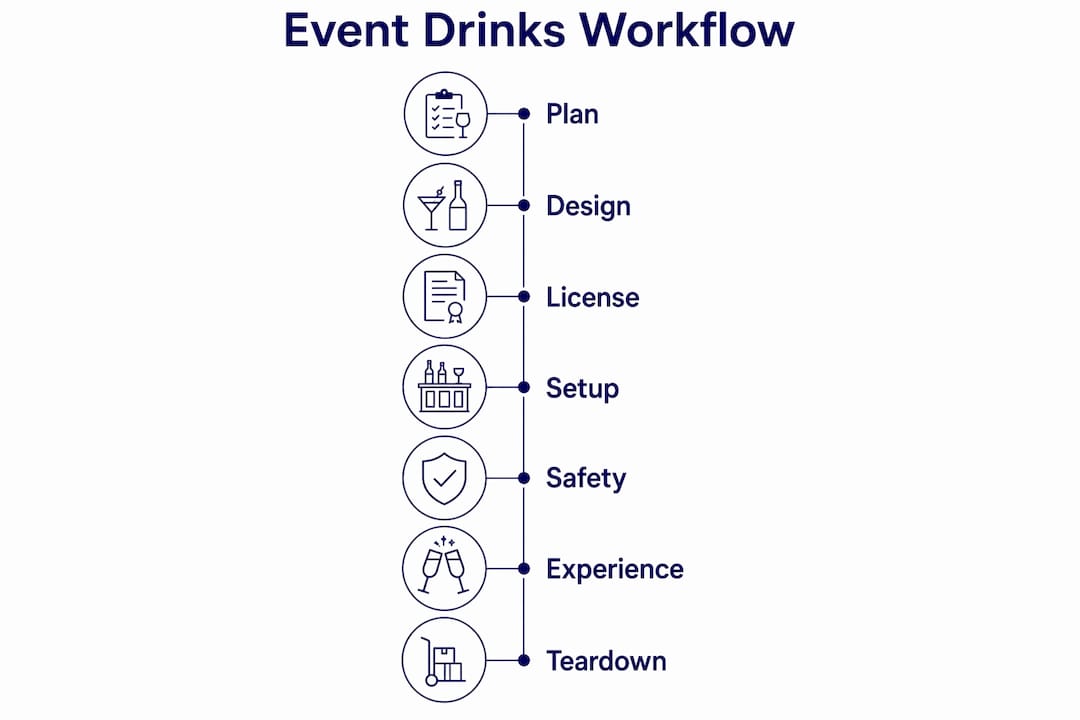
A well-executed luxury event drinks workflow is the difference between a celebration guests remember and one they forget. For champagne tower displays specifically, that workflow covers six core areas: concept and design, provider sourcing, UK licensing compliance, physical setup, staffing, and contingency planning. Get all six right and the tower becomes the centrepiece of the evening. Miss one and the consequences range from licensing refusals to structural accidents mid-service.
Here is what every organiser needs in place:
- Concept and design: tower size, glassware style, and optional enhancements such as flowers or strawberries
- Provider vetting: selecting a specialist with a proven track record for luxury champagne tower hire
- UK compliance: written venue approval and floor plan submission at least 28 days before the event
- Physical setup: level surface, structural checks, and a pre-pour rehearsal
- Staffing: trained staff with clear roles and correct ratios
- Contingency: backup plans for weather, spillage, and supply shortfalls
How do you plan and design a luxury champagne tower display?
Start with the guest count and work backwards. Tower size, bottle volume, and staffing all flow from that single figure. A tower designed for 80 guests served at a 150-person wedding creates pressure points that no amount of good service can fix on the night.
When sourcing a provider, look for bespoke build capability. Champagnetowerhire tailors tower size and décor to the event theme, with optional additions including fresh flowers and strawberries that transform the display into a visual focal point rather than a functional afterthought. Confirm that the provider handles delivery, setup, and staffing as a single package.
For the drinks offer itself, balance your selection across alcoholic and non-alcoholic options. Crowd-pleasing whites such as Sauvignon Blanc and Chardonnay work well alongside a quality sparkling for the tower pour. Add a 10% buffer to your bottle count to cover unexpected consumption or last-minute guest additions.
Pre-event coordination checklist:
- Confirm tower dimensions and weight load with the venue
- Agree delivery window and setup time with your provider
- Brief all bar staff on service flow and responsible drinking policies
- Verify glassware count against guest numbers plus a contingency surplus
- Confirm chilling times for all sparkling stock
Pro Tip: For cocktail stations alongside the tower, organise spirits and mixers into distinct zones and use jiggers for every pour. Consistency of flavour is what separates a luxury bar from an average one.
What UK licensing requirements apply to champagne tower service?
UK licensing law is specific and unforgiving on timelines. Any sale or supply of alcohol requires the organiser to submit a detailed floor plan highlighting alcohol service areas and obtain written venue approval no later than 28 days before the event date.
| Requirement | Detail |
|---|---|
| Floor plan submission | Highlight all areas where alcohol will be sold or supplied |
| Written approval deadline | Minimum 28 days before the event |
| Personal Licence Holder | Must be present on site during alcohol service |
| Designated Premises Supervisor | Holds authority to approve or curtail alcohol supply |
| Licensed hours | Alcohol served only within hours stipulated by the premises licence |
The Designated Premises Supervisor at your venue holds primary authority over all licensable activity. Their approval is not a formality. They can restrict or stop service at any point if conditions are not met.
Where alcohol is supplied by anyone other than the venue’s own caterer, a Personal Licence Holder must supervise the service, and a copy of that licence must be provided to the venue. The licence must be valid in the applicable jurisdiction: England and Wales, Scotland, or Northern Ireland.
Compliance checklist:
- Confirm the venue’s premises licence covers your event type and hours
- Submit the floor plan with alcohol zones clearly marked, 28 days in advance
- Obtain written approval from the venue
- Verify the Personal Licence Holder’s credentials and jurisdiction
- Agree service cut-off times with the Designated Premises Supervisor
- Brief bar staff on responsible service and refusal procedures
Pro Tip: If your event is at an unlicensed private venue, a Temporary Event Notice (TEN) will likely be required. Confirm this with your provider or a licensing adviser well ahead of the 28-day deadline.
How do you set up a champagne tower step by step?
The physical setup of a champagne tower demands patience and precision. Rush it and the structure becomes a liability.
- Choose a level, stable surface. Any tilt in the base will cause uneven pour and potential collapse. Use a spirit level before placing a single glass.
- Build from the base tier upward. Place the widest row of coupe glasses first, edges touching but not overlapping.
- Check structural integrity at each tier before adding the next layer. Press gently on the outer glasses to confirm stability.
- Position the tower away from high-traffic routes. Guests brushing past the structure mid-service is the most common cause of accidents.
- Conduct a dry rehearsal with water before the event opens. This reveals any instability and confirms the pour trajectory.
- Pour slowly from the top glass on the night, allowing the liquid to cascade naturally. Never pour directly onto lower tiers.
For a detailed walkthrough, the champagne tower setup guide from Champagnetowerhire covers styling and service considerations specific to elegant events.

What health and safety protocols apply to champagne tower structures?
A champagne tower is a structural installation, not just a decorative feature. Treat it accordingly.
Keep a clear exclusion zone of at least one metre around the base during the pour. Brief all guests before the moment so nobody reaches for a glass prematurely. Ensure the surface beneath the tower is non-slip and that any tablecloth is secured so it cannot be pulled. Wet floors around the base are a slip hazard; assign a staff member to monitor and dry the area throughout service.
For drink display safety protocols specific to event planners, Champagnetowerhire publishes dedicated guidance covering structural checks and service procedures. All staff working near the tower should understand the escalation route if the structure shows any sign of instability.
How should you plan for weather or accidents affecting the display?
Outdoor events carry the highest risk. Wind is the primary structural threat to a champagne tower; even a moderate gust can destabilise the upper tiers. If the event has any outdoor element, agree a weather threshold with your provider in advance and have an indoor fallback position identified before the day.
For indoor events, the main contingency concerns are spillage and breakage. Keep a reserve of matching coupe glasses on site, at least 15% above your planned count. Assign one staff member specifically to the tower area during the pour, with authority to pause service if anything looks unstable. A pre-agreed signal between the tower attendant and the event manager keeps the response discreet and fast.
Pair your drinks planning with a coordinated festive meal offering so food and beverage service timings do not clash at peak moments.
How do you create a memorable guest experience around luxury drinks?
The tower pour is a moment, not just a service action. Frame it deliberately. Announce it, gather guests, and let the cascade do the work. That 60-second spectacle is what guests photograph and describe to friends afterwards.
Beyond the pour itself, staffing ratios determine whether the experience feels attentive or chaotic. For cocktail service alongside the tower, one bartender per 40 guests keeps queues short. For simpler wine and sparkling service, one per 75 guests is workable. A bar lead who oversees flow and adjusts in real time is worth the additional cost at any event above 80 guests.
Offer a considered non-alcoholic option at the same presentation standard as the champagne. Guests who do not drink alcohol should never feel like an afterthought.
What does post-event teardown and waste management involve?
Teardown begins the moment the last guest leaves the tower area. Collect all glasses systematically from the top tier downward, reversing the build sequence. Never remove glasses from the base before the upper tiers are clear.
Separate broken glass immediately into a dedicated sharps bin, not a general waste bag. Bottle waste from a champagne tower event accumulates quickly; arrange collection with the venue in advance and confirm whether glass recycling is available on site. Leftover liquid should be disposed of responsibly and not poured directly onto outdoor surfaces where it may attract pests or create a slip hazard. A full post-event debrief with your provider confirms what worked, what to adjust, and whether the bottle count matched the forecast.
Champagnetowerhire: the specialist behind your luxury display
Planning a luxury champagne tower display is genuinely complex, and the quality of your provider determines how much of that complexity you carry yourself. Champagnetowerhire offers a fully managed service covering bespoke tower design, custom sizing, optional enhancements such as flowers and fresh strawberries, and full staffing. You brief them on your vision; they handle the build, the pour, and the teardown.
Whether you are planning a wedding, a corporate champagne tower display, or a private celebration, Champagnetowerhire covers events across the UK and internationally. Get an instant quote directly on their website and confirm your date before it goes.
Key takeaways
A successful luxury event drinks workflow depends on locking in compliance, design, and staffing well before the event date, with champagne tower hire specialists handling the physical execution.
| Point | Details |
|---|---|
| Submit floor plans early | UK venues require written approval and a floor plan at least 28 days before alcohol service. |
| Buffer your bottle count | Add 10% to your planned quantity to cover unexpected consumption or last-minute guests. |
| Staff to the right ratio | One bartender per 40 guests for cocktail service keeps queues short and service quality high. |
| Build top-down, dismantle bottom-up | Always construct and remove champagne towers tier by tier from the top to avoid structural failure. |
| Champagnetowerhire | Offers fully managed, bespoke champagne tower hire with staffing and optional styling enhancements across the UK. |


