

Most British luxury events risk running dry without accurate champagne estimates. For wedding planners and corporate event organizers in London, knowing exact quantities saves both budget and reputation. Upscale celebrations demand flawless presentation and seamless hospitality. This guide reveals how to strategically calculate champagne needs from guest profiles to contingency planning so every pour impresses and every tower shines.
Table of Contents
- Step 1: Assess Guest Numbers And Consumption Preferences
- Step 2: Determine Tower Size And Key Display Requirements
- Step 3: Calculate Accurate Champagne Bottle Quantities
- Step 4: Verify Estimates Against Event Duration And Serving Style
- Step 5: Adjust Final Counts For Contingency And Luxury Presentation
Quick Summary
| Key Point | Explanation |
|---|---|
| 1. Understand guest profiles | Assess age, background, and cultural expectations to anticipate champagne consumption effectively. |
| 2. Plan champagne tower size | Choose a tower configuration that matches your guest count and desired visual impact for the event. |
| 3. Calculate accurate bottle counts | Estimate the number of champagne bottles needed based on expected glasses per guest and event type. |
| 4. Adjust for event duration | Distinguish between short and long events to tailor champagne quantities according to consumption patterns. |
| 5. Implement contingency plans | Include a buffer of 10-15% additional champagne to accommodate unexpected guests and events. |
Step 1: Assess Guest Numbers and Consumption Preferences
Estimating champagne requirements begins with understanding your guest profile and consumption patterns. Consumer preferences research indicates that beverage consumption varies significantly across different event types and demographic groups, making precise calculation crucial for luxury celebrations.
Start by creating a comprehensive guest list that breaks down attendees by age range, professional background, and cultural expectations. Corporate events typically see different champagne consumption compared to wedding receptions. For instance, a young professional networking event might feature lighter drinking patterns than a celebratory wedding dinner. Consider tracking expected guest numbers by calculating invitees versus confirmed attendees. Most event planners recommend planning for 80% of invited guests, with a 10% buffer for unexpected additions.
Carefully analyse your guest demographic to predict consumption. A typical champagne tower setup requires approximately one champagne flute per guest during the initial toast, with an additional half to three quarters of a flute per person for continued celebration. Professional inbound tourism data suggests that international guests often have varied drinking preferences, so consider offering alternative beverage options to accommodate diverse tastes.
Top Tip: Always prepare slightly more champagne than your initial calculations suggest to ensure a seamless and abundant celebration.
Step 2: Determine Tower Size and Key Display Requirements
Deciding on the perfect champagne tower involves careful consideration of your event’s scale and visual impact. Luxury event presentation research highlights that the tower’s size and arrangement significantly influence guest perception and overall event atmosphere.
The tower’s dimensions depend primarily on your total guest count and desired dramatic effect. Standard champagne tower configurations range from compact 3×3 base towers suitable for intimate gatherings of 20 to 30 guests, to impressive 6×6 or 7×7 towers that can accommodate 100 to 150 guests. Professional event planners recommend allocating approximately 4 to 5 champagne flutes per guest to ensure a stunning display that allows for multiple pouring moments. When selecting tower height, consider venue ceiling clearance and table dimensions to ensure a seamless installation.
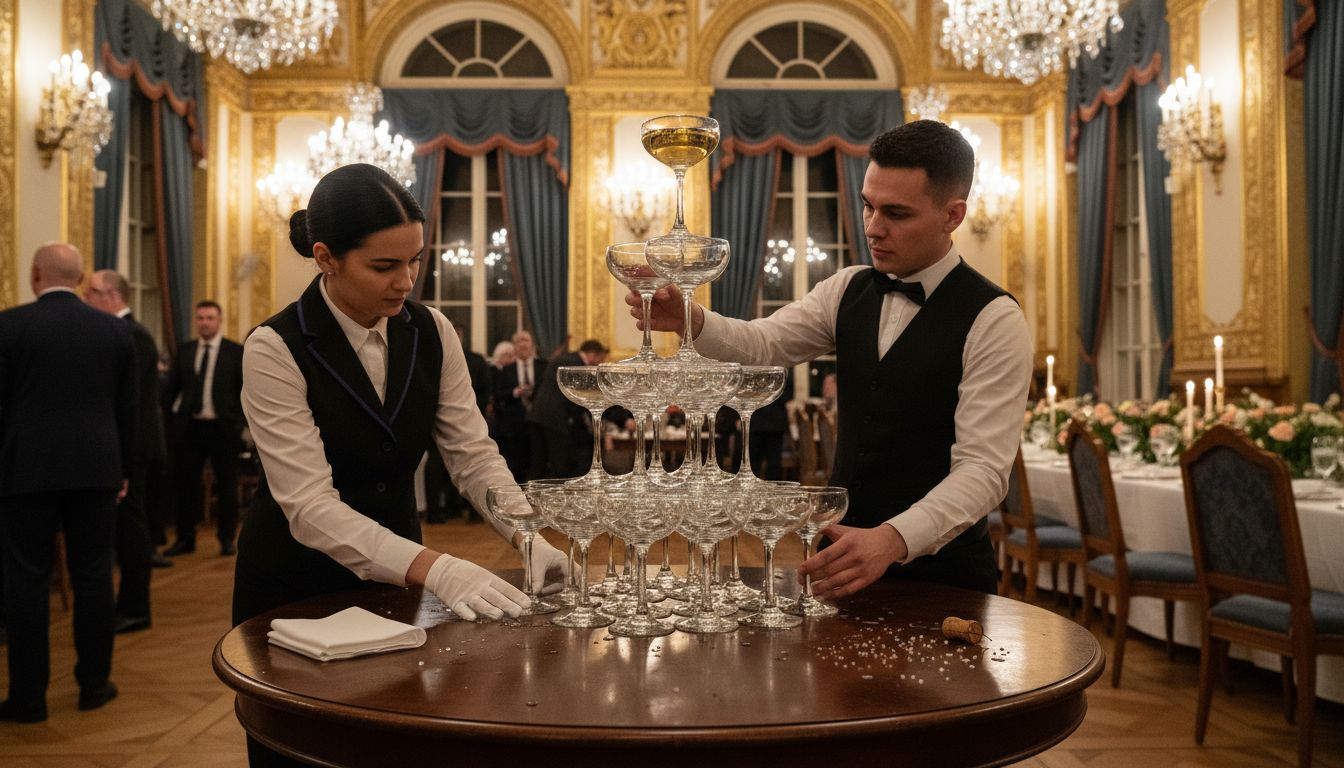
Here is a concise reference for standard champagne tower sizes and their guest capacities:
| Tower Base Size | Number of Glasses | Suitable Guest Count |
|---|---|---|
| 3 × 3 | 9 | 20–30 |
| 4 × 4 | 16 | 30–50 |
| 5 × 5 | 25 | 50–80 |
| 6 × 6 | 36 | 80–120 |
| 7 × 7 | 49 | 120–150 |
Visual symmetry and structural integrity are paramount. Work with professional champagne tower specialists who can calculate precise glass arrangements based on your specific guest numbers. Typically, towers are constructed using a pyramid structure where each layer supports the glasses above it perfect alignment is crucial to prevent potential collapse during the spectacular champagne pour.
Top Tip: Always conduct a pre event test run with your tower setup to confirm stability and visual appeal.
Step 3: Calculate Accurate Champagne Bottle Quantities
Accurately estimating champagne quantities requires precision and strategic planning for your luxury event. Professional event planning resources offer comprehensive guidance on calculating the perfect amount of bubbly for your guests.
Start by understanding standard bottle measurements. A typical 750ml champagne bottle yields approximately 6 to 8 standard pours, with most event planners recommending 1 to 2 glasses per guest during receptions. The calculation formula involves multiplying your total guest count by expected glasses per person and dividing by bottle servings. For a 100 guest event anticipating two glasses each, you would need approximately 25 bottles 12 to 15 standard 750ml bottles to ensure sufficient coverage. Factor in additional buffer stock about 10 to 15 percent extra to accommodate unexpected guests or more enthusiastic drinkers.
Consider variations based on event type. Corporate events typically require more conservative estimates compared to wedding celebrations. Champagne serving techniques suggest allocating slightly different quantities for toast moments versus continuous service. During a toast, plan for approximately 4 ounce pours, while reception service might involve smaller 3 ounce servings to extend your champagne supply.
Top Tip: Always communicate with your champagne tower specialist to refine your bottle quantity calculations based on specific event dynamics.
Step 4: Verify Estimates Against Event Duration and Serving Style
Refining your champagne estimates requires a nuanced understanding of how event dynamics influence consumption patterns. Champagne toast calculations demonstrate the critical importance of matching bottle quantities to specific event characteristics.
Event duration plays a pivotal role in determining accurate champagne requirements. Shorter events like brief toasts typically demand less champagne approximately one half glass per guest compared to extended receptions where guests might consume up to half a bottle each. A four hour wedding reception will require significantly different planning than a one hour corporate toast. Professional event planners recommend tracking consumption rates by breaking down the event into distinct phases toast moments versus continuous service and adjusting your bottle allocation accordingly.
Serving style dramatically impacts your champagne consumption estimates. Event planning strategies reveal that continuous table service creates different drinking patterns compared to limited pouring opportunities. For instance, a seated dinner with scheduled champagne service will consume less than a standing cocktail reception where guests have unrestricted access. Consider factors such as guest demographics professional networking events tend to have more conservative drinking patterns while celebratory weddings might see higher consumption and plan your champagne quantities with these nuanced expectations in mind.
The following table summarises how serving style and event duration can affect champagne requirements:
| Event Attribute | Lower Consumption Scenario | Higher Consumption Scenario |
|---|---|---|
| Serving Style | Seated dinner with fixed pours | Cocktail reception with free pouring |
| Event Duration | 1 hour corporate toast | 4 hour wedding celebration |
| Demographic Example | Professional networking | Young adult wedding guests |
| Typical Glasses/Guest | 1–1.5 | 2–3 |
Top Tip: Create a flexible champagne allocation strategy that can be adjusted in real time during your event.
Step 5: Adjust Final Counts for Contingency and Luxury Presentation
Successful champagne planning requires strategic flexibility and meticulous attention to presentation details. Contingency planning research emphasises the importance of building buffer capacity into your initial champagne estimates to accommodate unexpected scenarios.
Recommended contingency margins typically range between 10 to 15 percent above your calculated baseline. This additional quantity protects against potential issues such as unexpected guest arrivals, enthusiastic drinking patterns, or potential spillage during spectacular champagne tower displays. Professional event planners suggest allocating extra bottles specifically for dramatic moments like tower cascades where visual impact might require multiple attempts to achieve the perfect pour.
Luxury event market studies highlight that upscale presentations demand exceptional precision. Consider factors beyond pure quantity such as champagne temperature, glassware quality, and serving aesthetics. Your final count should not just meet numerical requirements but also ensure an uninterrupted, elegant experience that maintains the event’s sophisticated atmosphere. This means having reserve bottles chilled and ready seamlessly replace any compromised stock without disrupting the event’s flow.
Top Tip: Always keep an additional 10 percent champagne stock in a temperature controlled environment to guarantee seamless luxury service.
Elevate Your Luxury Event with Expert Champagne Tower Solutions
Estimating the perfect champagne quantities for your luxury event can feel overwhelming. From calculating guest preferences to balancing event duration and presentation style, the challenge lies in ensuring every toast sparkles without shortage or waste. This article highlights the importance of precise planning around guest numbers, tower size, and champagne bottle calculations to create a seamless and elegant experience.
At Champagne Tower Hire, we understand these critical details and specialise in delivering bespoke champagne tower services that align perfectly with your event’s unique demands. Whether you are planning an intimate wedding or a grand corporate function, our tailored solutions include custom tower configurations, professionally staffed setups, and luxury presentation touches designed to impress. Discover how our expertise can take the guesswork out of your champagne needs by exploring our Uncategorized Archives – Champagne Tower Hire.
Plan smarter today by visiting Champagne Tower Hire and request your instant quote. Let us help you create a stunning, sophisticated celebration that guests will remember for years to come.
Frequently Asked Questions
How can I assess the number of guests and their champagne consumption preferences for my luxury event?
To accurately estimate champagne needs, start by creating a guest list that categorises attendees by age, background, and event type. Track expected guests and consider planning for 80% of those invited, adding a 10% buffer for any unexpected additions.
What size champagne tower should I choose based on my guest count?
Select a champagne tower size based on the number of guests and desired visual impact. For example, a 4×4 base can accommodate 30 to 50 guests, while a 6×6 tower is suitable for 80 to 120 guests. Plan to allocate around 4 to 5 glasses per guest for optimal presentation.
How do I calculate the number of champagne bottles required for my event?
Calculate the number of bottles by multiplying your total guest count by the number of glasses each guest is expected to consume, then divide by the number of servings per bottle. For instance, if you expect 100 guests to drink two glasses each, you would need about 25 bottles, adding an extra 10% to account for unforeseen circumstances.
How does the duration of my event affect champagne consumption?
Event duration significantly impacts consumption rates, with shorter events needing less champagne. For example, a quick toast may require half a glass per guest, while a lengthy reception might need up to half a bottle each. Break your event down into phases to adjust bottle quantities accordingly.
What contingency measures should I take when estimating champagne quantities?
Include a contingency margin of approximately 10-15% above your initial estimates to manage unexpected guests or increased consumption. Additionally, ensure you have extra bottles ready for key moments, like a champagne tower pour, to maintain a seamless and elegant experience.
How should I present the champagne to enhance the luxury experience?
Focus on the aesthetics of presentation, including the appropriate temperature, glass quality, and overall elegance. Ensure an uninterrupted service by keeping a reserve of 10% of your champagne stock in a temperature-controlled setting, allowing for quick replacements if necessary.


