

Few party centrepieces make an impression like a champagne tower, yet nearly every british celebration faces this classic challenge. One misstep in glassware selection or location can tip over hours of careful planning. Choosing premium glasses, arranging them perfectly, and picking the right spot will make your tower shine. Get ready to learn how careful attention and a few professional secrets help transform an ordinary moment into a stunning statement, with results that last in photos long after the last toast.
Table of Contents
- Step 1: Select Premium Glassware and Ideal Location
- Step 2: Calculate Quantities and Arrange Tower Structure
- Step 3: Prepare Champagne and Essential Enhancements
- Step 4: Build the Champagne Tower Safely and Securely
- Step 5: Pour Champagne for a Seamless Cascade Effect
- Step 6: Inspect and Enhance Presentation for Maximum Impact
Quick Summary
| Key Point | Explanation |
|---|---|
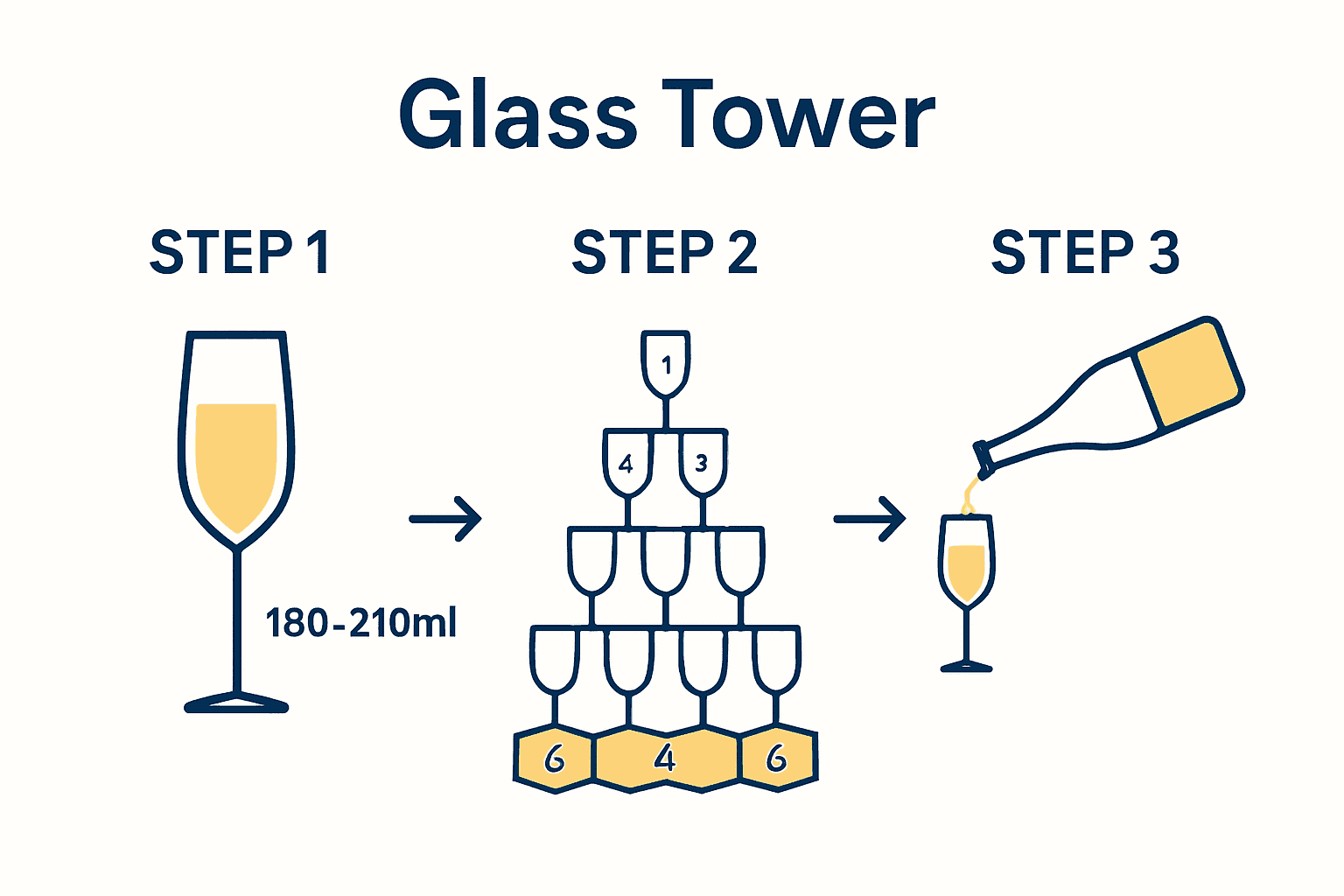
| 1. Choose the Right Glassware | Select crystal flutes that are of uniform height and width for stability and elegance, ideally between 180 to 210 millilitres. |
| 2. Strategically Place the Tower | Position the tower in a central, well-lit area, ensuring the surface is level and away from high traffic zones to prevent disruptions. |
| 3. Calculate Glass Quantities Precisely | For a 5-tier tower, use 55 flutes with 10, 9, 7, 5, and 4 glasses per tier, plus an extra 10% for breakages. |
| 4. Pour with Precision for Cascading Effect | Pour champagne from the bottom at a 45-degree angle, filling glasses two-thirds full to maintain structural integrity and reduce foam. |
| 5. Enhance Visual Presentation | Clean glasses thoroughly and add decorative elements like edible gold or fresh berries to transform the tower into a stunning centrepiece. |
Step 1: Select Premium Glassware and Ideal Location
Creating a spectacular champagne tower requires thoughtful selection of both glassware and venue placement. According to Basingstoke Government, choosing the right location is crucial for event success, considering factors like accessibility, space, and overall atmosphere.
When selecting glassware for your champagne tower, prioritise crystal champagne flutes with consistent height and width to ensure stability. Look for glasses with a narrow mouth and wider base, which helps create elegant structural integrity. Choosing The Right Glass For Your Champagne Tower Hire recommends selecting uniform glasses between 180 to 210 millilitres to maintain visual symmetry and structural balance.
Location selection demands strategic thinking. Position your champagne tower in a central, well-lit area with sufficient surrounding space to prevent accidental bumping. Ensure the surface is completely level and stable, preferably on a dedicated table or professional event platform. Avoid high traffic zones, proximity to dancing areas, or locations near young children to minimise potential disruptions or accidents. A carefully chosen location transforms your champagne tower from a mere beverage display into a stunning centrepiece that captivates your guests.
Step 2: Calculate Quantities and Arrange Tower Structure
Building a stunning champagne tower requires precise mathematical planning and strategic structural arrangement. Basingstoke Government emphasises the importance of meticulous event layout planning, which directly applies to creating an impressive champagne tower that captivates your guests.
To calculate tower quantities, start with a classic pyramid structure. A standard 5 tier tower typically requires 55 champagne flutes arranged in descending rows: 10 glasses on the base, then 9, 7, 5, and 4 glasses on subsequent tiers. Purchase approximately 10 percent more glasses than your calculated requirement to account for potential breakages or imperfect glasses. Measure each glass height precisely to ensure uniform alignment and stability throughout the tower.
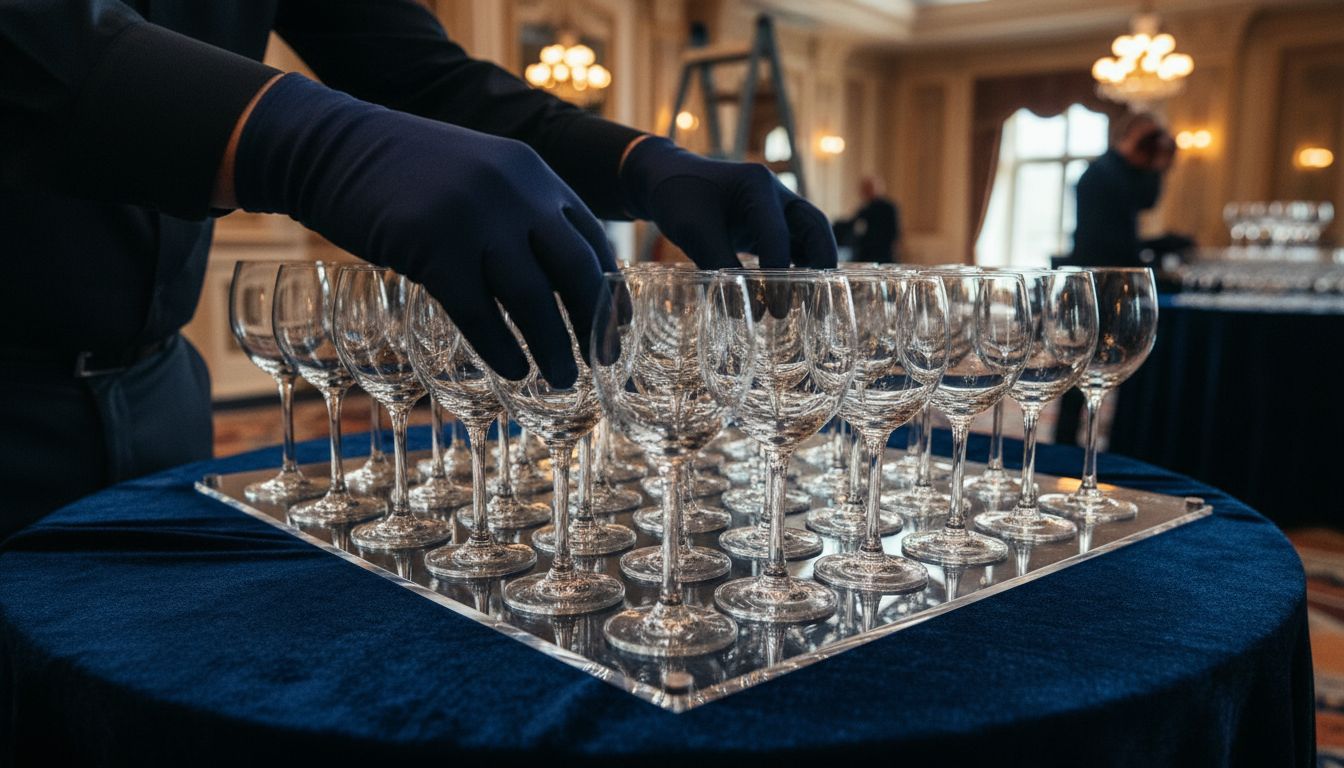
When arranging your tower, begin by selecting a completely flat surface with minimal vibration. Start from the bottom tier, placing glasses in a tight hexagonal formation to create maximum structural integrity. Carefully centre each subsequent tier directly above the previous layer, ensuring perfect symmetry and balance. Work slowly and methodically, using gentle movements to position each glass. Pro tip: consider using a professional champagne tower assembly board or template to guarantee precise placement and prevent potential structural collapses during your event.
Step 3: Prepare Champagne and Essential Enhancements
Preparing the perfect champagne tower involves more than just selecting beautiful glassware. According to Basingstoke Government, thoughtful beverage selection and preparation are crucial to enhancing guest experience during events. Ultimate guide to selecting the best Champagne drink for your celebration recommends choosing a high-quality champagne with consistent bubbling characteristics to ensure optimal tower performance.
When preparing champagne for your tower, chill bottles to approximately 7 to 10 degrees Celsius for optimal taste and effervescence. Open bottles carefully just before pouring to maintain carbonation and prevent excessive foam. Use a long champagne spoon or professionally designed pouring tool to create a smooth, controlled stream that minimises splashing and maintains the tower’s structural elegance. Begin pouring from the bottom tier, allowing champagne to cascade naturally through the subsequent levels.
To elevate your champagne tower, consider adding subtle enhancements like edible gold leaf, fresh strawberries, or delicate floral garnishes around the base. These thoughtful touches transform your tower from a mere beverage display into a stunning centrepiece that captures your guests’ imagination. Remember to prepare these decorative elements in advance and place them strategically to complement the tower’s design without compromising its structural integrity.
Step 4: Build the Champagne Tower Safely and Securely
Building a champagne tower demands meticulous attention to safety and structural integrity. Basingstoke Government emphasises comprehensive risk assessment and secure installation techniques for event setups. How to Set Up Champagne Tower for Luxury Events provides essential guidance for creating a stable and visually stunning display.
To ensure maximum safety, begin by wearing clean cotton gloves to prevent fingerprints and maintain glass cleanliness. Work slowly and methodically, using gentle pressure when placing each glass. Create a stable base by placing the first tier glasses extremely close together in a tight hexagonal formation. Apply minimal adhesive between glasses if needed, using food-safe glass mounting gel sparingly. Ensure each subsequent tier is precisely centred, with glasses touching at multiple contact points to distribute weight evenly and prevent potential collapse.
Crucial safety considerations include selecting a completely level surface away from high traffic areas, children, or potential sources of vibration. Test the tower’s stability by gently tapping the table and observing any movement. Consider having a backup set of glasses and a professional assembly board nearby in case of unexpected structural issues. Remember that patience and precision are your greatest allies when constructing this spectacular centrepiece.
Step 5: Pour Champagne for a Seamless Cascade Effect
Creating a breathtaking champagne tower cascade requires precision, technique, and understanding of fluid dynamics. Basingstoke Government highlights the importance of expert beverage service in enhancing guest experience. Step by Step Champagne Display for Elegant Events provides critical insights into achieving that perfect champagne flow.
Begin pouring at a controlled 45-degree angle directly into the bottom centre glass, allowing champagne to flow smoothly without excessive splashing. Use a long champagne spoon to guide the liquid and minimise foam formation. Pour slowly and consistently, filling each glass approximately two-thirds full to prevent overflow and maintain the tower’s structural elegance. The key is maintaining a steady, gentle stream that allows champagne to cascade naturally through each subsequent tier without disrupting the carefully constructed glass arrangement.
Pro tip: Chill your champagne to between 7 and 10 degrees Celsius before pouring, which helps control foam and ensures optimal taste.
 Practice your pouring technique beforehand to develop the muscle memory required for a flawless display. Remember that patience and a delicate touch are your greatest assets when creating this spectacular centrepiece that will undoubtedly become the focal point of your event.
Step 6: Inspect and Enhance Presentation for Maximum Impact
Transforming your champagne tower from a mere beverage display to a stunning visual spectacle requires meticulous attention to presentation details. Basingstoke Government emphasises strategic event presentation techniques that elevate visual appeal and thematic consistency. Champagne Tower Terminology: Complete Guide for Events offers valuable insights into creating a memorable display.
Begin your final inspection by carefully examining each glass for spotless clarity and perfect alignment. Use professional microfibre cloths to remove any fingerprints or water spots, ensuring each glass reflects light beautifully. Consider complementing your tower with strategic background elements like metallic trays, delicate floral arrangements, or carefully positioned mood lighting that accentuates the tower’s architectural elegance. Pay particular attention to colour coordination between your glassware, venue decor, and any additional decorative elements to create a cohesive visual narrative.
Critical presentation enhancements include adding subtle garnishes like edible gold leaf, fresh berries, or delicate sugar work around the tower’s base. These thoughtful touches transform your champagne tower from a functional beverage service into an artistic centrepiece that captivates and delights guests. Remember that the final presentation is about creating a multisensory experience that celebrates both visual sophistication and culinary craftsmanship.
Elevate Your Event with Bespoke Champagne Towers
Crafting a bespoke champagne tower can be a daring challenge that calls for precision, artistry, and impeccable planning. Whether you face the task of selecting the perfect uniform glassware, securing a stable location, or mastering the flawless cascade, every detail matters to transform your display into a captivating centrepiece. The article highlights key concepts such as structural integrity, elegant presentation, and seamless pouring techniques that event organisers strive to perfect but can sometimes find overwhelming.
This is where expert assistance makes a difference. At Champagne Tower Hire, we specialise in creating luxurious, custom-built champagne towers tailored exactly to your event’s needs with options for flowers, strawberries, and fully staffed setups. Whether for weddings, corporate celebrations, or private parties, our dedicated team ensures your tower is not only visually stunning but also safely and securely constructed. Explore insightful tips and customer experiences in our Uncategorized Archives and take the next step towards effortless sophistication today.
Why risk DIY stress when you can impress your guests with a flawless champagne tower designed by professionals? Visit https://champagnetowerhire.co.uk now to receive an instant quote and start planning a spectacular event centerpiece that will leave a lasting impression.
Frequently Asked Questions
What type of glassware is best for a champagne tower?
Selecting crystal champagne flutes with a consistent height and width is crucial for stability. Choose glasses with a narrow mouth and a wider base to ensure structural integrity; aim for glasses between 180 to 210 millilitres for visual symmetry.
How do I calculate the number of glasses needed for a champagne tower?
Start with a classic pyramid structure; for a standard 5 tier tower, you’ll need 55 glasses: 10 on the base, then 9, 7, 5, and 4 for subsequent tiers. Always purchase approximately 10 percent more glasses to account for any breakages or imperfections.
What is the ideal temperature for pouring champagne in a tower?
Chill your champagne to between 7 to 10 degrees Celsius for optimal taste and effervescence. Pouring at this temperature helps control foam and ensures a smooth champagne flow across the tower.
How can I enhance the presentation of my champagne tower?
Transform your tower’s appearance by adding garnishes like edible gold leaf, fresh berries, or floral accents around the base. Consider using complementary background elements such as metallic trays or ambient lighting to elevate the overall visual impact.
What precautions should I take while building a champagne tower?
Ensure you work on a completely level surface and create a stable base by placing the first tier glasses close together in a tight hexagonal formation. For added safety, test the stability by gently tapping the table and observe any movement before pouring champagne.


