

Glamorous celebrations often feature traditions that leave a lasting impression, and few displays capture attention like a champagne tower. British event planners and hosts have long admired the drama that comes with building these cascading pyramids. With origins tracing back to French aristocracy and a revival during the Roaring Twenties, over 60 glasses can dazzle at once in modern renditions. This look at champagne towers uncovers their rise from aristocratic luxury to iconic centrepieces of sophistication and festive flair.
Table of Contents
- Origins And Early Uses Of Champagne Towers
- Iconic Eras And Changing Designs Over Time
- Influence Of Hollywood And Royal Celebrations
- Champagne Towers At Modern Celebrations And Events
- Safety, Etiquette, And Event Planning Essentials
Key Takeaways
| Point | Details |
|---|---|
| Historical Significance | Champagne towers originated in 18th-century France, evolving into symbols of luxury and celebration during the Jazz Age. |
| Cultural Evolution | Over time, these displays adapted to reflect changing social dynamics and design aesthetics, from aristocratic exclusivity to modern accessibility. |
| Hollywood and Royal Influence | Their portrayal in films and royal events transformed champagne towers into powerful cultural symbols of elegance and festivity. |
| Modern Relevance | Today, champagne towers are versatile features at events, enhancing guest experiences and serving as striking visual centrepieces. |
Origins and Early Uses of Champagne Towers
Champagne towers emerged as a spectacular display of luxury and celebration during the 18th-century French aristocracy, representing far more than a mere beverage service. According to RegencyGarden, these elaborate structures were originally termed ‘champagne fountains’ or ‘pyramids of champagne,’ symbolizing opulence and social status.
The tradition truly blossomed during the Jazz Age of the 1920s and 1930s, when high-society gatherings transformed these towers into iconic entertainment centerpieces. As BubblesDontCount notes, Hollywood movies and extravagant parties of the Roaring Twenties elevated champagne towers from mere refreshment displays to symbols of sophistication and festivity.
These architectural beverage arrangements were not simply about serving drinks but represented a performative art form of hospitality. Event hosts would meticulously construct pyramids of crystal glasses, carefully balancing each tier to create a mesmerizing visual spectacle. When champagne was poured from the top, it would cascade gracefully through the carefully arranged glasses, creating a breathtaking display that captured the imagination of guests and signaled an extraordinary celebration.
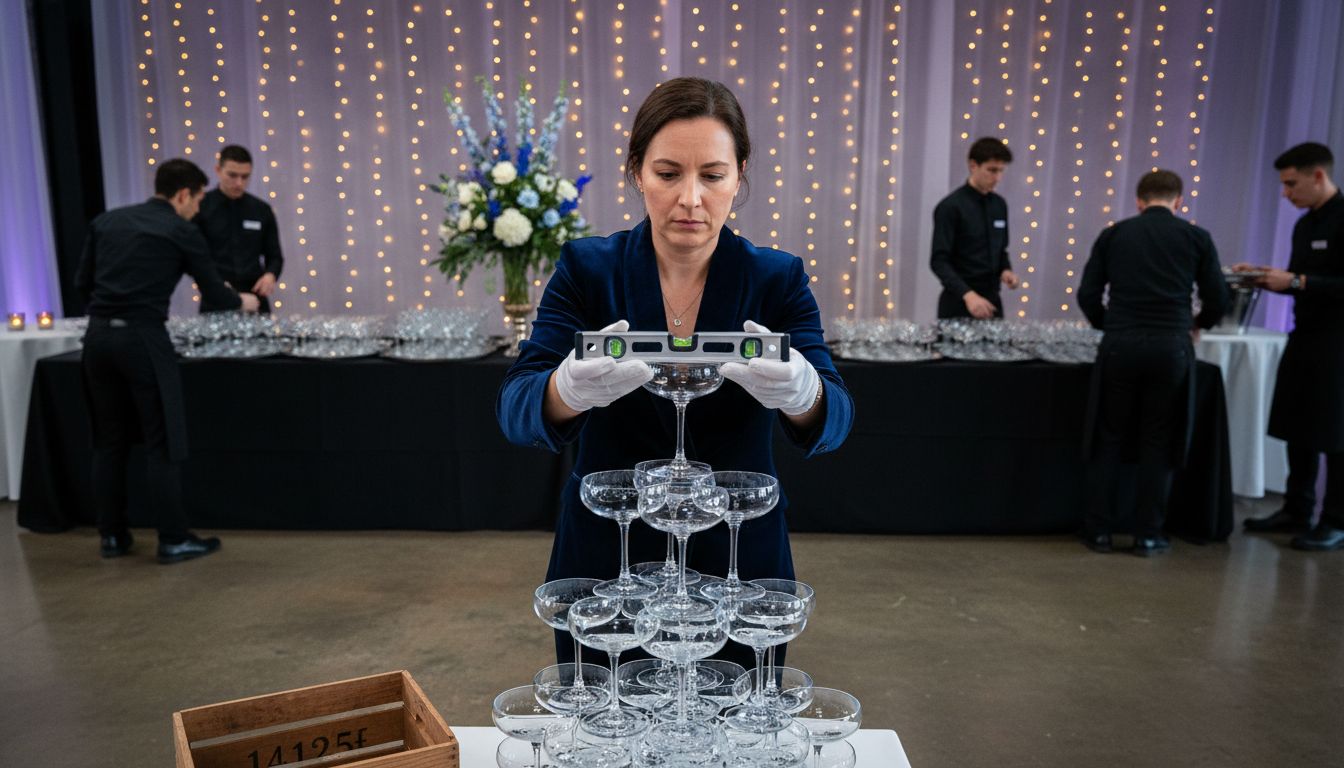
By integrating drama, engineering precision, and culinary artistry, champagne towers became more than a drink service. They transformed into a statement of elegance, wealth, and theatrical hospitality that continues to captivate event planners and guests alike. For more insights into the nuanced world of champagne towers, explore our guide on champagne tower terminology.
Iconic Eras and Changing Designs Over Time
Champagne towers experienced remarkable transformations across different social and cultural periods, reflecting the evolving aesthetics and entertainment styles of each era. RegencyGarden highlights that these structures reached peak popularity during the Jazz Age, adapting continuously to contemporary event design while maintaining their classic allure.
The post-World War II period marked a significant evolution in champagne tower design. According to BubblesDontCount, the 1950s in America saw a surge in popularity, with champagne towers symbolizing national optimism and prosperity. During this time, event designers began experimenting with glass types, tower heights, and structural complexity, moving beyond traditional pyramid shapes to more innovative architectural configurations.
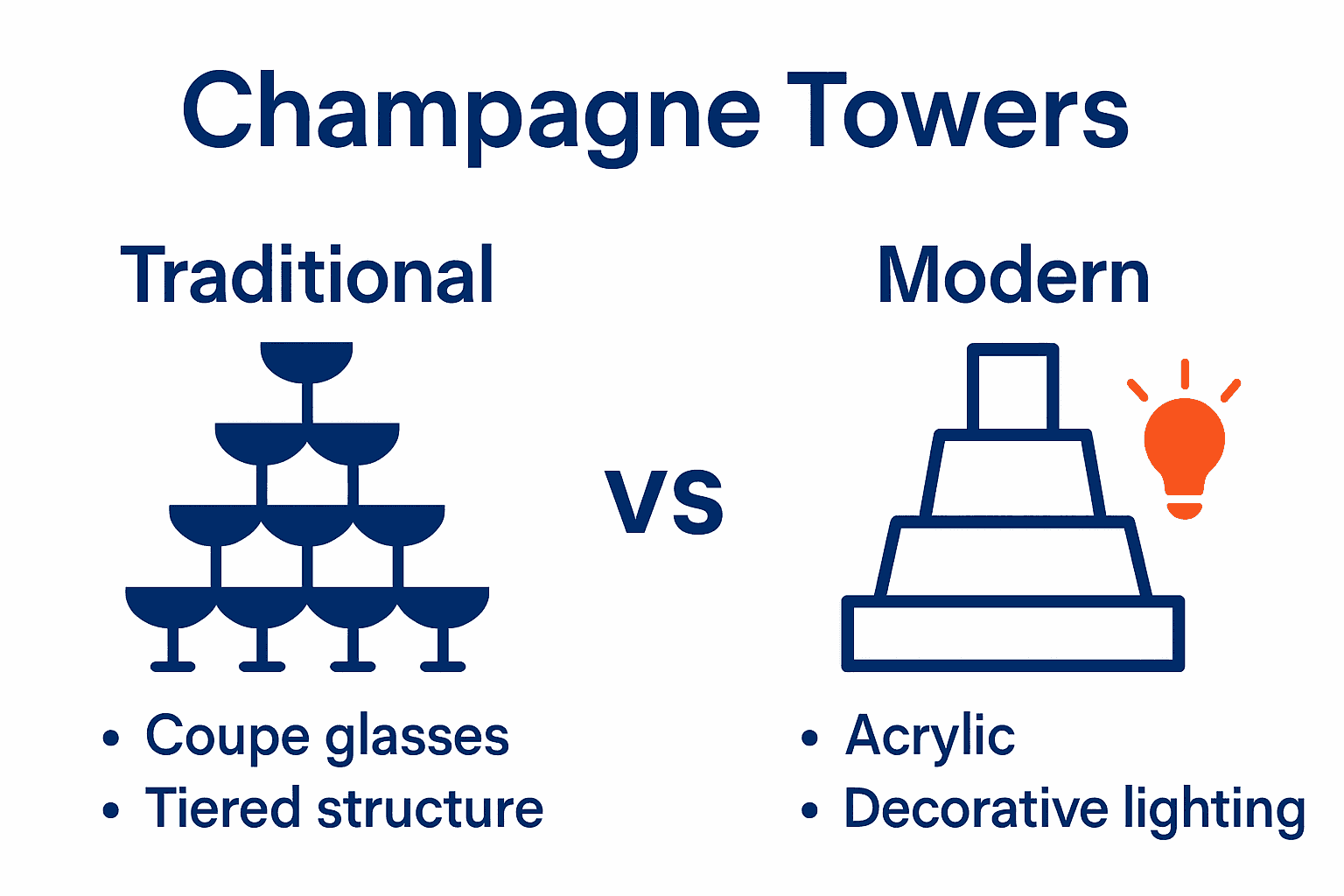
As social dynamics shifted through subsequent decades, champagne towers transformed from exclusive aristocratic displays to more accessible celebratory centerpieces. Event professionals started incorporating contemporary materials like acrylic, experimenting with non-traditional glass shapes, and creating towers that could accommodate larger gatherings. Modern designs now range from sleek, minimalist structures to elaborate, multi-tiered installations that serve as both functional beverage services and dramatic visual statements.
These evolving designs reflect broader cultural trends, with each era reimagining the champagne tower to suit its aesthetic sensibilities.
VIDEO:video_content] From the elegant Art Deco influences of the 1920s to today’s Instagram-ready spectacles, champagne towers continue to capture imagination and represent the pinnacle of celebratory sophistication. For a deeper understanding of these intricate designs, explore our [guide on champagne tower terminology, which offers insights into the nuanced world of these spectacular beverage displays.
Influence of Hollywood and Royal Celebrations
The champagne tower transcended its original aristocratic origins to become a powerful cultural symbol, deeply embedded in the visual narratives of Hollywood and royal celebrations. BubblesDontCount reveals how these spectacular displays became iconic visuals of abundance in early 20th-century entertainment, symbolizing an irresistible blend of elegance and festivity.
Hollywood’s golden era transformed champagne towers from mere beverage displays into cinematic metaphors of luxury and celebration. Classic films frequently featured these impressive structures as visual shorthand for opulence, using them to instantly communicate a character’s social status or the extravagance of a particular scene. RegencyGarden notes that the visual drama of a champagne tower creates an undeniably romantic and luxurious atmosphere, making it a perfect prop for capturing audience imagination.
Royal celebrations further elevated the champagne tower’s cultural significance, transforming it from a party accessory to a symbol of diplomatic sophistication and ceremonial grandeur. European royal weddings and state banquets began incorporating these intricate glass pyramids as statements of refinement, turning what was once a simple drink service into a carefully choreographed display of cultural prestige. The precision required to construct these towers mirrored the meticulous protocols of royal entertaining, with each carefully balanced glass representing a metaphorical bridge between tradition and spectacle.
Today, the legacy of these Hollywood and royal influences continues to inspire event planners and celebration designers. The champagne tower remains a powerful visual statement, bridging historical elegance with contemporary entertainment aesthetics. For those looking to understand the nuanced world behind these spectacular displays, our guide on champagne tower terminology offers deeper insights into this fascinating tradition.
Champagne Towers at Modern Celebrations and Events
The champagne tower has experienced a remarkable renaissance in contemporary event planning, transforming from a nostalgic tradition to a must-have centerpiece for sophisticated celebrations. RegencyGarden highlights that modern events are embracing these spectacular displays, offering a perfect blend of vintage charm and contemporary elegance that captivates guests across various occasions.
From lavish corporate events to intimate wedding receptions, champagne towers have become a strategic statement of luxury and entertainment. ConnectionsEntertainment reveals that contemporary setups have evolved dramatically, with some towers featuring up to 60 intricately arranged coupe glasses stacked in elaborate six-tier configurations. Event designers now enhance these displays with innovative touches like strategic lighting, floral arrangements, and custom decorative elements that transform the traditional champagne tower into a true visual spectacle.
The versatility of modern champagne towers extends beyond their visual appeal. Corporate events now use these displays as powerful networking and team-building tools, creating memorable moments that break traditional event formalities. Wedding planners have embraced them as interactive experiences, turning the classic champagne pour into a choreographed moment of celebration that generates stunning photographic opportunities and creates lasting memories for couples and their guests.
As event aesthetics continue to evolve, champagne towers remain a timeless yet adaptable feature of high-end celebrations. For event professionals looking to incorporate these spectacular displays into their next gathering, our guide on setting up champagne towers for luxury events offers comprehensive insights into creating the perfect memorable experience.
Safety, Etiquette, and Event Planning Essentials
Creating a champagne tower requires meticulous planning and professional expertise to ensure both visual spectacle and guest safety. ConnectionsEntertainment recommends hiring professional services specifically to guarantee stability and proper pouring techniques, minimizing potential accidents during these elaborate displays.
The selection of glassware plays a crucial role in the success of a champagne tower. TastingTable highlights the traditional use of coupe glasses, prized for their wide brims that allow champagne to overflow and cascade gracefully. These glasses are not just aesthetically pleasing but functionally designed to create the mesmerizing visual effect that makes champagne towers so captivating. Event planners must consider factors like glass thickness, rim uniformity, and structural integrity to ensure a flawless display.
Etiquette surrounding champagne towers involves more than just technical execution. It requires understanding the nuanced social dynamics of the event, knowing precisely when to initiate the pour, and managing guest expectations. Professional event coordinators must choreograph the moment carefully, ensuring the tower becomes a focal point of celebration without disrupting the event’s overall flow. This involves strategic positioning, timing, and creating an atmosphere of anticipation and excitement.
For event professionals seeking to master the art of champagne tower presentation, our guide on champagne tower etiquette provides comprehensive insights into creating seamless, memorable experiences that will leave a lasting impression on guests.
Elevate Your Event with the Timeless Elegance of Champagne Towers
Understanding the rich history and evolving spectacle of champagne towers reveals why they remain the ultimate symbol of celebration and sophistication. Whether you aim to captivate guests with the cascading beauty of traditional coupe glasses or seek a modern twist that fits your event’s unique style, the challenge lies in balancing grandeur with flawless execution. At Champagne Tower Hire, we transform this historic tradition into an unforgettable experience by crafting bespoke champagne displays tailored to your occasion. Our expert team handles every detail from custom-built towers to elegant garnishes ensuring your celebration is both safe and spectacular.
Discover how our premium service brings the glamorous legacy of champagne towers to life for weddings, corporate functions, or private parties. Browse through our Uncategorized Archives for inspiration and insights on creating remarkable events. Don’t miss the opportunity to impress your guests with a stunning champagne tower that blends history, style, and flawless execution. Visit Champagne Tower Hire today to get your instant quote and start planning a celebration that will be remembered for years to come.
Frequently Asked Questions
What are the origins of champagne towers?
Champagne towers originated in 18th-century French aristocracy, initially termed ‘champagne fountains’ or ‘pyramids of champagne.’ They symbolised luxury and social status at high-society gatherings.
How did champagne towers evolve over time?
Champagne towers evolved through different social eras, reaching peak popularity during the Jazz Age in the 1920s. Post-World War II, designs became more innovative, incorporating modern materials and elaborate configurations to suit contemporary tastes.
What role did Hollywood play in the popularity of champagne towers?
Hollywood transformed champagne towers into icons of luxury and celebration during its golden era. They became visual metaphors for opulence in films, symbolising elegance and festivity in various memorable scenes.
What are the essential safety tips for setting up a champagne tower?
To ensure safety, it is critical to hire professionals experienced in constructing champagne towers. Selecting suitable glassware, considering stability and pouring techniques, and choreographing the moment of pouring are vital to prevent accidents.


