

Most British luxury weddings demand centrepieces that combine style and practicality, yet over 60 percent of high-end planners cite unique beverage displays as key to guest satisfaction. For wedding professionals in London, the choice between glass and acrylic towers impacts not only the event’s visual narrative but also its atmosphere, safety, and sustainability. This guide highlights essential differences so you can create unforgettable champagne moments for discerning clients.
Table of Contents
- Defining Glass and Acrylic Towers
- Aesthetic Impact on Luxury Events
- Stability, Safety and Structural Integrity
- Durability and Maintenance Differences
- Environmental and Sustainability Factors
- Cost, Customisation and Visual Mistakes
Key Takeaways
| Point | Details |
|---|---|
| Material Selection | Choose between glass and acrylic towers based on desired visual impact, durability, and design flexibility. |
| Maintenance Considerations | Implement material-specific maintenance protocols to preserve aesthetics and structural integrity. |
| Sustainability Factors | Evaluate the environmental impact of materials, emphasising glass’s superior recyclability versus acrylic’s limitations. |
| Cost and Customisation | Assess total value, considering long-term durability and potential visual issues associated with acrylic customisations. |
Defining Glass and Acrylic Towers
Luxury wedding planners understand the nuanced differences between glass and acrylic towers, which serve as stunning centrepieces for sophisticated events. These structural display elements require careful consideration, with each material offering unique characteristics that impact visual appeal, durability, and overall event aesthetic.
Glass towers represent the pinnacle of elegance, crafted through precise engineering techniques that transform raw materials into transparent architectural marvels. Structural glass design principles reveal how manufacturers create robust yet delicate structures capable of supporting multiple champagne glasses while maintaining exceptional visual clarity. The material’s inherent properties allow for seamless transparency, creating an almost magical floating effect that captivates wedding guests.
Acrylic towers present an alternative solution with distinctive advantages. Technical material characteristics demonstrate that acrylic offers remarkable impact resistance and lightweight construction compared to traditional glass. Wedding professionals appreciate acrylic’s flexibility, as these towers can be manufactured in various shapes, colours, and sizes, providing greater design versatility for bespoke event experiences.
Expert Tip: When selecting between glass and acrylic towers, consider your venue’s specific lighting conditions and overall aesthetic to ensure the most stunning visual presentation for your luxury wedding champagne display.
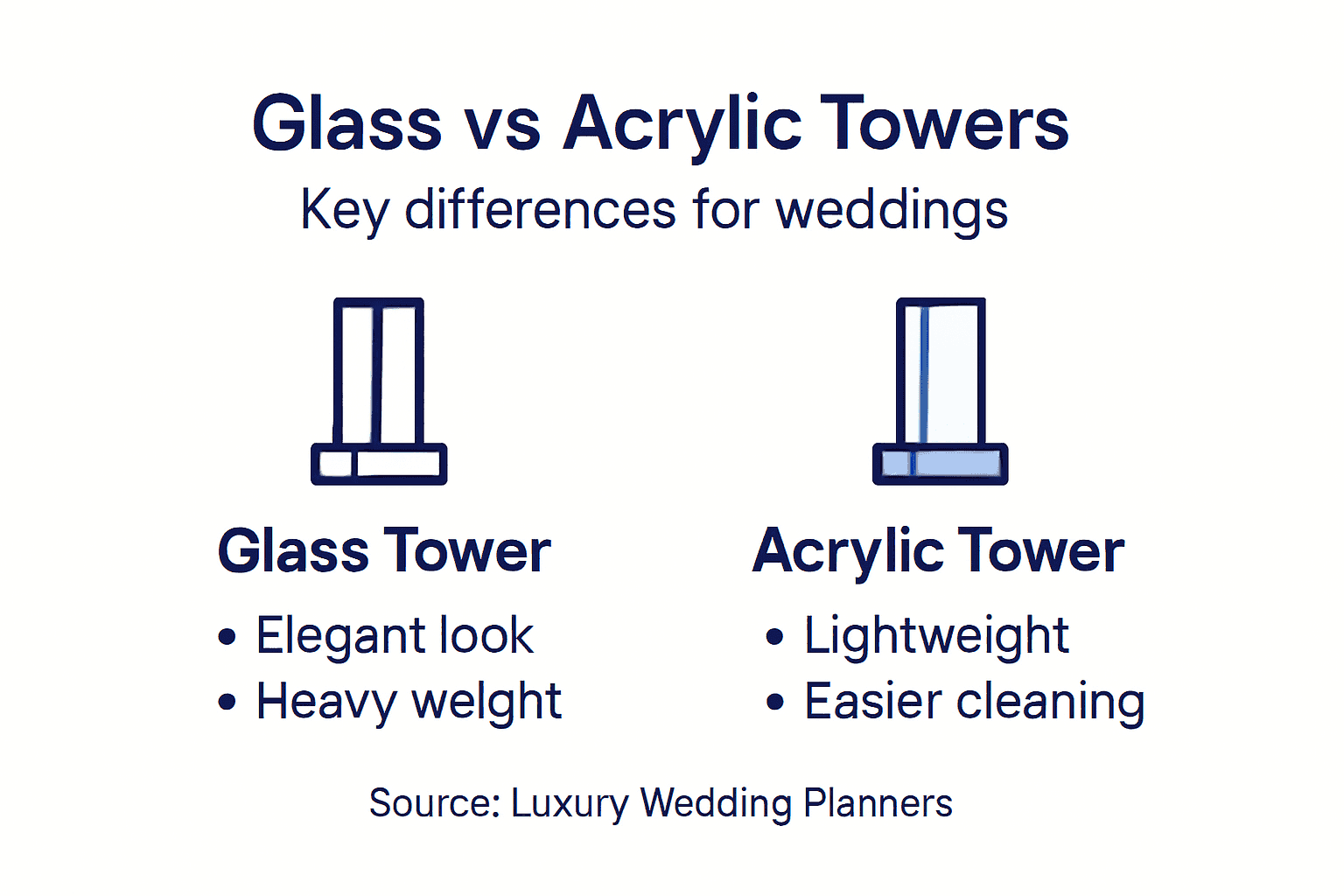
Here’s a concise comparison of key factors when choosing glass vs acrylic champagne towers for luxury events:
| Factor | Glass Tower | Acrylic Tower |
|---|---|---|
| Visual Clarity | Exceptional transparency | Slight optical distortion |
| Durability | Brittle, prone to breakage | Highly impact-resistant |
| Design Versatility | Limited shapes, clear only | Custom shapes and colours |
| Maintenance Needs | Allows stronger cleaners | Requires delicate cleaning |
| Sustainability | Widely recyclable, lower carbon | Limited recycling, petroleum |
| Cost | High, due to craftsmanship | Lower, more cost-effective |
| Weight | Heavy, needs careful handling | Lightweight, easy to transport |
| Safety Risks | Breaks into sharp fragments | Shatters rarely, safer edges |
Aesthetic Impact on Luxury Events
Centrepiece design plays a pivotal role in transforming wedding receptions from ordinary to extraordinary, with glass and acrylic towers emerging as sophisticated visual statements that define event aesthetics. These architectural elements do more than simply display champagne; they create immersive sensory experiences that capture guests’ imagination and set the tone for an unforgettable celebration.
Historical glass craftsmanship reveals the profound artistic heritage behind luxury event design, demonstrating how transparent materials can elevate visual storytelling. The intricate clarity and brilliance of professionally crafted glass towers reflect light in mesmerising patterns, creating dynamic visual landscapes that transform reception spaces into elegant showcases of refined taste.
Modern wedding designers understand that material selection goes beyond mere functionality. Glass artistry techniques showcase how carefully chosen display structures communicate sophistication, with each tower serving as a sculptural element that complements the event’s overall design narrative. The interplay of light, transparency, and structural form allows these towers to become more than mere champagne holders—they emerge as artistic statements that reflect the couple’s aesthetic sensibilities.
Each tower becomes a carefully choreographed design element, capable of reflecting venue lighting, creating visual depth, and establishing focal points that draw guests’ attention. The strategic placement of these transparent structures can manipulate spatial perceptions, making reception areas feel simultaneously intimate and expansive.
Pro Tip: Consider the venue’s lighting design and colour palette when selecting glass or acrylic towers to ensure they harmonise seamlessly with the overall wedding aesthetic.
Stability, Safety and Structural Integrity
Ensuring the structural integrity of champagne towers represents a critical consideration for luxury wedding professionals, where aesthetic appeal must be meticulously balanced with rigorous safety standards. The potential for catastrophic failure during a high-profile event demands comprehensive engineering approaches that prioritise both visual elegance and mechanical reliability.
Structural glass engineering principles reveal sophisticated techniques for creating robust display structures that can withstand the dynamic environments of wedding celebrations. Laminated and toughened glass technologies provide exceptional strength, reducing brittleness and implementing critical safety mechanisms that prevent sudden structural collapse. These advanced manufacturing processes transform delicate transparent materials into reliable architectural elements capable of supporting multiple champagne glasses without compromising aesthetic integrity.
Safety protocols for temporary structures emphasise the importance of professional installation and ongoing maintenance. Wedding planners must collaborate with certified technicians who understand the nuanced requirements of constructing stable towers, including precise foundation preparation, strategic weight distribution, and comprehensive stability assessments. The selection of materials, connection methods, and supporting frameworks becomes paramount in creating displays that are not just visually stunning but inherently secure.
Modern champagne tower design integrates multiple safety considerations, including load-bearing calculations, environmental stability factors, and potential guest interaction risks. Professionals must assess surface conditions, potential movement areas, and implement discrete stabilisation mechanisms that remain invisible to event attendees while providing robust structural support.
Pro Tip: Always request a professional structural assessment and installation verification for champagne towers to guarantee maximum safety and prevent potential event disruptions.
Durability and Maintenance Differences
Luxury wedding professionals must carefully evaluate the distinctive durability characteristics of glass and acrylic materials, recognising that each substrate demands unique maintenance strategies to preserve its pristine aesthetic throughout an event. The choice between these materials extends far beyond initial visual appeal, encompassing long-term performance and resilience under varying environmental conditions.
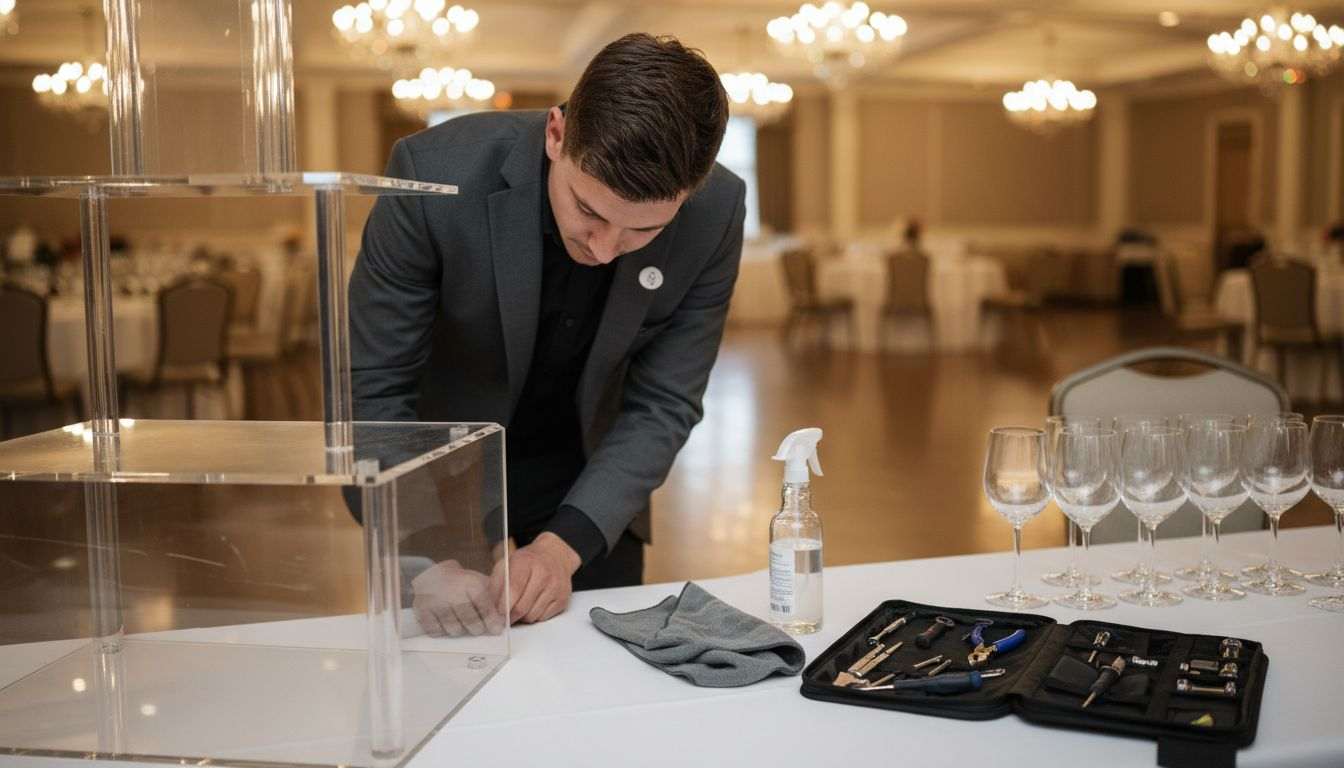
Acrylic material specifications reveal nuanced insights into material vulnerability and maintenance requirements. Acrylic towers demonstrate remarkable impact resistance but remain susceptible to surface scratching and potential chemical degradation. Wedding planners must implement careful handling protocols, avoiding abrasive cleaning materials and ensuring gentle maintenance techniques that protect the tower’s delicate transparent surface.
Glass structural defect identification highlights the complex manufacturing challenges inherent in creating flawless glass structures. Unlike acrylic, glass presents different maintenance considerations, including potential surface imperfections like bubbles or micro-knots that can compromise structural integrity. Professional-grade glass towers require meticulous initial selection and ongoing inspection to ensure optimal performance and aesthetic consistency throughout an event.
The comparative maintenance profiles of glass and acrylic towers demand sophisticated understanding. Acrylic requires softer cleaning cloths, avoiding harsh chemicals, while glass tolerates more rigorous cleaning methods but demands careful handling to prevent potential structural microfractures. Temperature fluctuations, humidity levels, and physical handling also play critical roles in determining each material’s long-term durability and visual presentation.
Pro Tip: Develop a material-specific maintenance protocol with your event technicians, accounting for the unique care requirements of glass and acrylic towers to preserve their structural integrity and visual brilliance.
Below is a summary of common maintenance challenges and solutions for glass and acrylic towers:
| Material | Frequent Issues | Ideal Cleaning Technique | Precautionary Measures |
|---|---|---|---|
| Glass | Surface defects, microfractures | Ammonia-based glass cleaner | Inspect for cracks |
| Acrylic | Scratches, chemical sensitivity | Microfibre cloth, mild soap | Avoid harsh chemicals |
Environmental and Sustainability Factors
Sustainability has become a critical consideration for luxury wedding professionals, driving a profound reevaluation of material choices that balance aesthetic excellence with environmental responsibility. The selection between glass and acrylic towers now extends beyond visual appeal, encompassing a comprehensive assessment of ecological impact and long-term environmental performance.
Innovative glass recycling techniques demonstrate remarkable potential for circular design, revealing glass’s capacity for sustainable reuse and reduced carbon footprint. Advanced manufacturing processes now enable glass structures to be deliberately engineered for future recyclability, transforming what was once considered a single-use material into a potentially regenerative design solution for event infrastructure.
Glass production environmental considerations highlight the complex energy dynamics involved in material creation. Manufacturers are increasingly implementing energy-efficient production methods, reducing embodied carbon and minimising environmental impact. Acrylic, by contrast, presents different sustainability challenges, typically deriving from petroleum-based resources and offering more limited recycling potential compared to glass’s inherent recyclability.
Modern wedding design increasingly demands materials that tell a comprehensive story of environmental stewardship. The choice between glass and acrylic towers now reflects not just aesthetic preferences but a commitment to responsible event design, where each structural element represents a conscious decision towards minimising ecological impact and supporting sustainable practices.
Pro Tip: Consult with your champagne tower provider about their specific sustainability practices, requesting detailed information about material sourcing, manufacturing processes, and end-of-life recycling options.
Cost, Customisation and Visual Mistakes
Luxury wedding professionals must navigate a complex landscape of material selection, balancing aesthetic aspirations with budgetary constraints and technical feasibility. The choice between glass and acrylic towers involves nuanced considerations that extend far beyond initial purchase price, encompassing customisation potential, long-term value, and potential visual compromises.
Glass production cost factors reveal the intricate economics behind creating bespoke towers. Raw material expenses, energy consumption, and manufacturing complexity significantly influence pricing, with custom glass designs demanding premium investment. Sophisticated glass towers require precision engineering, meaning each unique configuration represents a substantial financial commitment that reflects the material’s inherent craftsmanship.
Acrylic customisation techniques offer more flexible and cost-effective alternatives for wedding professionals seeking tailored solutions. Acrylic’s malleable nature allows for easier cutting, shaping, and colour modification, presenting lower-cost customisation opportunities. However, wedding planners must remain vigilant about potential visual defects such as surface scratching, masking residue, and potential optical distortions that could compromise the tower’s elegant presentation.
Ultimately, the selection between glass and acrylic towers transcends mere price comparison. Sophisticated event designers consider holistic value propositions, evaluating how each material’s unique characteristics align with the wedding’s aesthetic vision, budgetary parameters, and desired visual impact. The most successful implementations seamlessly integrate material properties with design intent, creating memorable centrepieces that feel both luxurious and purposefully crafted.
Pro Tip: Request material samples and detailed quotations from multiple providers, comparing not just initial costs but also customisation capabilities, potential visual limitations, and long-term aesthetic performance.
Elevate Your Wedding with Stunning Champagne Towers
Choosing between glass and acrylic towers involves balancing elegance, durability, and safety to create a memorable luxury wedding experience. At Champagne Tower Hire, we understand the importance of selecting the perfect champagne display that complements your venue’s lighting and aesthetic while ensuring flawless structural integrity and visual impact.
Our bespoke service offers expertly crafted towers tailored to your event’s unique style and requirements. Whether you desire the crystal clarity of glass or the versatile design possibilities of acrylic, our fully staffed setups guarantee a seamless experience. Discover how our premium champagne towers transform receptions into elegant celebrations by visiting our Uncategorized Archives, where you can explore inspirational ideas and technical insights. Ready to create an unforgettable centrepiece that truly captivates your guests? Contact us today at Champagne Tower Hire for a personalised quote and make your luxury wedding vision a dazzling reality.
Frequently Asked Questions
What are the main differences between glass and acrylic towers for weddings?
Glass towers offer exceptional transparency and elegance but are brittle and require careful handling. In contrast, acrylic towers are impact-resistant, lightweight, and available in various shapes and colours, making them more versatile for custom designs.
How do the maintenance requirements differ for glass and acrylic towers?
Glass towers can tolerate stronger cleaning methods but require careful handling to avoid microfractures. Acrylic towers need softer cleaning cloths and must avoid harsh chemicals to prevent scratches and surface degradation.
What factors should I consider when selecting between glass and acrylic towers for my wedding?
Consider the venue’s lighting, overall aesthetic, and safety requirements. Glass towers create a stunning visual impact but are heavier, while acrylic towers offer design versatility and lower weight, making them easier to transport and install.
Are glass towers more environmentally friendly than acrylic towers?
Yes, glass towers are widely recyclable and can be engineered for future recyclability, whereas acrylic is typically derived from petroleum-based resources and has limited recycling potential, making glass a more sustainable option.
Recommended
- Why Choose Glass Towers for Elegant Events
- 7 Examples of Luxury Wedding Trends for UK Planners – Champagne Tower Hire
- Role of Visual Displays at Weddings – Creating Luxury Moments
- Champagne Towers Glass on Glass Trend for 2023 – Champagne Tower Hire
- How Long Do Guests Stay at a Destination Wedding in Texas Hill Country?


