

More than half of British luxury weddings feature striking beverage displays, yet selecting the right champagne glass type can define the success of an entire celebration. For wedding planners and top event coordinators, curating champagne towers requires a nuanced understanding of both aesthetics and engineering. This guide uncovers the glassware secrets behind unforgettable towers, offering practical insight for those who elevate British event experiences with refined, one-of-a-kind presentations.
Table of Contents
- Defining Glass Types For Champagne Towers
- Popular Glass Variations And Their Features
- Key Performance Factors: Stability And Function
- Customisation And Decorative Options For Events
- Common Pitfalls When Selecting Tower Glasses
Key Takeaways
| Point | Details |
|---|---|
| Understanding Glass Types | Choosing the right glass type (Coupe, Flute, Tulip) is crucial for aesthetic appeal and functional performance in champagne towers. |
| Material Matters | Opt for high-quality crystal or standard glass based on the event’s tone and budget to ensure both durability and elegance. |
| Stability is Key | Conduct preliminary stacking tests to ensure glasses maintain structural integrity and aesthetic alignment throughout the event. |
| Customisation Enhances Appeal | Incorporate decorative elements that complement the overall theme to elevate the visual impact of the champagne tower. |
Defining Glass Types for Champagne Towers
When creating a stunning champagne tower for UK events, understanding the nuanced world of glassware becomes paramount. Different glass types offer unique characteristics that significantly impact the visual appeal and functional performance of your tower. Champagne glass designs have evolved dramatically, presenting event professionals with multiple stylistic and practical options.
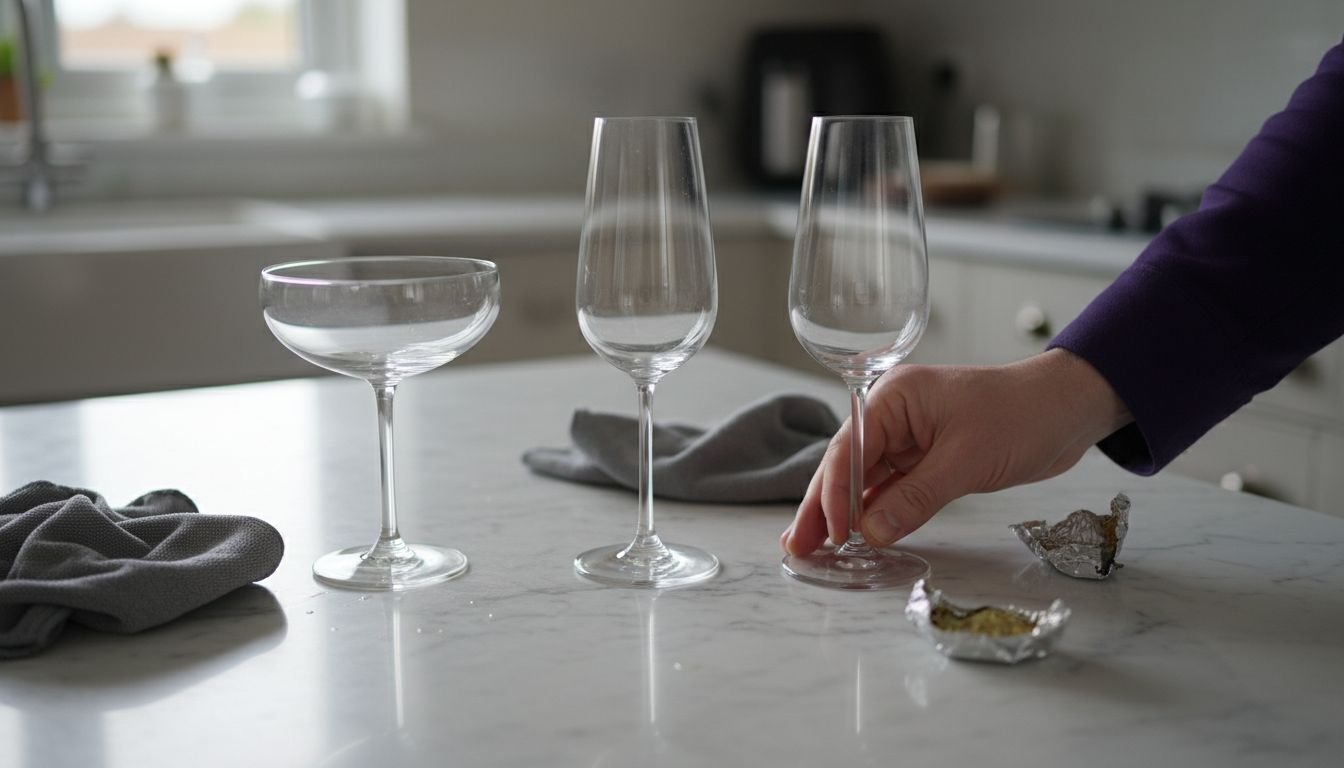
Traditionally, three primary glass types dominate champagne tower construction: the coupe, the flute, and the modern tulip glass. The classic coupe glass, with its wide, shallow saucer-like shape, originated in the early 20th century and provides a dramatic, vintage aesthetic perfect for elegant weddings and corporate celebrations. Flute glasses offer a more contemporary approach, featuring tall, narrow profiles that showcase the effervescence of champagne and create precise, uniform stacking patterns. The tulip glass represents the most recent innovation, with a slightly curved design that enhances aroma retention and provides superior structural stability for tower construction.
Material selection plays an equally critical role in glass selection. Professional event planners typically choose between crystal and standard glass, each offering distinct advantages. Crystal glasses provide exceptional clarity, brilliant light refraction, and a weightier feel that communicates luxury. Standard glass, while more affordable, can still deliver impressive visual impact when selected thoughtfully. Factors like thickness, rim symmetry, and overall construction quality determine how successfully glasses will stack and maintain structural integrity throughout an event.
Pro Tip for Tower Success: Always conduct a preliminary stacking test with your selected glasses before the event, ensuring uniform rim sizes and checking for any subtle variations that might compromise your champagne tower’s stability and aesthetic appeal.
Here’s a concise comparison of the three main champagne glass types for tower construction:
| Glass Type | Key Visual Impact | Stacking Stability | Champagne Experience |
|---|---|---|---|
| Coupe | Vintage appeal | Moderate, wide rim | Softer, quicker aroma development |
| Flute | Modern elegance | High, narrow rim | Preserves bubbles and clarity |
| Tulip | Balanced sophistication | Excellent, curved profile | Enhanced aromas and bubble retention |
Popular Glass Variations and Their Features
Champagne glasses represent more than mere drinking vessels – they are architectural elements that define the sensory experience of sparkling wine service. Comprehensive glassware guides reveal nuanced differences between glass types that can dramatically transform event presentation and guest experience.
Three primary glass variations dominate professional champagne tower design: coupe, flute, and tulip glasses. The classic coupe glass, with its broad, shallow silhouette, originated in the 1930s and provides a vintage aesthetic perfect for retro-themed events. Its wide rim allows rapid champagne oxidation, creating a softer flavour profile ideal for sweeter sparkling wines. Flute glasses, characterised by their tall, narrow design, represent the most traditional option, showcasing champagne’s vibrant bubbles and maintaining carbonation brilliantly. The modern tulip glass offers a sophisticated compromise, featuring a gentle curve that concentrates aromas while providing superior bubble retention and visual elegance.
Material composition further distinguishes these glass variations. High-end crystal glasses deliver exceptional clarity and light refraction, creating stunning visual displays during champagne tower presentations. Standard glass options provide more affordable alternatives without significantly compromising aesthetic impact. Professional event planners often select glasses with uniform rim diameters and consistent wall thickness to ensure stable, symmetrical tower construction.
The table below summarises top glass material choices and their suitability for events:
| Material | Visual Qualities | Durability | Event Suitability |
|---|---|---|---|
| Crystal | Brilliant clarity, sparkle | Lower | Upscale, formal celebrations |
| Standard Glass | Clean appearance, affordable | Higher | Large, casual, or outdoor events |

Pro Tip for Glass Selection: Always test stack compatibility by creating a small trial tower beforehand, checking for rim alignment and structural integrity to prevent potential collapse during your actual event performance.
Key Performance Factors: Stability and Function
Champagne tower design transcends aesthetic considerations, demanding meticulous engineering and scientific understanding of glass performance. Advanced fluid dynamics research reveals intricate relationships between glass shape, structural integrity, and functional performance that are critical for successful event execution.
Structural stability represents the primary performance metric for champagne tower glasses. Optimal tower construction requires glasses with consistent rim diameters, uniform wall thickness, and precise geometric symmetry. The base diameter, rim width, and overall glass profile dramatically influence a tower’s potential for vertical stacking. Narrow-rimmed flute glasses typically provide superior stacking capabilities, while wider coupes demand more strategic placement and carefully calculated weight distribution. Professional event planners must assess each glass type’s inherent structural characteristics, understanding how minute variations can compromise entire tower designs.
Beyond physical stability, glass performance encompasses sensory elements that enhance the champagne drinking experience. Scientific investigations into glass characteristics demonstrate how specific glass geometries impact bubble formation, aroma concentration, and carbonation preservation. Tulip-shaped glasses excel in these parameters, offering a delicate balance between visual appeal and functional sophistication. Their gently curved profiles concentrate aromatic compounds while maintaining optimal bubble dynamics, creating a superior sensory experience that elevates the entire champagne tower presentation.
Pro Tip for Tower Engineering: Conduct a comprehensive preliminary assessment by creating a small-scale test tower, systematically evaluating each glass type’s stacking potential, weight distribution, and structural resilience before your actual event setup.
Customisation and Decorative Options for Events
Elevating a champagne tower from a mere beverage display to a true centrepiece requires strategic aesthetic considerations and creative design elements. Creative wedding decor ideas can transform standard glassware into a stunning visual narrative that captivates event guests and reflects the unique personality of the celebration.
Customisation options for champagne towers extend far beyond traditional glass selections. Decorative embellishments like edible gold leaf rim treatments, personalised glass etching, and colour-coordinated glass collections enable event planners to align tower designs precisely with event themes. Elegant additions such as fresh floral garlands cascading between glass levels, strategically placed fairy lights, or custom-coloured glass bases can dramatically enhance the tower’s visual impact. Corporate events might incorporate branded elements, while weddings could feature romantic touches like delicate pearl accents or metallic rim detailing.
Material selection plays a crucial role in creating a cohesive decorative statement. Crystal glasses with subtle iridescent finishes offer a luxurious shimmer, while matte-finished glasses provide a contemporary, understated elegance. Metallic rim treatments in rose gold, platinum, or champagne tones can complement specific colour palettes, transforming the champagne tower from a functional item into a true design focal point. Professional event stylists often recommend selecting decorative elements that create visual depth and texture, ensuring the tower becomes an unforgettable architectural statement.
Pro Tip for Decorative Mastery: Always conduct a comprehensive mock-up of your champagne tower design, testing how decorative elements interact with lighting, venue aesthetics, and overall event styling to ensure a seamless, sophisticated presentation.
Common Pitfalls When Selecting Tower Glasses
Champagne tower design requires meticulous attention to detail, with glass selection representing a critical decision point that can make or break an event’s success. Comprehensive event glassware strategies highlight the nuanced challenges professionals face when curating the perfect glass collection for spectacular tower displays.
One of the most prevalent selection errors involves prioritising aesthetic appeal over functional performance. Event planners frequently choose glasses based on visual charm alone, overlooking crucial structural considerations such as rim consistency, wall thickness, and stacking compatibility. Mismatched glasses can create catastrophic tower instability, risking dramatic collapses that transform elegant displays into memorable disasters. Professionals must meticulously evaluate each glass’s geometric precision, checking for uniform diameter measurements, balanced weight distribution, and predictable stacking characteristics that ensure structural integrity throughout the event.
Material quality represents another significant pitfall in glass selection. Inexperienced event coordinators often select budget glassware without considering crucial durability factors. Crystal glasses might appear luxurious, but their delicate nature can compromise tower stability, while industrial-grade glasses might lack the refined aesthetic required for upscale events. The ideal selection balances structural robustness with visual sophistication, considering factors like glass thickness, manufacturing consistency, and potential stress points that could compromise the tower’s overall performance. Temperature variations, handling procedures, and transportation logistics further complicate glass selection, demanding a holistic approach to material evaluation.
Pro Tip for Glass Selection Mastery: Always conduct a comprehensive stress test by constructing a small preliminary tower, systematically assessing each glass type’s structural reliability and identifying potential failure points before your actual event setup.
Enhance Your Event with Expert Champagne Tower Solutions
Understanding the subtle differences between coupe, flute, and tulip glasses is essential for anyone looking to create a stable, visually stunning champagne tower. Whether you are worried about stacking stability or seeking to amplify the sensory experience of your sparkling wine service, the challenges of selecting the right glass type can be overwhelming. Key considerations like rim uniformity, material quality, and structural integrity must be addressed to avoid disappointing mishaps that detract from your event’s elegance.
At Champagne Tower Hire, we specialise in transforming your vision into a flawless champagne tower display that perfectly balances aesthetic sophistication with practical stability. From bespoke, crystal-clear towers to custom decorative options, our professional team ensures every glass meets rigorous standards, eliminating the guesswork in glass selection. Explore insights and success stories in our Uncategorized Archives – Champagne Tower Hire for expert guidance and inspiration.
Do not risk your event’s centrepiece with unsuitable glassware complexities. Visit https://champagnetowerhire.co.uk now to secure a luxurious and dependable champagne tower hire service designed to elevate your UK event. Request an instant quote today and experience the difference true expertise makes.
Frequently Asked Questions
What are the different types of glasses used for champagne towers?
The three primary types of glasses for champagne towers are the coupe, flute, and tulip glass. Each offers unique visual appeal and functional characteristics for stacking and serving champagne.
How does the shape of champagne glasses affect stacking stability?
The shape of champagne glasses influences their stacking stability. Flute glasses, with their narrow rims, provide superior stacking capabilities, while wider coupe glasses require more strategic placement for stability.
What material should I choose for champagne glasses in a tower?
You can choose between crystal and standard glass. Crystal offers exceptional clarity and a luxurious feel, while standard glass is more affordable and can still provide impressive visual impact when selected carefully.
What factors should I consider when designing a champagne tower?
Consider the glass type, material quality, stacking stability, and aesthetic elements such as decorative embellishments to enhance the visual appeal and ensure the structural integrity of your champagne tower.
Recommended
- Glassware Types Explained: Elevating Event Experiences – Champagne Tower Hire
- Glassware Selection: Everything You Need to Know – Champagne Tower Hire
- Champagne Tower Hire UK: Complete Guide for Events – Champagne Tower Hire
- Champagne Towers in Luxury Marketing
- 6 Types of Solar Water Heater Explained for UK Homes – Skan Plumbing & Heating
- The Role of Color in Architecture: A 3D Color Wheel Guide


