

TL;DR:
- Event sophistication combines emotional resonance, intentional design, and flawless delivery to create memorable experiences.
- Layered lighting, premium textures, and staffed experiential focal points elevate the event’s atmosphere without increasing costs.
Event sophistication is the deliberate integration of emotional resonance, intentional design, and flawless operational delivery to create an experience guests feel as much as they see. It is not about spending more. It is about choosing better. For UK organisers, three levers create it immediately:
- Layered lighting: swap uniform overhead lighting for ambient, accent, and dynamic phase cues that shift as the event progresses.
- Premium textures and tableware: linen napkins, crystal glassware, and tactile centrepieces signal quality before a single word is spoken.
- An experiential focal point with staffed delivery: a champagne tower, for instance, creates a dramatic visual anchor and a shared guest moment, but only when it is installed, managed, and poured by a dedicated crew.
Read the logistics and safety sections below before briefing any supplier on an experiential display.
Table of Contents
- What does event sophistication really mean in practice?
- Which design choices create a genuinely sophisticated atmosphere?
- Champagne towers vs. prosecco fountains: which experiential feature fits your event?
- What logistics and safety steps do UK planners need for experiential displays?
- What questions should you ask a champagne tower supplier?
- Key takeaways
- Why the “show” is only half the job
- Champagnetowerhire: turnkey champagne tower hire across the UK
- Useful sources and further reading
What does event sophistication really mean in practice?
Sophistication is integration, not excess. Three pillars hold it together, and weakness in any one collapses the whole effect.
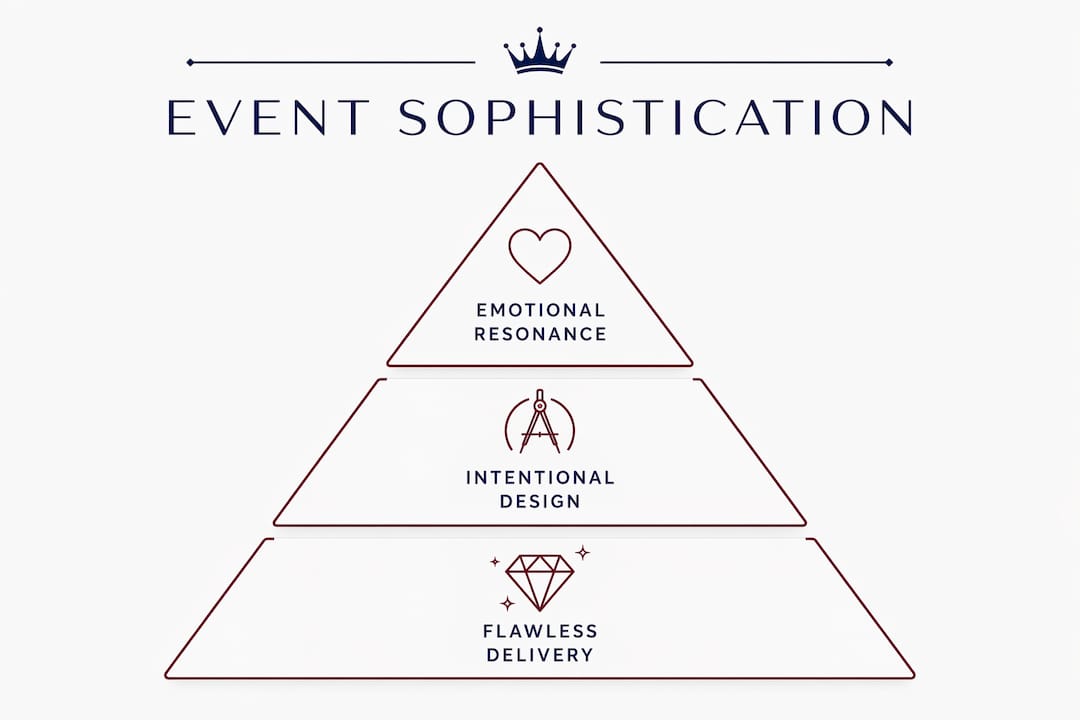
Emotional resonance starts with guest psychology. Comfort, clarity, and inclusivity are not soft extras; they are the metrics by which guests unconsciously judge an event. A room that is too dark to read a menu, a seating plan that isolates unfamiliar guests, or a bar queue that stalls the post-ceremony flow all erode the feeling of luxury regardless of how beautiful the florals are. Planners who place guest experience on equal footing with aesthetics consistently produce more memorable events.
Intentional design means every visual choice serves a coherent emotional aim. Cohesive colour palettes, considered focal points, and materials that interact well with light all contribute. Design, story, and execution are what convert a simple gathering into a luxury experience, not décor alone.
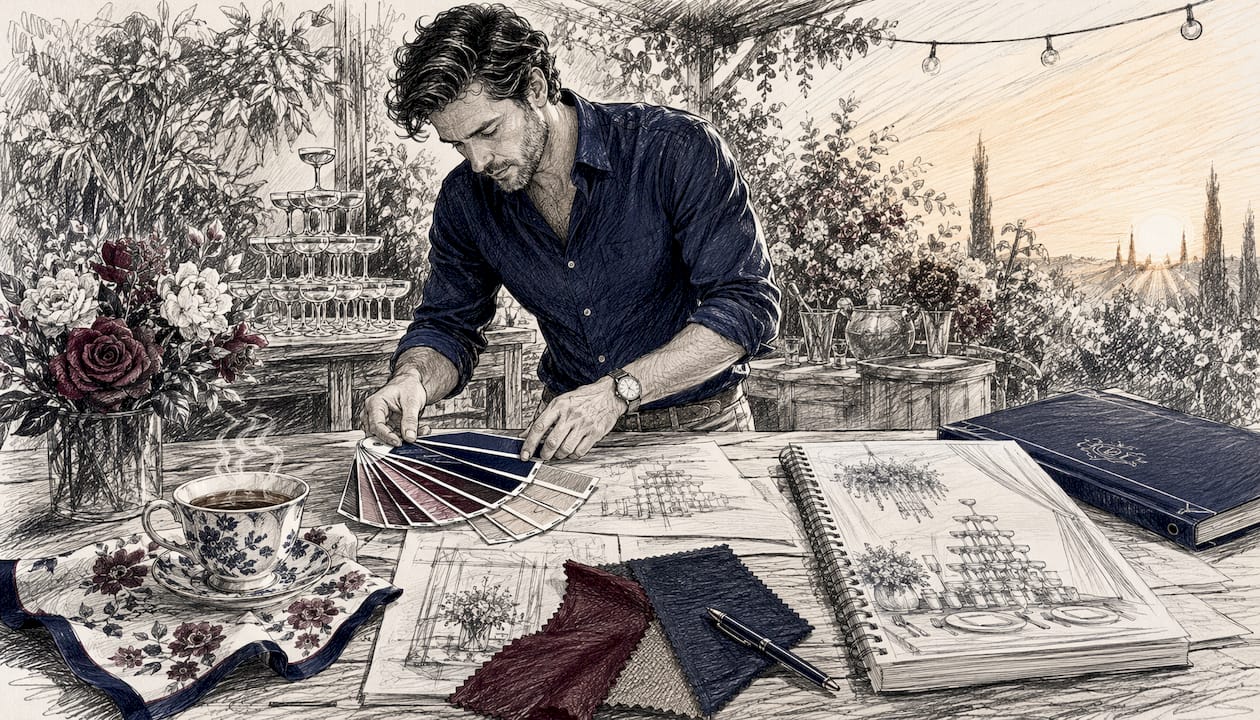
Flawless delivery is the invisible infrastructure. Timing, staffing ratios, and contingency plans let guests enjoy the experience without sensing the effort behind it. As Matthew Strange, Creative Director at MGN Events, puts it:
Which design choices create a genuinely sophisticated atmosphere?
Multi-layered lighting is the single highest-impact design lever available to any UK planner. At minimum, build three layers: ambient (overall room fill), accent (highlighting focal points and table centres), and dynamic phase lighting that shifts cue as the event moves from arrival through dining to dancing. Bright, uniform lighting removes depth and atmosphere; a layered scheme creates it.
Material and texture choices work in tandem with light. Quality materials and cohesive palettes are repeatedly cited as high-impact styling levers. Practically, this means:
- Soft fabrics (velvet runners, linen napkins) that absorb and diffuse light rather than reflect it harshly.
- Metallic surfaces on centrepieces or candelabras that amplify warm glow without overwhelming the palette.
- Glass elements (crystal glassware, lanterns) that add subtle sparkle at eye level.
- Natural materials (stone, wood, dried botanicals) that ground the scheme and add warmth.
Colour palette and florals should be restrained and cohesive. A ceremony phase might use ivory and sage; the reception shifts to deeper burgundy and candlelight gold. Florals reinforce the emotional register, not just the colour scheme. Low arrangements keep sightlines open; tall architectural pieces frame the focal point.
For elegant engagement party decorations and similar intimate events, the principle holds: fewer, better-chosen elements outperform a crowded tablescape every time.
Pro Tip: Swap standard white napkins for a textured linen fold tied with a personalised satin ribbon in your event colour. The cost is negligible, the tactile impression is immediate, and it photographs beautifully.
Champagne towers vs. prosecco fountains: which experiential feature fits your event?
A champagne tower is the most visually dramatic experiential focal point available at a UK event. Stacked coupe glasses, filled from the top tier, create a cascading pour that stops a room. A prosecco fountain or cava display offers a more continuous, self-service experience with a lower visual profile but faster throughput for larger guest counts.
| Feature | Champagne tower | Prosecco fountain | Flat drink display |
|---|---|---|---|
| Visual impact | Very high (focal point, reveal moment) | Medium (ambient, continuous) | Low–medium |
| Staffing required | Dedicated pourer + safety crew | One server per station | Minimal |
| Pace of service | Ceremonial (one pour event) | Continuous flow | Self-service |
| Space footprint | Moderate–large | Small–medium | Small |
| Noise/disruption risk | Low when staffed correctly | Very low | Very low |
Use-case guidance is straightforward. A champagne tower suits a formal wedding toast, a product launch needing a dramatic reveal, or a gala dinner where the pour becomes part of the programme. A prosecco fountain works better for a cocktail reception or after-dinner lounge where guests want continuous access without ceremony.
Safety is non-negotiable for any drink display. Drink-display stability depends on a level surface, correct glass stacking technique, and a clear exclusion zone. Coordinate with your venue’s technical team before installation, confirm your supplier carries public liability insurance, and ensure a written risk assessment is in place before the event day. For themed beverage displays that incorporate florals or fruit, the structural load changes, so always brief your supplier on add-ons in advance.
What logistics and safety steps do UK planners need for experiential displays?
Planning timeline
| Milestone | Key actions |
|---|---|
| 6–12 months out | Confirm venue suitability, floor-load limits, and access windows; book specialist supplier |
| 3 months out | Finalise tower size, staffing numbers, optional add-ons (florals, fruit); obtain supplier insurance certificates |
| 1 month out | Submit risk assessment to venue; confirm Licensing Act 2003 compliance for alcohol service |
| Event week | Agree installation schedule, crew call times, and contingency plan with venue coordinator |
| On the day | Crew arrival 2–3 hours pre-doors; level check, glass stack, safety zone marked; briefing with venue H&S lead |
UK events must comply with the Licensing Act 2003 for alcohol service and the Health and Safety at Work Act 1974 for on-site safety duties. Both apply to experiential drink displays. Many UK corporate planning guides recommend starting strategic planning 12 months out for large events.
Recommended staffing for a champagne tower setup
| Role | Responsibility |
|---|---|
| Installation lead | Structural setup, glass stacking, level verification |
| Dedicated pourer/server | The ceremonial pour and immediate guest service |
| On-site safety officer | Risk-assessment compliance, exclusion zone management |
| Concierge host | Guest flow, queue management, post-pour drink distribution |
Cost drivers include tower complexity (number of tiers), staffing hours, travel distance, and optional add-ons such as florals or fresh fruit. Build a contingency of up to 15% into your budget, as operational manuals for UK event planners consistently recommend.
What questions should you ask a champagne tower supplier?
A polished portfolio is not sufficient due diligence. Ask every prospective supplier these questions before signing anything.
- Can you provide installation photographs and case studies from venues of similar size and layout to mine?
- What does “fully staffed” mean in your proposal, specifically: how many crew, what roles, and for how many hours?
- Do you carry public liability insurance, and can you provide the certificate before the event?
- Do you produce a written risk assessment, and will you share it with my venue coordinator?
- What is your contingency plan if a key crew member is unavailable on the day?
- Have you worked with my venue’s technical team before, and how do you coordinate access and installation?
Red flags to watch for:
- No insurance certificate offered without prompting.
- Vague staffing numbers (“we’ll send someone on the day”).
- Unwillingness to liaise directly with the venue’s H&S lead.
- No written risk assessment or dismissal of the request.
- Pricing with no itemised breakdown of staffing, travel, and add-ons.
Decision criteria beyond price: look for verified testimonials and case studies, an instant quote system that signals transparent pricing, bespoke configuration options, and a clear escalation process if something goes wrong. Guest engagement best practices consistently show that experiential features succeed when the supplier treats operational reliability as seriously as visual impact.
Key takeaways
Event sophistication requires emotional resonance, intentional design, and flawless delivery working together; no single element compensates for weakness in another.
| Point | Details |
|---|---|
| Three core pillars | Emotional resonance, intentional design, and flawless delivery define sophistication, not budget alone. |
| Highest-impact design levers | Layered lighting (ambient, accent, dynamic) and premium textures create atmosphere faster than any other investment. |
| Experiential focal points | A champagne tower delivers maximum visual impact when staffed correctly; a prosecco fountain suits continuous-flow receptions. |
| UK safety and legal checks | Confirm Licensing Act 2003 compliance, a written risk assessment, and public liability insurance before any drink display goes live. |
| Champagnetowerhire | Offers bespoke staffed champagne tower setups with instant quotes, UK-wide coverage, and optional florals or fruit add-ons. |
Why the “show” is only half the job
The most common mistake I see in event planning is treating sophistication as a visual brief. Planners spend weeks perfecting the floral arch and the tower configuration, then discover on the day that the installation crew arrived 45 minutes late, the exclusion zone was never marked, and the first pour happened while guests were still being seated.
The reveal moment only works when the invisible infrastructure is airtight. That means a crew call two to three hours before doors, a level-checked installation, a coordinated cue with your MC, and a server who knows exactly when to begin the pour. The drama guests experience is entirely dependent on the discipline they never see.
The trade-off between a more dramatic reveal and smooth guest flow is real, and it almost always resolves in favour of flow. A tower poured at the wrong moment, into a crowd that is still moving, creates confusion rather than celebration. Brief your supplier to hold the pour until guests are settled and the room is quiet. That ten-second wait is what makes the moment land.
Champagnetowerhire: turnkey champagne tower hire across the UK
For planners who want the visual impact of a champagne tower without managing the logistics themselves, Champagnetowerhire delivers exactly that. Every setup is bespoke, fully staffed, and built around your venue’s specific requirements, from intimate wedding toasts to large-scale corporate reveals. Optional florals, fresh fruit, and custom configurations mean the display matches your event’s palette and scale precisely. Transparent pricing is available through an instant quote on the website, and the team coordinates directly with venue technical leads on risk assessments and installation schedules. Browse real champagne tower examples from UK events, or use the wedding beverage display checklist to brief your supplier with confidence.
Useful sources and further reading
- Licensing Act 2003 — primary UK legislation governing alcohol service at events.
- Health and Safety at Work Act 1974 — underpins all on-site safety duties for UK event suppliers and organisers.
- Drink display safety guide — risk assessments, stabilisation, and venue coordination for drink displays.
- Elegant drink display guide — step-by-step operational guidance for luxury drink displays.
- UK event planning checklist — structured reverse timeline and milestone guidance for UK corporate events.
- Luxury event styling secrets — materials, florals, and lighting guidance for atmosphere creation.
- Champagnetowerhire examples and case studies — visual reference for tower scale, configuration, and styling options.
Recommended
- Event experience enhancements: the 2026 planner’s guide – Champagne Tower Hire
- Event logistics explained: your complete 2026 guide – Champagne Tower Hire
- Why event aesthetics matter: the complete UK guide – Champagne Tower Hire
- Event drinks display workflow: your complete UK guide – Champagne Tower Hire


