

TL;DR:
- Effective event beverage service relies on early planning, proper staffing, and a well-designed drinks menu. Proper preparation of equipment, quantities, and display enhances guest experience and prevents common issues like running out of ice or long queues.
A well-planned beverage service is the backbone of any successful event, whether you are hosting an intimate wedding reception, a corporate gala, or a lively private party. This event drinks service guide covers everything you need to plan confidently: staffing ratios, drink quantities, bar formats, signature cocktails, and the logistical details that separate a smooth service from a chaotic one. Get these elements right and your guests will remember the evening for all the right reasons.
What does a good event drinks service guide cover?
Effective beverage service for events rests on four pillars: the right staff, the right quantities, the right equipment, and the right atmosphere. Miss any one of them and the cracks show quickly. A queue stretching past the dance floor, a bar that runs dry of ice, or a menu with no options for non-drinkers are all avoidable with proper planning. The industry term for this discipline is event bar management, and it applies equally to a 30-person dinner and a 500-person product launch.
The most common mistake organisers make is treating drinks as an afterthought. Catering gets the detailed spreadsheet; the bar gets a rough budget and a hope. This guide reverses that habit.
How do you staff a bar for your event?
Staffing ratios are the single most important variable in event bartending. Industry standards for 2026 set the benchmarks clearly:
- Beer and wine only: 1 bartender per 50 guests
- Full bar with cocktails: 1 bartender per 35–40 guests
- High-volume or fast-paced events: 1 bartender per 25–30 guests
These ratios assume a competent, experienced bartender. If you are hiring less experienced staff, tighten the ratios by 20%. A corporate awards night with 200 guests and a full cocktail menu needs at least five bartenders. Understaff that event and you will have guests waiting eight minutes for a drink during the peak hour after dinner.
Bar format matters as much as headcount. An open bar suits weddings and celebrations where generosity sets the tone. A consumption-based bar works well for corporate events where the host wants cost control. A hybrid model, where a set selection is included and premium options are charged separately, offers practical advantages for both budget and guest experience.
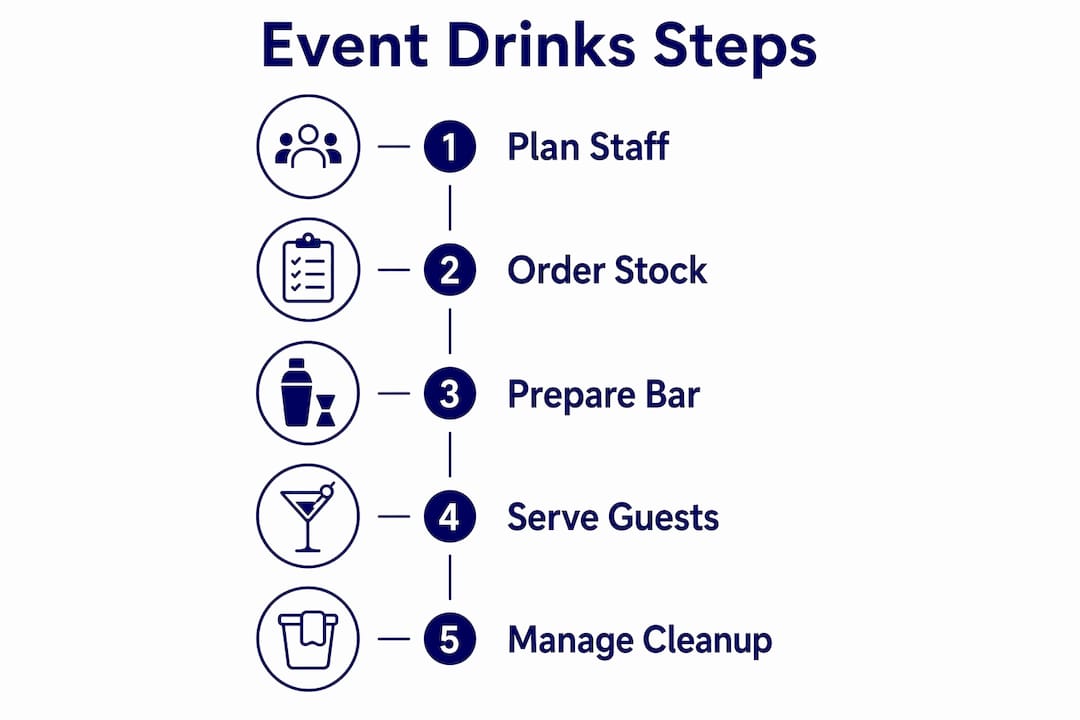
Book your bartending staff at least 4–8 weeks before the event. Professional planners recommend this lead time to secure experienced staff, particularly during peak seasons such as june through september and the december party period.
Pro Tip: For events with more than 100 guests, split your bar into at least two stations positioned at opposite ends of the venue. This prevents a single bottleneck and keeps guests circulating.
How much drink should you order for an event?
Accurate quantity planning stops you from running dry or wasting budget on surplus stock. The standard industry benchmarks give a reliable starting point:
| Drink type | Quantity per guest |
|---|---|
| Beer | 1.5 units per guest |
| Wine | 1 bottle per 2 guests |
| Spirits | 1 litre per 15 guests |
| Non-alcoholic drinks | 20–30% of total inventory |
These figures assume a four-hour event. Add roughly 10% per additional hour of service. The non-alcoholic allocation is not a courtesy gesture. Treating mocktails with the same care as alcoholic drinks, using fresh juices, quality garnishes, and creative presentation, makes non-drinkers feel genuinely included rather than catered for as an afterthought.
For your drink menu, resist the temptation to offer everything. A focused menu of four to six options serves guests faster and reduces waste. Pair your choices to the event type: a summer garden party calls for crisp whites, rosé, and light lagers; a winter corporate dinner suits full-bodied reds, whisky, and warming cocktails.
Signature cocktails for events should be limited to two or three options. Keeping the cocktail menu tight maintains service speed and gives each drink the attention it deserves. A single beautifully named cocktail tied to your event theme creates more impact than a sprawling menu that slows the bar to a crawl.
Pro Tip: Batch your signature cocktails in advance. Pre-mixing the base ingredients means your bartender pours and garnishes rather than measuring and mixing under pressure. Service speed doubles and consistency improves.
What equipment and logistics does a bar setup need?
Bar logistics are where events succeed or fail in silence. Guests never notice a perfectly stocked bar. They absolutely notice when it runs out of ice at 8pm.
The standard ice calculation is 1.5 pounds of ice per guest. For outdoor summer events or heavy cocktail service, increase that figure by 25–50%. Ice is cheap. Running out of it is not. Store ice in insulated coolers away from direct sunlight and keep a reserve supply separate from the working stock.
A complete bar setup requires the following:
- Glassware: Calculate 2.5 glasses per guest to allow for breakages and guests setting down drinks. Hire rather than buy for large events.
- Bar tools: Shakers, strainers, jiggers, muddlers, bottle openers, and a minimum of two cutting boards per bar station.
- Refrigeration: A portable bar fridge or ice bath for white wine, sparkling wine, and bottled beer. Warm white wine at a summer event is a memorable failure.
- Waste bins: One bin per bar station, emptied at least once per hour during peak service.
- Power supply: Confirm with the venue whether blenders or refrigeration units require a dedicated power source. Tripped circuits mid-event are avoidable.
Coordinate load-in and load-out times with your venue at least two weeks before the event. Clarify who handles post-event waste removal in writing. Many venues place this responsibility on the host regardless of caterer involvement, and the fees for leaving it unresolved can be significant.
For events with more than 100 guests, multiple bar stations are not a luxury. They are an operational requirement. Professional planners target a maximum wait time of three to five minutes per guest. A single bar serving 150 people cannot achieve that during peak demand.
How do you create a memorable drinks experience?
The drinks experience is where party drinks planning becomes event design. Signature cocktails have become central to event branding rather than optional extras. A cocktail named after the couple at a wedding, or one that reflects a company’s brand colours at a product launch, creates a talking point that guests carry home.
Stylised beverage displays add visual drama that photographs brilliantly and sets the tone the moment guests arrive. Consider these approaches for your next event:
- Champagne and prosecco towers: A tiered tower of filled coupes creates an immediate centrepiece. Champagnetowerhire specialises in bespoke towers for weddings, corporate events, and private parties across the UK.
- Themed drink stations: A dedicated gin station with botanicals and garnishes displayed in glass jars, or a mocktail bar with fresh fruit and herbs, gives guests an interactive experience rather than a passive one.
- Seasonal garnish trays: Edible flowers, dehydrated citrus, and herb sprigs add visual texture to individual drinks without adding complexity to service.
- Labelled menus at each station: A small printed card describing each drink, including mocktail options, helps guests choose quickly and reduces questions to bartenders during peak periods.
Creative drink station ideas are worth exploring early in your planning process. The display and the drink menu should feel like a single, considered decision rather than two separate choices made by different people. For corporate events specifically, current bar trends for 2026 show a strong move towards personalised, branded drink experiences that reinforce company identity.
Non-alcoholic creativity deserves the same budget and attention as the cocktail menu. A mocktail that uses house-made shrubs, fresh citrus, and a quality garnish is as impressive as its alcoholic counterpart. Guests who do not drink alcohol notice immediately when they are offered a glass of orange juice while everyone else receives a crafted cocktail.
Key takeaways
Effective event bar management requires early planning, accurate quantities, and a drinks menu that serves every guest with equal care.
| Point | Details |
|---|---|
| Staff to the right ratio | Use 1 bartender per 35–40 guests for a full bar; tighten ratios for high-volume events. |
| Book staff early | Secure bartending professionals at least 4–8 weeks before your event date. |
| Calculate quantities accurately | Stock 1.5 beers per guest, 1 bottle of wine per 2 guests, and 20–30% non-alcoholic options. |
| Plan ice and logistics | Budget 1.5 pounds of ice per guest and increase by up to 50% for outdoor or summer events. |
| Limit signature cocktails | Two to three signature drinks maintain service speed and create a stronger guest impression. |
What I have learned from planning event drinks services
The detail that trips up even experienced organisers is ice. Every single time. You plan the menu, you book the staff, you confirm the glassware, and then at 7:30pm someone is frantically calling a local supermarket because the bar ran dry. The calculation is simple: 1.5 pounds per guest, plus a 30% buffer, stored separately from the working supply. Write it on the brief. Put it in the contract. Say it out loud in the pre-event call.
The second thing I have seen consistently undervalued is the non-alcoholic offer. Organisers spend weeks selecting wines and debating cocktail names, then hand non-drinkers a carton of apple juice. That is a missed opportunity. A thoughtfully crafted mocktail menu, with the same quality ingredients and presentation as the cocktail list, costs very little extra and makes a visible difference to guest satisfaction.
My strongest recommendation for any organiser planning a large or high-profile event is to hire professional bartenders rather than relying on venue staff or well-meaning volunteers. The difference in service speed, consistency, and guest interaction is immediate. Professional bartenders at events bring equipment knowledge, crowd management instinct, and the composure to handle a rush without the bar descending into chaos.
Finally, the drinks display is not decoration. It is the first thing guests see when they enter the room. A champagne tower, a styled gin station, or an elegant prosecco display sets the tone before a single word is spoken. Treat it as part of the event design, not an add-on.
— Darren
Champagnetowerhire: bespoke displays for your event
Champagnetowerhire brings a spectacular focal point to weddings, corporate functions, and private celebrations across the UK. A bespoke champagne tower is a fully staffed, custom-built display that arrives, performs, and departs without adding pressure to your planning. Towers are available in multiple sizes, with optional additions including flowers and fresh strawberries for a truly lavish finish. Whether you are planning an intimate reception or a large-scale corporate event, Champagnetowerhire provides an instant quote and expert guidance on the right display for your occasion. For wedding organisers, the wedding beverage display checklist is an excellent starting point for drinks presentation planning.
FAQ
How many bartenders do I need for 100 guests?
For a full bar with cocktails, plan for two to three bartenders at 100 guests, using the ratio of 1 per 35–40 guests. For beer and wine only, two bartenders is sufficient.
What non-alcoholic drinks should I serve at an event?
Serve crafted mocktails using fresh juices, herbs, and quality garnishes alongside still and sparkling water. Non-alcoholic options should make up 20–30% of your total drink inventory.
When should I book bartending staff for my event?
Book bartending staff at least 4–8 weeks before your event. During peak seasons such as summer and december, the lead time should be closer to eight weeks to secure experienced professionals.
How do I stop queues forming at the bar?
For events with more than 100 guests, use multiple bar stations or satellite bars positioned at different points in the venue. Professional planners target a maximum wait time of three to five minutes per guest.
What are the best signature cocktails for events?
Limit your signature cocktail selection to two or three drinks tied to your event theme or brand. Batch the base ingredients in advance to maintain speed and consistency throughout service.


