

Every luxury wedding planner in London knows the difference a breathtaking display can make. Enhancing the aesthetic appeal of high-end events goes beyond simple decoration: it invites guests into a carefully curated visual experience that blends artistry with emotional impact. By understanding that aesthetic judgement is inherently subjective, planners can transform beverage displays into captivating masterpieces, ensuring each celebration is remembered for its elegance and originality.
Table of Contents
- Event Aesthetics Defined And Common Myths
- Types Of Luxury Event Aesthetic Elements
- Champagne Towers: Process And Visual Impact
- Styling Principles For Cohesive Event Design
- Safety, Legal And Staffing Considerations In The UK
- Common Pitfalls To Avoid With Event Aesthetics
Key Takeaways
| Point | Details |
|---|---|
| Understanding Event Aesthetics | Event aesthetics extend beyond visual appeal to include emotional resonance and cultural sensitivity in design. |
| Focus on Cohesion | Achieving cohesive design requires balancing colours, textures, and spatial arrangements to create a seamless experience. |
| Luxury Design Principles | Luxury event aesthetics rely on thoughtful, bespoke details rather than extravagant spending to enhance guest experiences. |
| Prioritising Safety and Compliance | Rigorous attention to legal and safety protocols is essential in managing successful events, ensuring guest safety and compliance. |
Event aesthetics defined and common myths
Understanding event aesthetics requires a nuanced perspective beyond mere visual appeal. Aesthetics as a philosophical concept explores beauty and perception, revealing that visual design is more complex than simple decoration. Event design transcends superficial arrangements, embodying a sophisticated dialogue between artistic vision and emotional experience.
Key elements of event aesthetics involve several critical components:
- Visual harmony and composition
- Emotional resonance and storytelling
- Cultural and contextual sensitivity
- Strategic sensory engagement
- Spatial arrangement and flow
Many professionals misunderstand event aesthetics, believing beauty can be objectively measured. Aesthetic judgement remains inherently subjective, shaped by individual perception, cultural background, and personal experiences. What appears stunning to one guest might feel overwhelming or disconnected to another.
Event aesthetics represent a delicate balance between intentional design and subjective interpretation, where each visual element communicates a nuanced narrative.
Event design myths frequently mislead planners into believing aesthetic excellence requires excessive expenditure or complex arrangements. Event definitions clarify that successful aesthetics emerge from thoughtful curation rather than extravagant spending. Minimalist designs can be profoundly impactful when executed with precision and understanding.
Pro tip: Focus on creating cohesive emotional experiences through deliberate aesthetic choices rather than attempting to impress through sheer visual complexity.
Types of luxury event aesthetic elements
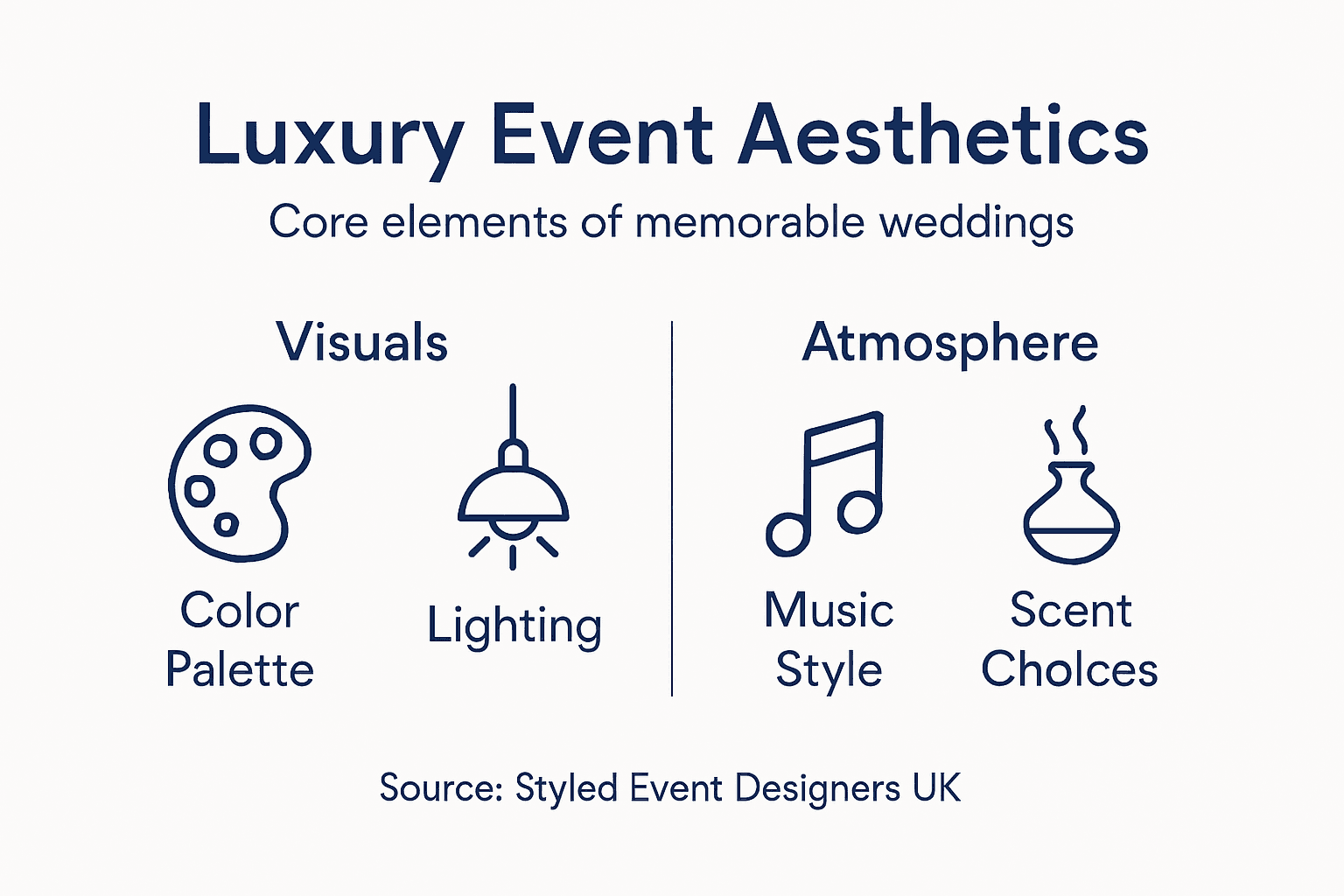
Luxury event aesthetics encompass a sophisticated array of design elements that transform ordinary gatherings into extraordinary experiences. Event planning requires meticulous infrastructure considerations that go far beyond simple decorative choices. These aesthetic components create immersive environments that engage all sensory experiences and communicate elegance through strategic design.
Key luxury event aesthetic elements include:
- Visual Design Elements
- Custom colour palettes
- Bespoke floral arrangements
- Sophisticated lighting designs
- Architectural room styling
- Sensory Experience Components
- Ambient music selection
- Curated fragrance experiences
- Textural design elements
- Experiential Infrastructure
- Premium spatial configurations
- Strategic guest flow management
- Personalised welcome experiences
Sophisticated event design requires understanding how individual elements interact to create a cohesive narrative. Specialist event infrastructure planning demonstrates that luxury is not about extravagance but precision, thoughtfulness, and nuanced attention to detail.
Luxury event aesthetics transform spaces from mere venues into immersive storytelling environments that captivate and enchant guests.
Professional event designers recognise that true luxury emerges through harmonious integration of technical infrastructure, emotional resonance, and visual sophistication. Each aesthetic element must communicate intentionality, creating a seamless experience that feels both meticulously planned and effortlessly elegant.
To help prioritise event aesthetic planning, here is a comparative overview of typical versus luxury event design elements:
| Aspect | Typical Event Design | Luxury Event Design |
|---|---|---|
| Visual Features | Standard decorations | Custom, bespoke styling |
| Sensory Engagement | Basic lighting, generic music | Tailored ambience and fragrance |
| Guest Experience | Standard entry, minimal flow | Personalised welcome, curated flow |
| Infrastructure | General layout, basic seating | Premium layouts, strategic guidance |
Pro tip: Focus on creating subtle, interconnected design narratives that guide guests through an emotional journey rather than overwhelming them with disparate visual elements.
Champagne towers: Process and visual impact
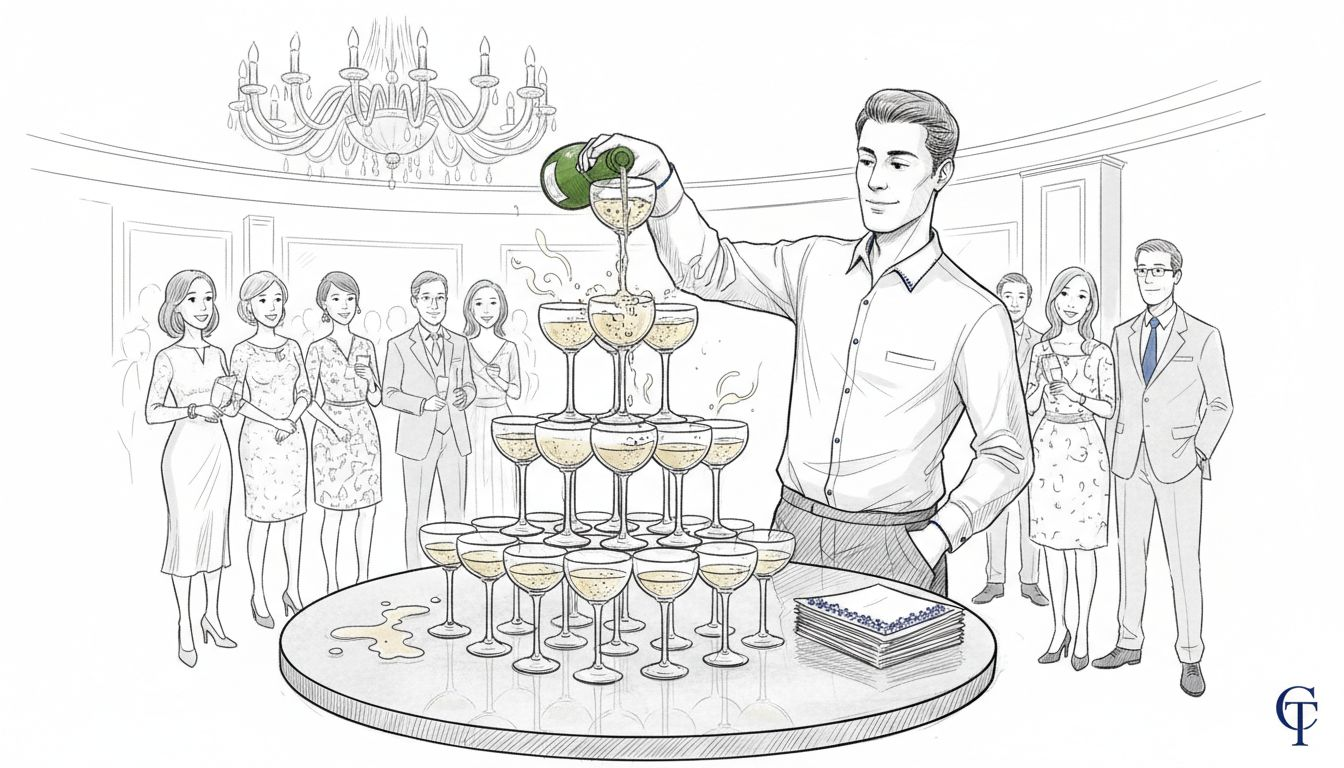
Champagne towers represent the pinnacle of event design, transforming an ordinary beverage service into a spectacular visual centrepiece. Artistic design principles underscore how strategic visual arrangements can create unforgettable moments of collective wonder and excitement.
The construction of a champagne tower involves several critical stages:
- Structural Preparation
- Selecting appropriate glassware
- Calculating precise glass pyramid dimensions
- Ensuring structural stability
- Technical Considerations
- Glass alignment and symmetry
- Weight distribution
- Temperature and condensation management
- Performance Elements
- Choreographing the initial pour
- Managing guest interaction
- Creating dramatic visual narrative
Architectural precision is fundamental to creating a successful champagne tower. Innovative design processes transform these displays from mere drink service into immersive experiential moments that captivate guests and generate lasting memories.
A perfectly executed champagne tower transcends beverage service, becoming a living sculpture that narrates elegance and celebration.
Professional event designers understand that champagne towers are more than technical arrangements—they are choreographed performances of liquid architecture. Each glass placement, each calculated pour represents a moment of carefully orchestrated drama that engages all sensory experiences.
Pro tip: Practice your champagne tower setup multiple times before the event to ensure flawless execution and minimise potential spillage during the critical pouring moment.
Styling principles for cohesive event design
Cohesive event design transforms disparate elements into a harmonious narrative that captivates and enchants guests. Strategic design processes reveal that true elegance emerges from intentional, methodical aesthetic planning rather than random decoration.
Key principles for achieving design cohesion include:
- Colour Harmony
- Developing a consistent colour palette
- Ensuring complementary tonal relationships
- Balancing dominant and accent colours
- Textural Integration
- Matching fabric and surface textures
- Creating visual depth through layering
- Coordinating material selections
- Spatial Choreography
- Designing purposeful guest movement
- Creating visual focal points
- Managing negative and positive spaces
Thematic consistency requires meticulous attention to detail. Event planning fundamentals demonstrate that successful styling emerges from understanding the event’s core narrative and translating that story through visual language.
Cohesive design is not about perfection, but about creating a seamless emotional journey that feels both intentional and effortless.
Professional event designers understand that styling is a delicate balance between artistic vision and technical precision. Each design element must communicate with the others, creating a unified experience that feels organic and intentionally curated.
Pro tip: Develop a comprehensive mood board that includes colour swatches, texture samples, and visual references to ensure design consistency across all event elements.
Safety, legal and staffing considerations in the UK
Luxury event management in the United Kingdom demands rigorous attention to legal and safety protocols. Crowd management represents a critical legal responsibility that event organisers must meticulously understand and implement to ensure guest safety and regulatory compliance.
Key safety and legal considerations include:
- Regulatory Compliance
- Health and Safety Executive (HSE) guidelines
- Public liability insurance requirements
- Alcohol licensing regulations
- Venue-specific safety certifications
- Staff Training Essentials
- Emergency response protocols
- First aid certification
- Crowd control techniques
- Alcohol service management
- Risk Management Strategies
- Comprehensive venue risk assessments
- Detailed event contingency planning
- Guest capacity management
- Security personnel deployment
Legal frameworks in the UK require event professionals to develop comprehensive safety strategies that anticipate and mitigate potential risks. Professional event teams must create detailed documentation demonstrating proactive safety planning and risk mitigation.
Safety is not an afterthought but the foundational principle upon which exceptional events are constructed.
Successful event management involves creating a holistic approach that balances luxury experience with stringent safety protocols. This requires seamless coordination between venue management, event staff, security personnel, and regulatory bodies to create an environment that feels both sophisticated and secure.
Reviewing best practices, this summary highlights key UK safety and legal requirements for event planners:
| Requirement | Purpose | Impact on Events |
|---|---|---|
| HSE Guidelines | Ensure public safety | Prevent accidents, legal compliance |
| Public Liability Insurance | Financial protection | Covers claims, boosts credibility |
| Alcohol Licensing | Manage beverage service | Legally controls drink distribution |
| Staff Training | Enhance operational readiness | Improves emergency and guest response |
Pro tip: Invest in comprehensive event insurance and maintain detailed documentation of your risk assessments to protect your business and ensure smooth event execution.
Common pitfalls to avoid with event aesthetics
Event aesthetic failures often stem from overlooking critical details and neglecting comprehensive planning strategies. Event management requires strategic risk prevention that addresses potential design and logistical challenges before they compromise the overall experience.
Common aesthetic pitfalls include:
- Design Inconsistencies
- Mismatched colour schemes
- Conflicting design themes
- Inappropriate scale of decorative elements
- Lack of visual hierarchy
- Functional Design Failures
- Overcrowded spaces
- Poor guest movement flow
- Inadequate lighting considerations
- Neglecting acoustic design
- Technical Implementation Errors
- Insufficient vendor coordination
- Last-minute design changes
- Overlooking technical infrastructure
- Ignoring venue-specific constraints
Technical planning demands meticulous attention to detail. Event planning requires comprehensive preparation that anticipates potential challenges and develops robust contingency strategies to maintain design integrity.
Aesthetic excellence emerges not from perfection, but from thoughtful problem-solving and adaptive design strategies.
Professional event designers understand that true luxury lies in seamless execution, where every potential pitfall is anticipated and elegantly managed. The most sophisticated events appear effortless precisely because of the extensive background planning that prevents visible complications.
Pro tip: Create a comprehensive design audit checklist that systematically evaluates every aesthetic element against your event’s core narrative and technical requirements.
Elevate Your Luxury Wedding with Stunning Champagne Tower Displays
Capturing the essence of event aesthetics requires more than just beautiful visuals – it demands a sophisticated journey that resonates emotionally and stylistically with your guests. This article highlights the challenges of creating cohesive event design and emphasises the importance of deliberate, impactful elements that tell a story. A champagne tower exemplifies this perfectly by transforming a simple beverage service into a breathtaking visual spectacle. Integrating such a show-stopping feature can ensure your wedding achieves that coveted blend of elegance, luxury, and memorable sensory experience.
If you are seeking to enhance your wedding with a truly bespoke attraction that complements your carefully curated colour palettes, spatial choreography, and thematic consistency explore the expert services at Champagne Tower Hire. Their custom-built, fully staffed champagne towers embody luxury event aesthetics by combining architectural precision with artistic flair. Discover how effortless it is to create an immersive, sophisticated ambience that guests will admire long after the day concludes.
Ready to incorporate a captivating champagne tower into your luxury wedding design? Visit Champagne Tower Hire now for a personalised quote and expert guidance. Experience flawless execution crafted to heighten your event aesthetics and create unforgettable moments that elevate your celebration to new heights.
Frequently Asked Questions
What are the key elements of event aesthetics for luxury weddings?
Key elements include visual harmony, emotional resonance, cultural sensitivity, sensory engagement, and spatial arrangement. Each component plays a crucial role in creating an immersive and memorable experience.
How can I achieve cohesive event design for my wedding?
To achieve cohesive design, focus on colour harmony, textural integration, and spatial choreography. Develop a consistent colour palette, match textures, and design purposeful guest movement to create a seamless experience.
What are common pitfalls to avoid in wedding event aesthetics?
Common pitfalls include design inconsistencies, functional design failures like overcrowded spaces, and technical implementation errors such as insufficient vendor coordination. Plan comprehensively to avoid these issues.
How can I incorporate champagne towers into my wedding design?
Champagne towers can be incorporated as a stunning visual centrepiece. Ensure careful planning of structural preparation, technical considerations like glass alignment, and performance elements to create an impressive and engaging spectacle.
Recommended
- 7 Examples of Luxury Wedding Trends for UK Planners – Champagne Tower Hire
- Role of Visual Displays at Weddings – Creating Luxury Moments
- Wedding Wow Factor: Creating Lasting Memories UK – Champagne Tower Hire
- Quality Beverage Hire: Elevating London Weddings – Champagne Tower Hire
- 7 Key Benefits of Luxury Transportation for Special Events – Ashe County Livery blog


