

High-profile british events are turning to breathtaking drinks towers as a benchmark of sophistication, with some installations showcasing over 200 glasses in a single display. For luxury wedding planners and corporate organisers, these visually striking centrepieces do far more than serve beverages—they create a talking point and set the tone for an unforgettable gathering. This guide uncovers how carefully constructed drinks towers can mesmerise guests, accentuate the occasion’s prestige, and reflect the impeccable standards of premier events across the United Kingdom.
Table of Contents
- Defining A Drinks Tower For Events
- Classic And Bespoke Drinks Tower Types
- Setup Process And Visual Impact Features
- Legal And Safety Requirements In The UK
- Cost Factors And Common Pitfalls
Key Takeaways
| Point | Details |
|---|---|
| Drinks Towers Enhance Events | Drinks towers serve as elegant centrepieces that transform beverage service into a stunning visual experience, encouraging guest interaction and adding sophistication to events. |
| Classic Versus Bespoke Designs | While classic towers follow traditional glass pyramid structures, bespoke designs offer creative flexibility for unique presentations to fit specific themes or branding. |
| Meticulous Planning Required | Successful drinks tower setups depend on careful planning, including precise glass selection, structural stability, and compliance with legal requirements to ensure a visually appealing and safe display. |
| Budget Considerations | Costs can vary significantly based on complexity, glass quantity, and staff expertise, making it essential to gather detailed quotes and carefully consider logistical factors to avoid pitfalls. |
Defining a Drinks Tower for Events
A drinks tower represents an elegant centrepiece that transforms ordinary event beverages into a spectacular visual experience. Originally popularised in high-end weddings and corporate celebrations, this dramatic display involves carefully stacking glasses in a precise pyramidal formation, creating a stunning architectural showcase for champagne or prosecco. Professional champagne tower arrangements provide a sophisticated focal point that captivates guests and elevates the overall event atmosphere.
The traditional drinks tower structure begins with a single glass at the pinnacle, progressively expanding in width with each descending tier. Typically constructed using crystal or champagne flutes, these towers can range from intimate designs featuring 10-15 glasses to grand installations accommodating over 100 glasses. Trained hospitality professionals carefully calculate glass placement, ensuring structural stability and creating a mesmerising cascade effect when liquid is poured from the topmost glass.
While champagne remains the classic beverage for tower displays, modern event planners increasingly experiment with alternative options. Prosecco, cocktails, and even non-alcoholic sparkling drinks can transform the traditional tower concept, offering versatility for diverse event requirements. The drinks tower transcends mere beverage service, functioning as a performance art piece that generates excitement, encourages social interaction, and provides a memorable focal point for celebrations.
Expert Tip: When designing a drinks tower, select glasses with uniform shape and size to guarantee a stable and visually seamless presentation.
Classic and Bespoke Drinks Tower Types
Drinks towers represent a sophisticated spectrum of design possibilities, ranging from traditional glass pyramid arrangements to highly customised architectural statements. Classic designs typically feature uniform champagne flutes arranged in a symmetrical triangular formation, while bespoke options offer unprecedented creative freedom for event planners seeking unique centrepieces. Bespoke champagne towers allow organisers to transform standard presentations into personalised works of event artistry.
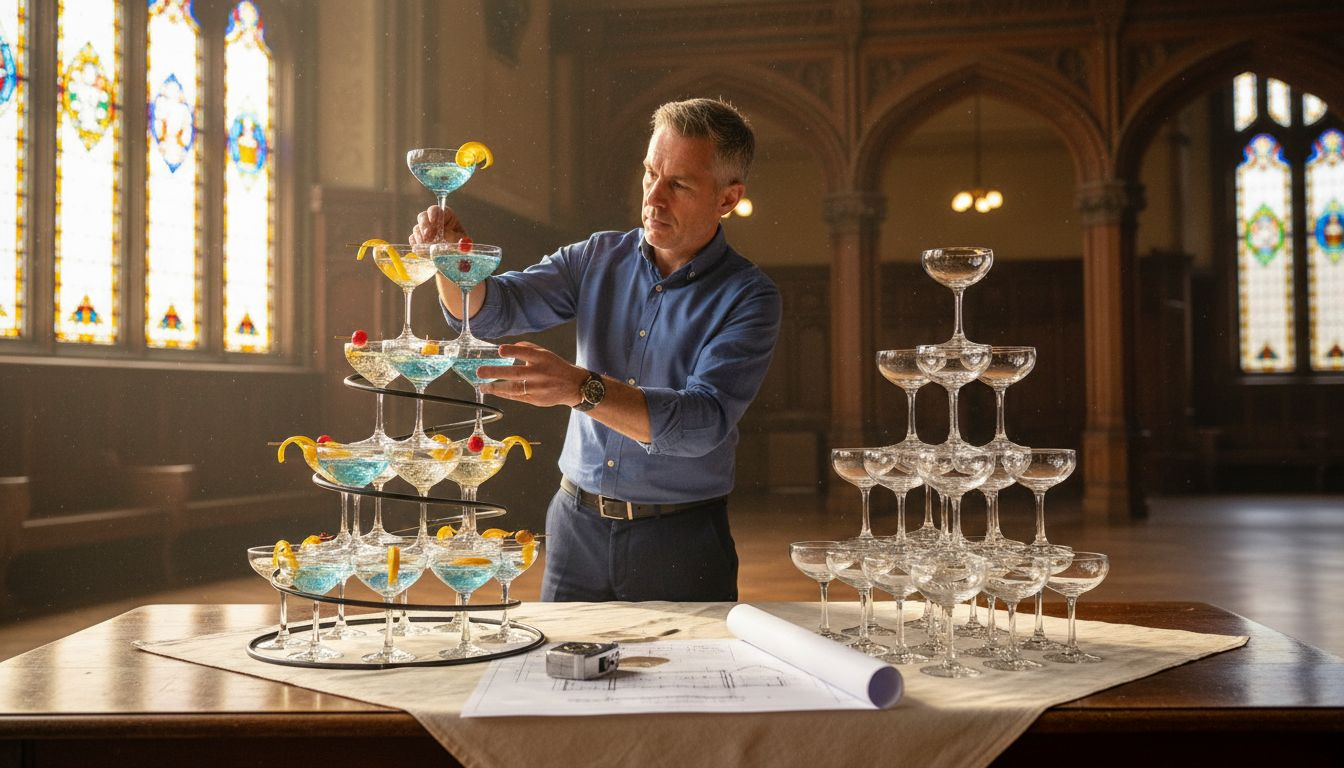
Traditional tower configurations generally follow standard structural principles: a single glass at the summit, expanding progressively wider with each descending tier. These classic arrangements usually accommodate between 30-100 glasses, depending on event scale and visual impact desired. Contemporary variations introduce innovative elements like coloured glassware, mixed glass heights, thematic decorative accents, and unconventional base structures that challenge traditional pyramid geometries.
Bespoke drinks tower designs enable remarkable customisation options for discerning clients. Event professionals might incorporate company branding, select glasses matching specific colour palettes, integrate lighting elements, or create asymmetrical sculptural forms that transcend conventional tower expectations. Some sophisticated designs integrate multiple tower configurations, creating complex multi-level displays that serve both aesthetic and functional purposes for high-end corporate and wedding celebrations.
Expert Tip: When commissioning a bespoke drinks tower, communicate precise event requirements and vision to ensure a perfectly tailored centrepiece that complements your overall event design.
Here is a comparison of classic versus bespoke drinks tower designs:
| Aspect | Classic Tower | Bespoke Tower |
|---|---|---|
| Structure | Standard pyramid | Custom shapes and layouts |
| Glass Uniformity | Always identical | Variable or themed glassware |
| Capacity Range | 30-100 glasses | 15 to 200+ glasses |
| Decorative Features | Minimal or traditional | Branding, lighting, unique colours |
| Use Case | Weddings, large parties | High-end, themed, or corporate events |
Setup Process and Visual Impact Features
The intricate setup of a drinks tower requires meticulous planning and professional expertise to create a breathtaking visual spectacle. Professional champagne tower coordination involves carefully selecting glasses, calculating precise structural requirements, and ensuring stability throughout the event. Trained event specialists understand that the tower’s success depends on strategic glass arrangement, weight distribution, and controlled pouring techniques that maintain the integrity of the architectural display.
Visual impact begins with thoughtful glass selection and architectural design. Optimal towers typically feature crystal or high-quality champagne flutes with uniform dimensions, creating a seamless pyramid that catches and reflects light dramatically. The pouring process itself becomes a performance, with liquid cascading from the topmost glass through subsequent tiers, generating a mesmerising visual effect that captivates guests. Sophisticated setups might incorporate additional visual elements like subtle lighting, decorative base treatments, or thematic colour coordinations that enhance the tower’s aesthetic appeal.
Technical considerations play a crucial role in maintaining the tower’s structural and visual integrity. Event professionals carefully calculate the number of glasses, typically ranging from 30 to 100 depending on event scale, ensuring each tier provides sufficient support for the glasses above. Precise glass placement, minimal movement during setup, and controlled pouring techniques prevent potential structural failures. Some advanced configurations incorporate hidden stabilisation mechanisms or custom-designed bases to guarantee a flawless presentation that remains visually stunning throughout the event duration.
Expert Tip: Select glasses with identical rim diameter and consistent weight to ensure maximum stability and create a visually perfect drinks tower display.
Legal and Safety Requirements in the UK
Navigating the complex landscape of legal and safety regulations is crucial when planning drinks towers for events in the United Kingdom. Professional event safety standards mandate comprehensive compliance with alcohol licensing, venue restrictions, and guest management protocols. Event organisers must obtain appropriate alcohol serving permits, ensure responsible beverage distribution, and implement strategic safety measures that protect guests and maintain regulatory adherence.
Venue-specific regulations play a significant role in drinks tower implementation. Corporate event venue requirements typically encompass strict guidelines regarding alcohol service, guest capacity management, and physical accessibility. Professional drinks tower providers must collaborate closely with venue management to verify compliance with fire safety regulations, emergency exit protocols, and potential restrictions on glass usage or alcohol presentation. These considerations extend beyond mere aesthetic concerns, representing critical legal obligations that protect both event organisers and attendees.
Specific legal requirements for drinks towers include comprehensive insurance coverage, trained staff supervision, and adherence to responsible alcohol service guidelines. Event professionals must ensure that pouring techniques minimise spillage risks, glass structures remain stable, and alcohol is served responsibly to prevent potential accidents. Additional safety considerations involve strategic tower placement to avoid obstruction of emergency routes, maintaining clear sightlines, and implementing controlled access to prevent unauthorized interaction with the tower structure.
Expert Tip: Always confirm venue-specific alcohol service regulations and obtain necessary permits at least six weeks prior to your event to ensure seamless legal compliance.
Cost Factors and Common Pitfalls
Drinks tower pricing encompasses a complex array of factors that event organisers must carefully navigate to ensure both aesthetic excellence and budget management. The total investment typically ranges from £500 to £2,500, depending on tower complexity, glass quantity, staffing requirements, and customisation options. Professional drinks tower services include not just the physical structure, but also expert setup, trained personnel for pouring, transportation, insurance, and potential decorative enhancements that transform a simple display into a sophisticated event centrepiece.
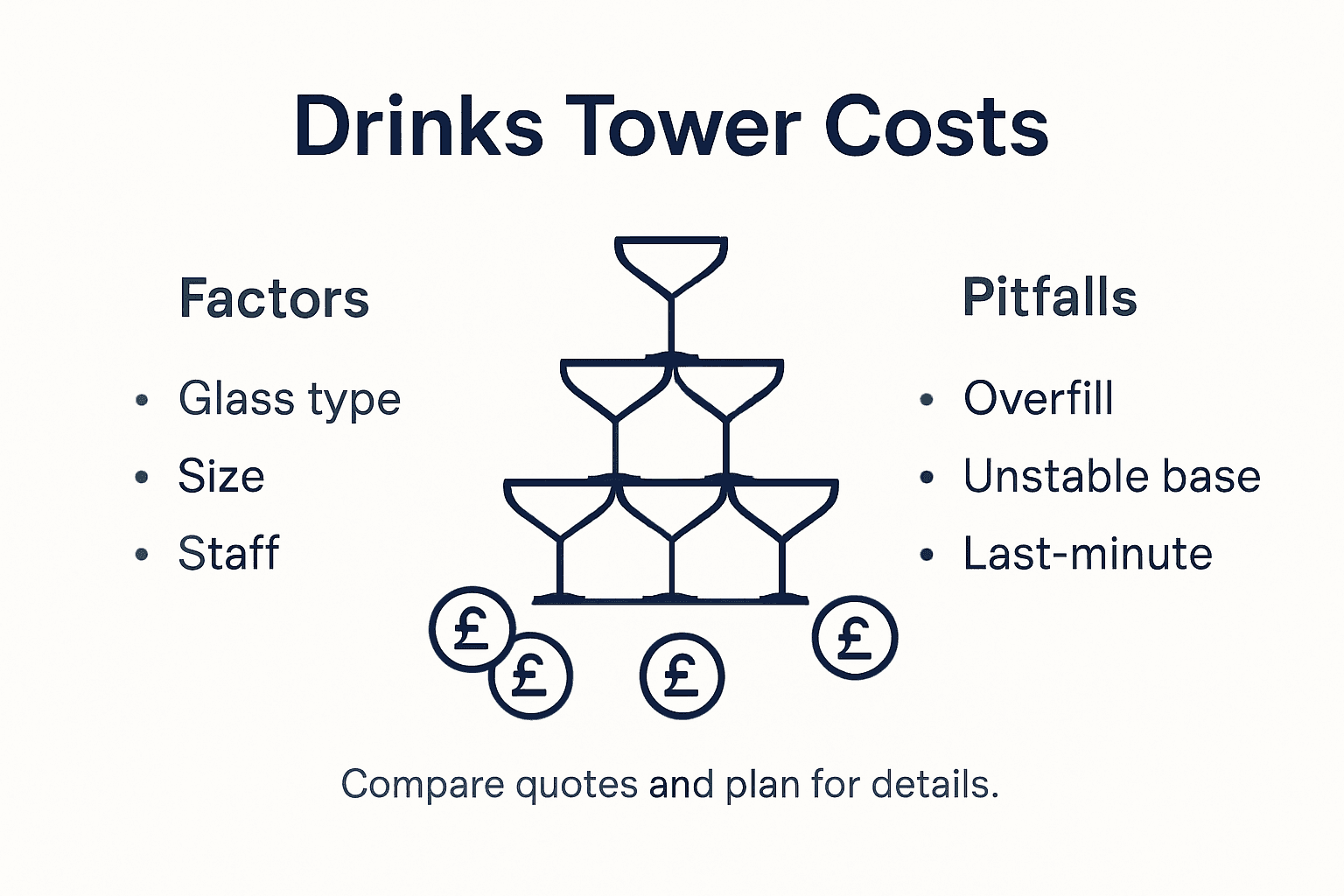
Common pitfalls in drinks tower planning often stem from underestimating logistical complexities. Inexperienced event planners might miscalculate glass requirements, neglect structural stability considerations, or fail to account for venue-specific constraints. Critical mistakes include inappropriate glass selection, inadequate weight distribution, insufficient safety protocols, and poor positioning that compromises both visual impact and guest accessibility. These errors can result in structural collapse, potential safety hazards, and significant financial losses that far outweigh initial cost-saving attempts.
Budget allocation requires strategic consideration of multiple variables beyond the tower’s basic construction. Event professionals must factor in additional expenses such as specialised glassware rental, professional staff training, insurance coverage, transportation logistics, and potential customisation elements like thematic decorations or branded glass treatments. Advanced planning typically involves obtaining multiple quotes, comparing comprehensive service packages, and understanding the full scope of professional drinks tower provision to avoid unexpected financial surprises during event preparation.
The following table summarises key cost drivers and potential pitfalls in drinks tower planning:
| Factor | Impact on Cost | Common Mistake |
|---|---|---|
| Glass Quantity | Increases total expense | Underestimating glass needs |
| Staff Expertise | Raises service price | Hiring untrained personnel |
| Customisation | Adds premium charges | Overlooking design constraints |
| Venue Constraints | May require extras | Ignoring site-specific rules |
| Insurance and Permits | Essential, affects price | Neglecting legal requirements |
Expert Tip: Request detailed, itemised quotes from multiple providers and carefully compare the comprehensive services included to avoid hidden costs and ensure transparent pricing.
Elevate Your Event with a Bespoke Drinks Tower Experience
Creating a stunning drinks tower that captivates guests while ensuring safety and elegance can be a complex challenge. From selecting the perfect glasses with uniform shapes to designing custom pyramid structures that match your event theme, every detail counts when crafting a memorable centrepiece. The intricate setup and strict legal requirements for safe alcohol service further highlight the need for expert planning and professional execution.
At Champagne Tower Hire, we specialise in turning these challenges into effortlessly exquisite experiences. Whether you desire a classic champagne tower or a bespoke creation tailored to your unique event vision, our fully staffed service covers all bases—from precise glass arrangements and cascading pours to compliance with UK legal standards. Discover our full range of offerings in the Uncategorized Archives – Champagne Tower Hire and explore how elegant bespoke towers can transform your wedding, corporate event, or private party.
Ready to impress your guests with a breathtaking drinks tower that merges visual drama and impeccable service? Visit https://champagnetowerhire.co.uk today to request your instant quote and secure a sophisticated centrepiece designed for lasting memories.
Frequently Asked Questions
What is a drinks tower?
A drinks tower is an elegant centrepiece typically made by stacking glasses in a pyramidal formation, often used for champagne, prosecco, or other beverages at events.
How do you set up a drinks tower?
Setting up a drinks tower involves careful planning, selecting uniform glasses, calculating structural requirements, and ensuring stability through professional expertise to create a visually stunning display.
What types of beverages can be used in a drinks tower?
While champagne is the traditional choice for drinks towers, modern variations include prosecco, cocktails, and non-alcoholic sparkling drinks, allowing for flexibility in beverage selection.
What are the benefits of hiring a professional for drinks tower arrangements?
Hiring professionals ensures proper setup, adequate safety measures, and a visually appealing presentation. Experienced staff will handle the logistics, glass placement, and pouring techniques to prevent accidents and enhance the overall experience.


