

TL;DR:
- Drink display safety involves arranging beverages to meet stability, food safety, and regulatory standards during events. Proper temperature control, structural load management, and environmental monitoring are essential to prevent hazards and ensure a safe, attractive presentation.
Drink display safety is the practice of organising and maintaining beverage presentations to meet physical stability, food safety, and regulatory compliance standards at events. For event planners, this means far more than arranging bottles attractively. It covers temperature controls mandated by bodies such as Food Standards Australia New Zealand, structural requirements aligned with standards like BS 5852, and ergonomic placement principles that prevent accidents in busy venues. Get it right and your display becomes a showpiece. Get it wrong and you face contamination risks, structural failures, and regulatory breaches that no amount of styling can fix.
What key safety regulations and temperature controls govern beverage displays?
Temperature control is the foundation of beverage display safety. Food Standards Australia New Zealand mandates that potentially hazardous beverages must be kept at 5°C or below, or 60°C or above. That two-zone rule exists because bacterial growth accelerates rapidly in the range between those thresholds.
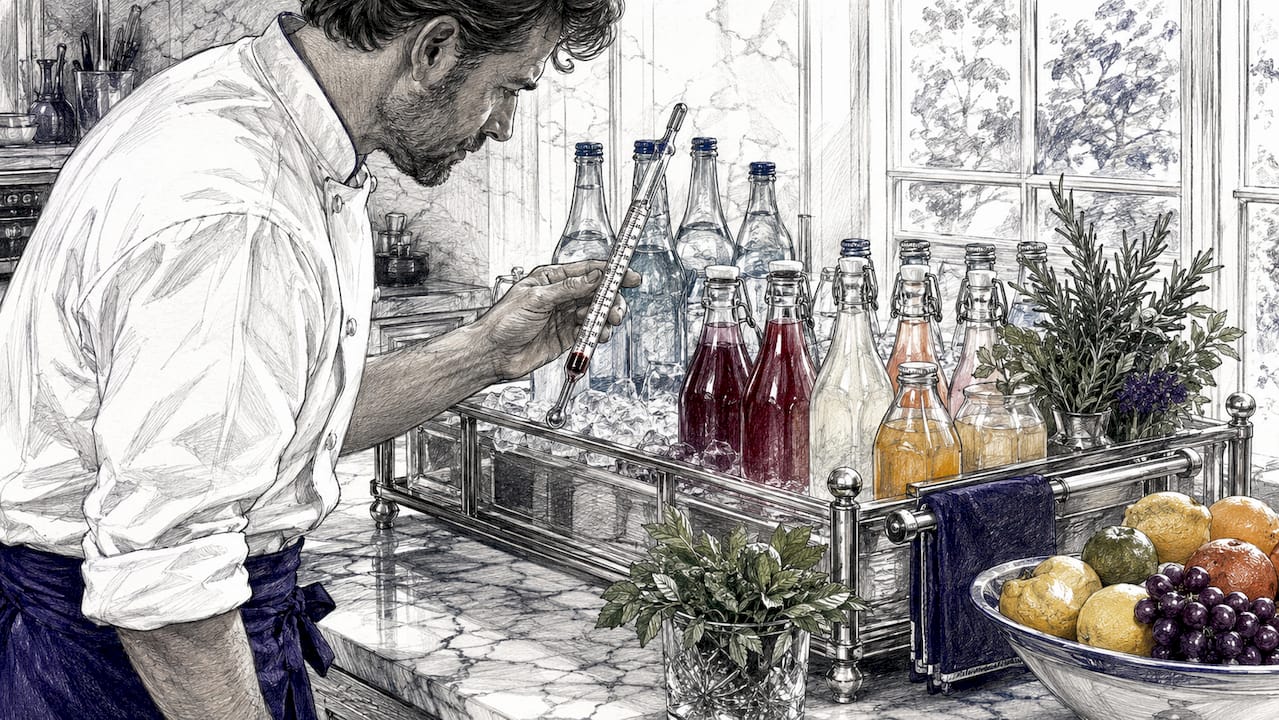
For short-duration events, time-based controls offer a practical alternative. A beverage held outside the safe temperature range for less than four hours is generally considered acceptable under food safety frameworks, provided it is not returned to display after that window. Event planners should document these time periods carefully, particularly at outdoor summer events where ambient heat rises quickly.
Contamination prevention is equally non-negotiable. Physical barriers between open beverage containers and guests, dedicated serving utensils, and covered display surfaces all reduce cross-contamination risk. Environmental controls such as packaging integrity checks and hygiene monitoring must continue throughout the event, not just at setup.
| Requirement | Standard | Practical application |
|---|---|---|
| Cold beverage temperature | 5°C or below | Use chilled display units or ice beds |
| Hot beverage temperature | 60°C or above | Use heated urns or insulated dispensers |
| Time-based control | Under 4 hours outside safe range | Log start times; discard after limit |
| Contamination barriers | Physical separation required | Use sneeze guards, lids, and tongs |
| Hygiene monitoring | Ongoing throughout event | Assign staff to check displays hourly |
Beverage display stands must also comply with fire resistance standards such as BS 5852 for furniture and EU 10/2011 for food-contact plastics. These certifications confirm that the materials guests interact with will not introduce chemical hazards or create fire risks in enclosed venues.
How to ensure structural stability and safe placement of drink display stands?
Structural failure is the most underestimated risk in beverage display planning. A common mistake is treating a heavy drink display like a lightweight impulse bin. A full fixture plan involving load rating checks and floor stability assessments is the correct starting point, not an optional extra.
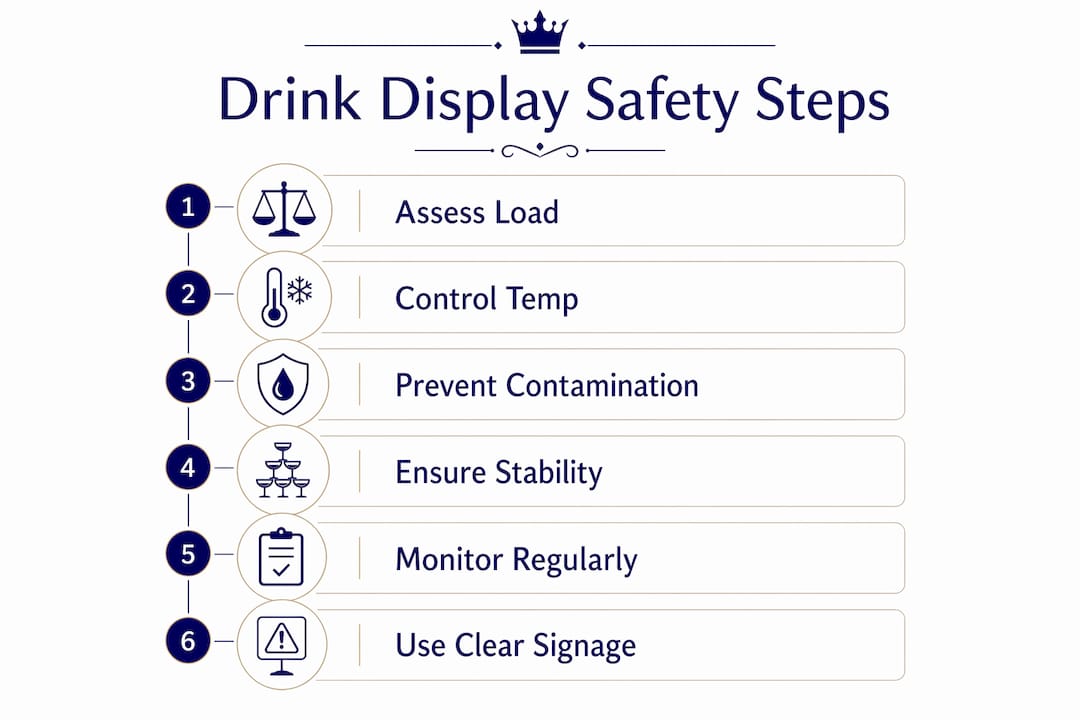
Every display stand has a manufacturer load rating. That figure represents the maximum static weight the unit can hold safely. The critical error planners make is calculating the weight of empty bottles, then forgetting to account for filled weight, ice, glassware, and the dynamic stress of guests reaching in and restocking staff loading from above. Safe display designs must account for shopper interaction and restocking stress, not just static loads.
Placement rules that prevent accidents
Safety codes require that display stands do not obstruct aisles or emergency exit paths. In practice, this means measuring aisle clearance before finalising your floor plan, not after the display arrives. A stand placed even 30 centimetres too close to a fire exit can constitute a regulatory violation and a genuine evacuation hazard.
Event layout must allow for natural guest flow without bottlenecks forming around the display. High-traffic zones near entrances and bars amplify the tipping risk for any freestanding unit. Anchor points, wall brackets, or weighted bases should be specified in your fixture plan for these locations.
Pro Tip: Always request the manufacturer’s load rating certificate before confirming a display stand for your event. Compare the rated capacity against your estimated filled weight, then apply a safety margin of at least 20% to account for restocking and guest interaction.
| Display type | Typical load capacity | Key safety consideration |
|---|---|---|
| Freestanding bottle rack | Light to medium | Requires floor anchor or weighted base |
| Chilled cabinet unit | Medium to heavy | Needs level surface and electrical safety check |
| Tiered glass tower | Medium | Confirm per-shelf rating; avoid top-heavy loading |
| Wall-mounted shelf | Medium | Verify wall fixings against total filled weight |
| Portable bar unit | Heavy | Check floor surface stability before positioning |
Ergonomic placement reduces both injury risk and product damage. Place heavier multipacks and bottles on lower shelves. Position high-demand products at hand level to reduce reaching and the instability that comes with guests stretching across a display. This principle applies equally to a champagne tower at a wedding and a soft drinks rack at a corporate conference.
What environmental and maintenance controls sustain drink display safety during events?
Environmental conditions affect beverage safety even for products that appear shelf-stable. Temperature fluctuations in high-traffic event spaces can compromise packaging integrity and accelerate spoilage in ways that are not immediately visible. A display that passed its morning setup check may be unsafe by mid-afternoon if the venue temperature has risen significantly.
Assign a staff member specifically to monitor display conditions throughout the event. That person checks temperatures, inspects packaging for damage, and removes any product that shows signs of leakage or contamination. Hourly checks are the minimum standard for events lasting more than three hours. For large-scale events with multiple display points, a written log with timestamps provides both a safety record and evidence of due diligence.
Cleaning and hygiene maintenance of display units must happen continuously, not just at the start and end of the event. Spills on display surfaces create slip hazards and attract contamination. Surfaces in contact with beverages or glassware should be wiped down at each restocking interval.
Pro Tip: Assign maintenance responsibilities by zone, not by task. One staff member owns the entire display area, including temperature checks, surface cleaning, and restocking. Split responsibilities create gaps where no one notices a problem until it becomes an incident.
Restocking procedures carry their own risks. Displays customised to specific refill habits and traffic patterns maintain structural integrity far longer than generic setups. Brief your team on the correct restocking sequence: remove depleted stock from the front, load new stock from the rear, and never overload a shelf to compensate for a late delivery.
Key daily and periodic maintenance actions for event staff:
- Check beverage temperatures at setup and every hour during the event.
- Inspect all display surfaces for spills, damage, or contamination before and during service.
- Verify structural stability of stands after each major restocking.
- Remove and document any product that falls outside safe temperature or packaging standards.
- Conduct a full post-event inspection of display units before return or storage.
What best practices and guidelines should event planners follow for safe drink displays?
Selecting the right display type is the first decision that shapes every safety outcome. Match the display format to the product weight, the venue environment, and the expected guest traffic. A tiered glass champagne tower suits a controlled, staffed setting. A self-service chilled cabinet suits a high-volume casual event. Mismatching display type to context is where most safety problems begin.
The event beverage display guide from Champagnetowerhire sets out the core considerations for hosts and organisers planning displays across different event formats. Applying those principles from the planning stage, rather than retrofitting safety measures on the day, produces consistently better outcomes.
Signage plays a larger role in beverage display safety than most planners acknowledge. Clear labels indicating allergens, alcohol content, and serving instructions reduce the likelihood of guests handling products incorrectly. Supervision at the display point, particularly during peak service periods, prevents overcrowding and the instability that comes with multiple guests reaching into a display simultaneously.
Customising your display layout to match actual traffic patterns is a practice that experienced manufacturers strongly recommend. Displays not designed around replenishment realities tend to suffer structural damage and reduced lifespan. Map your guest flow before finalising display positions, and plan restocking routes that do not cross the main guest circulation path.
For planners working across luxury wedding beverage displays and corporate functions alike, the following numbered checklist covers the non-negotiable steps:
- Confirm manufacturer load ratings for every display unit before booking.
- Map display positions against the venue floor plan, checking aisle clearance and exit proximity.
- Specify temperature control method for each beverage category (chilled, ambient, or hot).
- Brief all event staff on hourly temperature checks and contamination protocols.
- Assign zone-based maintenance responsibilities before the event begins.
- Prepare a restocking sequence that maintains structural stability throughout service.
- Conduct a pre-service safety walkthrough and document findings.
Planners who treat these steps as a fixed pre-event protocol, rather than a checklist to skim, consistently report fewer incidents and smoother service.
Key takeaways
Drink display safety requires combining temperature control, structural load management, and continuous environmental monitoring to protect guests and meet regulatory standards throughout an event.
| Point | Details |
|---|---|
| Temperature control | Keep hazardous beverages at 5°C or below, or 60°C or above, throughout the event. |
| Structural load management | Always verify manufacturer load ratings and account for filled weight, not empty weight. |
| Placement compliance | Displays must not obstruct aisles or fire exits; anchor freestanding units in high-traffic zones. |
| Ergonomic arrangement | Place heavy items low and high-demand products at hand level to reduce tipping risk. |
| Ongoing maintenance | Assign zone-based staff to monitor temperatures, surfaces, and structural stability hourly. |
Why safety and spectacle are not opposites
I have watched event planners spend weeks perfecting the visual design of a beverage display and then spend approximately ten minutes on the structural setup. That imbalance is where incidents happen. The most spectacular displays I have seen at weddings and corporate events share one quality: the safety planning happened first, and the styling was built around it, not bolted on afterwards.
The regulations around beverage display safety are tightening, not relaxing. Consumer expectations have shifted too. Guests at premium events now notice when a display looks precarious or when a chilled unit is clearly struggling to maintain temperature. Safety compliance has become part of the luxury experience, not a backstage concern.
The practical lesson I keep returning to is this: treat your display plan the same way you treat your catering brief. Define the constraints first, then design within them. A champagne tower built on a verified load-rated surface, positioned clear of exits, and staffed by a team with a clear maintenance rota is both safer and more impressive than one assembled without that groundwork. You can read more about planning elegant drink displays to see how that principle applies across different event formats.
The planners who get this right are not the ones with the biggest budgets. They are the ones who ask the structural and safety questions before the aesthetic ones.
— Darren
Champagnetowerhire: luxury displays built with safety at their core
Champagnetowerhire designs and delivers award-winning champagne and prosecco towers for weddings, corporate functions, and private parties across the UK and internationally. Every tower is custom-built to verified load ratings, positioned by an experienced team, and staffed throughout your event. Safety compliance and visual impact are built into the service from the first consultation, not added as an afterthought. Whether you are planning an intimate celebration or a large-scale corporate showcase, Champagnetowerhire provides a fully managed, luxury champagne tower hire service that meets the highest standards of both elegance and safety. For a tailored quote and expert guidance on your event, visit Champagnetowerhire today.
FAQ
What is drink display safety?
Drink display safety is the practice of organising beverage presentations to meet physical stability, food safety, and regulatory compliance standards. It covers temperature control, structural load management, contamination prevention, and placement rules.
What temperature should beverages be kept at during an event?
Potentially hazardous beverages must be kept at 5°C or below, or 60°C or above, as mandated by food safety standards. Products held outside these ranges for more than four hours should be removed from display.
How do I prevent a drink display stand from tipping over?
Confirm the manufacturer load rating before setup, account for the total filled weight of all products, and use anchor points or weighted bases for freestanding units in high-traffic areas. Evaluate the floor surface stability before positioning any heavy display.
What regulations apply to beverage display stands?
Display stands must comply with fire resistance standards such as BS 5852 and food-contact material regulations such as EU 10/2011. Placement must also meet safety codes requiring clear aisle widths and unobstructed emergency exits.
How often should event staff check a beverage display during an event?
Staff should check temperatures, surface hygiene, and structural stability at least once per hour during any event lasting more than three hours. Written logs with timestamps provide a safety record and demonstrate regulatory due diligence.


