

TL;DR:
- Customized beverage experiences are tailored to guest preferences, event themes, and branding. They include bespoke cocktails, automation, or DIY stations to suit different event sizes and budgets. Proper menu engineering and service planning ensure consistent quality and memorable guest impressions.
Customized drink experiences are curated beverage services designed around individual guest preferences, event themes, and brand identity. They go far beyond a standard bar menu. Whether you are planning a corporate gala, a wedding reception, or a private celebration, personalized beverage services transform the drinks offering into a genuine talking point. The industry term for this discipline is beverage menu engineering, and it covers everything from bespoke cocktails crafted by expert mixologists to automated cocktail technology that produces a custom drink in as little as 20 seconds. This guide gives you the frameworks, formats, and practical knowledge to deliver unforgettable drink moments at your next event.
What types of customized drink experiences suit your event?
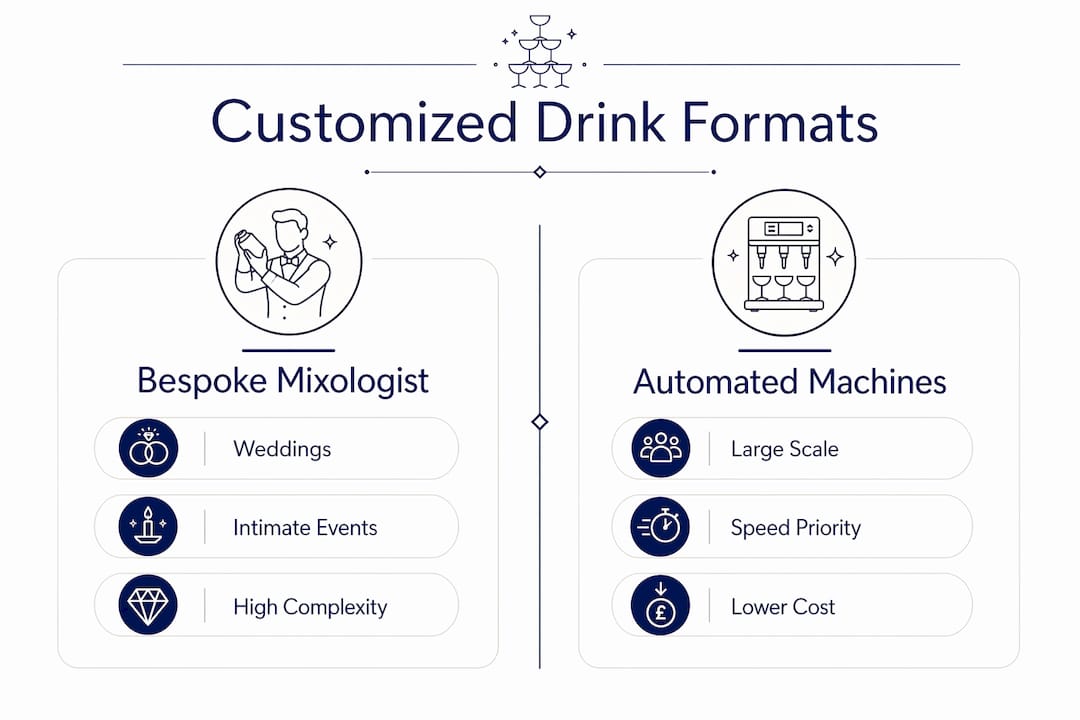
Three distinct formats define the market for personalized beverage services, and each suits a different event scale and budget.
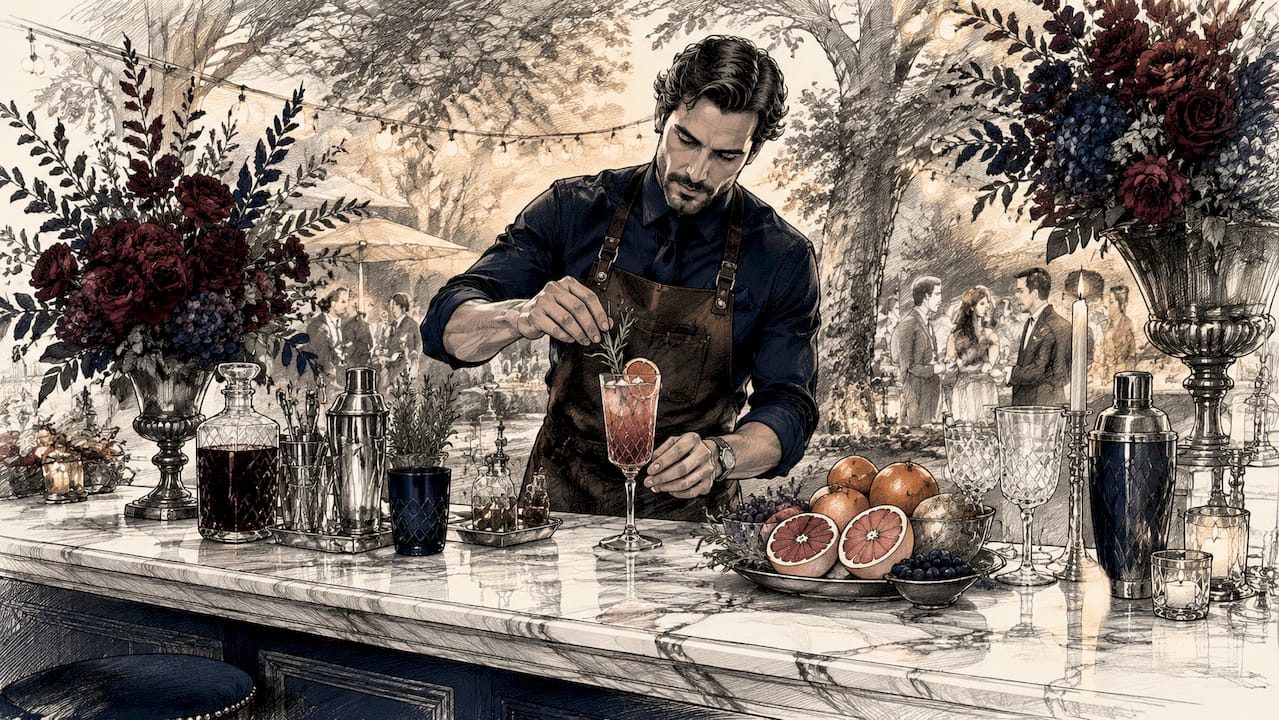
Human-curated bespoke cocktails are the gold standard. A skilled mixologist consults with the host in advance, develops a tailored drink menu around flavour preferences, dietary requirements, and event theme, then delivers each drink to order on the night. Venues like Plumette bar in Brussels have shown that bespoke cocktail pricing sits comfortably within the standard signature menu range, typically €12–€17 per drink with no additional charge for personalisation. That makes the premium feel accessible rather than prohibitive.
Automated cocktail machines serve a different purpose. These units can produce custom drinks or mocktails in as little as 20 seconds, making them ideal for high-volume events where speed matters as much as creativity. A corporate awards evening for 500 guests, for example, benefits from the consistency and pace that automation delivers. The trade-off is a reduced sense of theatre compared to a live mixologist.
DIY cocktail stations sit between the two. Guests select from a curated set of base spirits, mixers, and garnishes and build their own drink. This format works brilliantly for interactive party drink stations at relaxed celebrations where guest participation is part of the entertainment. The risk is inconsistency, which is why the ingredient selection must be pre-vetted by a professional.
| Format | Best for | Complexity | Relative cost |
|---|---|---|---|
| Bespoke mixologist | Weddings, intimate dinners | High | Higher |
| Automated machine | Large corporate events | Low | Medium |
| DIY cocktail station | Casual parties, team events | Medium | Lower |
Pro Tip: For events above 200 guests, combine an automated machine for speed with one live mixologist station for theatre. Guests get both efficiency and a memorable experience.
How to design a tailored drink menu that works under pressure
A tailored drink menu fails not because the cocktails are poor, but because the planning behind service is poor. Menu engineering professionals are clear on this: customisation does not mean total freedom. Success lies in engineered menus that guarantee balanced, repeatable cocktails every time.
The most effective structure for a bespoke beverage menu uses three tiers, a concept drawn from Savile Row tailoring. Tiered cocktail menus organised as Ready to Wear, Made to Measure, and Bespoke guide guests through personalisation while keeping service moving. Ready to Wear covers pre-built signature drinks. Made to Measure allows guests to adjust one or two variables, such as spirit base or sweetness level. Bespoke is a full consultation with the bartender for those who want something entirely their own.
Follow these steps when engineering your menu:
- Define your guest profile. Identify dietary restrictions, alcohol preferences, and flavour affinities before you write a single recipe. A corporate audience in London will have different expectations from a wedding party in rural Yorkshire.
- Limit the menu to 6–12 cocktails. Professional menu packages typically offer 6–12 options, balancing creative range with operational control. Fewer options mean faster service and more consistent quality.
- Cross-utilise ingredients. Every ingredient on your bar should appear in at least two drinks. This reduces waste, simplifies prep, and cuts costs without limiting the guest’s sense of choice.
- Set quality control standards. Agree on shelf-life rules for pre-batched elements, temperature standards for glassware, and a tasting protocol before the event opens. Consistency is the difference between a good bar and a great one.
- Include mocktail equivalents. Every cocktail on the menu should have a non-alcoholic counterpart. This is no longer optional at UK events; it is an expectation.
Pro Tip: Ask your mixologist to photograph the ingredient list and build specs for every drink. Guests who want to replicate custom drinks at home will remember your event long after the night ends.
How to align your drinks with event theme, season, and brand
A bespoke drink should be as expressive as the event’s décor and music. Drinks as event storytelling is a principle that the best event planners apply deliberately, not as an afterthought. When the flavour profile of a cocktail echoes the colour palette of the room or the season of the year, guests feel the coherence even if they cannot articulate why.
Seasonal botanicals are the most direct tool for this. A winter wedding calls for warming spices: cardamom, cinnamon, and smoked rosemary. A summer garden party invites elderflower, cucumber, and fresh mint. Aligning seasonal botanical ingredients with the event narrative creates a sensory experience that feels considered and complete.
Brand alignment matters just as much for corporate events. Consider these approaches:
- Custom labels on bottles or infusion jars. A company’s logo on a cocktail infusion jar turns a drink into a branded keepsake. Branded packaging transforms beverages into memorable gifts that guests take home, extending the event’s marketing reach.
- Signature drink names tied to the brand story. Naming a cocktail after a company milestone or product launch creates a conversation piece at the bar.
- Colour-matched garnishes and glassware. A drink served in a coupe glass with a garnish that matches the brand’s primary colour reinforces visual identity without a word being spoken.
- Thematic mocktail options. For inclusive corporate events, a zero-alcohol drink that mirrors the signature cocktail’s colour and garnish ensures every guest feels part of the experience.
For guidance on how themed beverage displays reinforce event identity, the principles apply equally to drinks menus and physical display structures.
What are the most common pitfalls in personalised beverage services?
Service system design matters more than menu complexity alone. Most problems at bespoke bars trace back to planning failures, not creativity failures. Recognising these pitfalls early saves you from a queue that stretches across the venue.
- Bottlenecks at the bar. A single bespoke cocktail station cannot serve 300 guests efficiently. Plan one bartender per 50–75 guests for interactive formats, and pre-batch any elements that do not require fresh preparation.
- Flavour clashes from unstructured menus. When guests have total freedom to combine ingredients, poor combinations are inevitable. Pre-vetted flavour profiles curated by a mixologist prevent this. The menu should guide choice, not simply list every available ingredient.
- Inconsistent quality across the evening. The first cocktail served at 7pm should taste identical to the one served at 10pm. Pre-batching base mixes, standardising measures, and running a mid-event quality check are non-negotiable for large events.
- Guest misexpectations. If guests arrive expecting a fully bespoke experience but find a limited menu, disappointment follows. Communicate the format clearly in advance, whether through event invitations, table cards, or a brief introduction from the host.
- Undertrained staff. A beautifully engineered menu collapses if the bartenders cannot explain it confidently. Invest in a pre-event briefing that covers every drink’s story, ingredients, and allergen information.
Pairing your drinks programme with a well-considered event drinks styling guide helps you address both the visual and operational dimensions of service before the event begins.
Key takeaways
Customized drink experiences succeed when menu engineering, service planning, and thematic alignment work together from the start.
| Point | Details |
|---|---|
| Engineer the menu, not just the recipes | Limit options to 6–12 drinks and use tiered structures to balance creativity with service speed. |
| Match drinks to event context | Use seasonal botanicals, brand colours, and signature names to make beverages part of the event’s story. |
| Plan service flow first | Assign one bartender per 50–75 guests and pre-batch base mixes to prevent bottlenecks. |
| Branded packaging adds lasting value | Custom labels on cocktail jars serve as takeaway gifts and extend your event’s marketing impact. |
| Communicate the format clearly | Tell guests what to expect before they reach the bar to manage expectations and improve satisfaction. |
Why I think most event planners underestimate the drinks programme
Most event planners spend months on venue, catering, and entertainment, then treat the drinks as a final checkbox. That is a mistake I have seen repeated at events of every scale. The bar is where guests spend the most time between speeches, courses, and performances. It is the social engine of the evening.
The insight that changed how I think about this comes from the tailored menu approach: treat the drinks list as an editorial experience, not a product catalogue. When a tiered editorial menu guides guests from familiar to adventurous, it creates a journey rather than a transaction. Guests remember that. They talk about it.
The second thing I would push back on is the assumption that more choice equals more personalisation. The opposite is true. A menu of four brilliantly curated cocktails, each with a clear story and a mocktail counterpart, delivers a far more personal experience than a bar with 30 options and no curation. Restraint is a form of hospitality. It tells guests you have thought carefully about what they will enjoy, rather than simply offering everything and hoping something lands.
Finally, do not overlook the physical presentation. A beautifully designed drink, served in the right glass with a considered garnish, communicates quality before the first sip. The visual impact of beverage displays is as much a part of the guest experience as the flavour itself.
— Darren
How Champagnetowerhire can complete your bespoke beverage vision
A perfectly engineered cocktail menu deserves an equally impressive centrepiece. Champagnetowerhire specialises in bespoke champagne tower hire across the UK and internationally, creating stunning prosecco and champagne displays that become the visual anchor of any celebration. Every tower is custom-built to suit your event’s scale and aesthetic, with optional additions including fresh flowers and strawberries for a truly lavish finish. Fully staffed setups mean you focus on your guests while the team handles every detail. Whether you are hosting a wedding, a corporate gala, or a private party, a champagne tower from Champagnetowerhire turns your drinks programme into a spectacle. Explore corporate champagne tower options or request an instant quote to see how effortlessly a tower fits your vision.
FAQ
What are customized drink experiences?
Customized drink experiences are curated beverage services tailored to individual guest preferences, event themes, and brand identity. They range from bespoke cocktails crafted by mixologists to automated machines and interactive DIY stations.
How many cocktail options should a bespoke event menu include?
Professional menu engineering recommends 6–12 cocktails for most events. Limiting options maintains service speed, ingredient consistency, and overall drink quality throughout the evening.
Can automated cocktail machines replace a live mixologist?
Automated machines produce custom drinks in as little as 20 seconds and suit high-volume events well. For weddings or intimate dinners where theatre and personal interaction matter, a live mixologist remains the stronger choice.
How do I align my drinks menu with an event theme?
Use seasonal botanicals, colour-matched garnishes, and signature drink names tied to the event narrative. Pairing flavour profiles with the event’s décor and music creates a cohesive sensory experience guests notice immediately.
What is the biggest operational mistake at bespoke bars?
The most common failure is poor service flow planning. Assigning too few bartenders and skipping pre-batching of base mixes creates queues and inconsistent quality. Plan one bartender per 50–75 guests for interactive formats.


