

A flawlessly executed champagne tower never fails to capture attention, yet building one demands far more than just stacking glasses and pouring bubbly. With each tier, every precise placement and careful pour shapes a spectacle that can define an event. Professional event planners know that a single misstep can topple the display, making mastery of champagne tower terminology and technique essential. This guide breaks down key terms, expert methods, and creative concepts, turning a challenging tradition into an unforgettable experience.
Table of Contents
- Defining Champagne Tower Terminology And Concepts
- Types Of Champagne Towers And Key Variations
- Essential Terms: Glasses, Tiers, And Pouring Techniques
- Tower Setup, Accessories, And Staffing Explained
- Safety, Etiquette, And Common Pitfalls To Avoid
Key Takeaways
| Point | Details |
|---|---|
| Champagne Tower Design | Proper glass selection and precise calculations are essential for creating a visually stunning champagne tower. Utilize coupe glasses for stability and optimal design. |
| Event Planning Expertise | Designate a Tower Master for professional management during setup and service, ensuring a seamless champagne pouring experience. |
| Safety and Etiquette | Implement safety measures, including strategic tower placement and professional supervision, to mitigate risks during events. |
| Creative Enhancements | Incorporate decorative elements such as lighting and thematic details to elevate the aesthetic appeal of the champagne tower display. |
Defining Champagne Tower Terminology and Concepts
A champagne tower, also known as a champagne fountain, represents an exquisite centerpiece that transforms beverage service into a spectacular visual experience. According to Dine, this architectural marvel involves stacking multiple coupe glasses in a precise pyramid formation, allowing champagne to cascade elegantly from the uppermost glass through each subsequent tier.
The fundamental structure typically involves careful mathematical precision. Professional champagne tower designers strategically calculate glass placement, ensuring a symmetrical design that enables smooth liquid flow. Key terminology includes:
- Base Layer: The foundational row of glasses supporting the entire structure
- Cascading Effect: The seamless liquid movement from top glasses to bottom
- Coupe Glasses: Traditional, wide-rimmed glasses specifically used for tower construction
- Height Configuration: The total number of glasses and pyramid levels
From a technical perspective, Champagne.fr highlights that understanding champagne classifications like ‘Brut’ and ‘Blanc de Blancs’ can significantly enhance the tower experience. Selecting the right champagne becomes crucial for achieving both visual drama and exceptional taste. Professional event planners recommend choosing sparkling wines with consistent effervescence and balanced viscosity to ensure smooth, photogenic cascading between glasses.
While the concept might seem simple, creating a flawless champagne tower requires significant skill. Precise glass alignment, careful pouring technique, and understanding fluid dynamics transform this from a mere beverage service into an unforgettable event highlight. Whether for weddings, corporate celebrations, or luxurious soirées, the champagne tower remains a timeless symbol of sophistication and celebration.
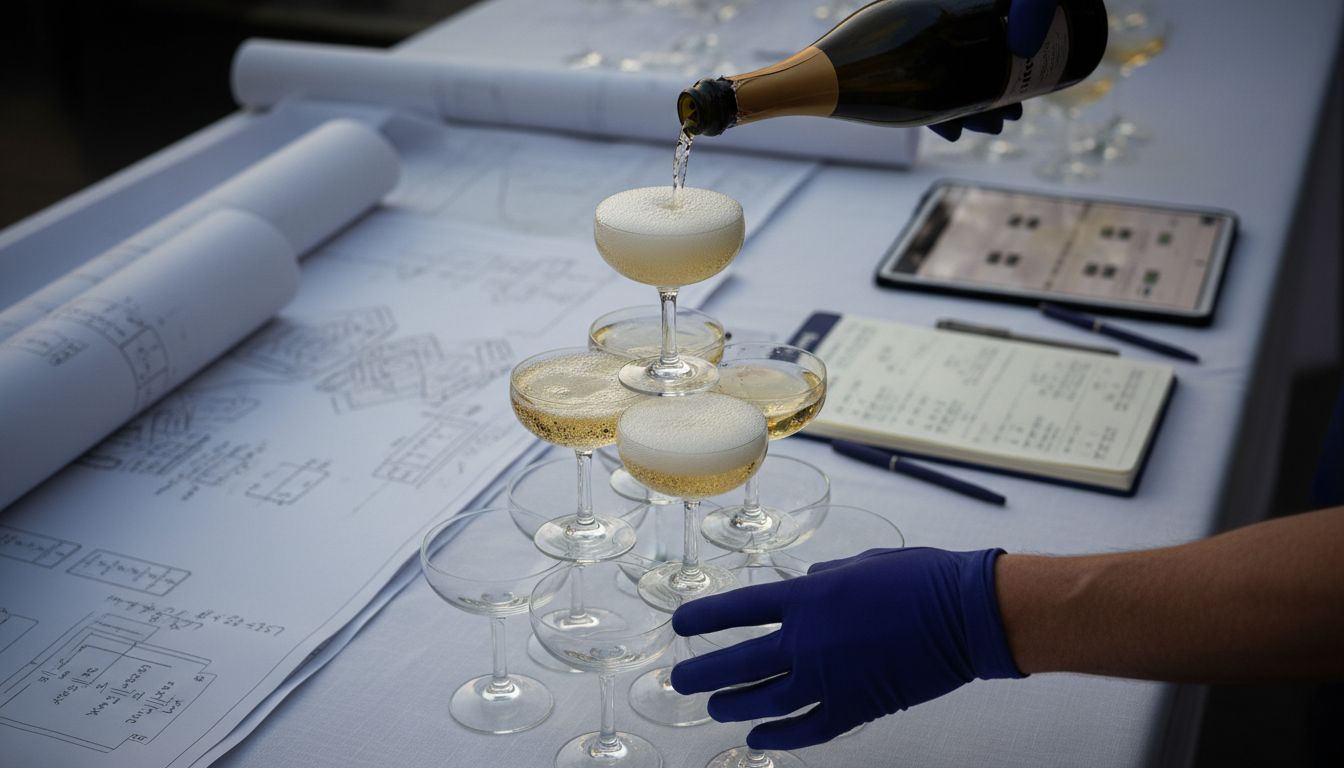
For those seeking to master the nuanced art of champagne tower design, our comprehensive guide on champagne tower etiquette offers deeper insights into creating truly memorable displays.
Types of Champagne Towers and Key Variations
Champagne towers represent a dynamic art form with numerous design variations that cater to different event styles and aesthetic preferences. According to Connections Entertainment, traditional towers typically feature up to 60 coupe glasses arranged in a six-tier configuration, though modern interpretations have dramatically expanded design possibilities.
Tower Variations include:
- Classic Pyramid Tower: The traditional six-tier design with precise glass stacking
- Asymmetrical Modern Tower: Non-traditional arrangements with intentional geometric disruptions
- Themed Tower: Customized displays incorporating event-specific decorative elements
- Illuminated Tower: Incorporating lighting effects for dramatic visual impact
Professional event designers now push creative boundaries by integrating unique embellishments. Connections Entertainment highlights emerging trends like incorporating chocolate-dipped strawberries and sophisticated lighting elements, transforming the champagne tower from a mere beverage service into an interactive art installation.
Size and scale play crucial roles in tower design. Smaller towers might feature three to four tiers suitable for intimate gatherings, while larger corporate or wedding events could showcase elaborate structures with seven or eight tiers. Glass selection becomes equally important, with crystal coupes offering enhanced elegance compared to standard glassware.
For those wanting to explore stunning visual representations of these design concepts, our comprehensive examples of champagne towers showcase the incredible versatility and creativity possible in modern champagne tower design.

Essential Terms: Glasses, Tiers, and Pouring Techniques
Champagne tower construction is a delicate art that requires precision and understanding of specific technical elements. According to The Knot, coupe glasses are the cornerstone of a successful champagne tower, prized for their wide bowl and thick stem which provide exceptional stability when stacked for intricate displays.
Key Glass and Structural Considerations:
- Glass Selection: Coupe glasses with substantial stems and uniform rim sizes
- Tier Calculation: Geometric progression from base to peak
- Pouring Angle: 45-degree tilt to minimize splashing
- Glass Spacing: Minimal gap between glasses to ensure smooth cascading
Professional champagne tower designers must also master precise volume calculations. KegWorks highlights that a standard champagne bottle serves approximately five glasses, making careful bottle allocation critical. For a five-tier tower featuring 55 glasses, event planners will need a minimum of five to six bottles to ensure a complete and visually stunning display.
The pouring technique represents another crucial aspect of champagne tower mastery. Professionals recommend a slow, steady pour directly into the top glass, allowing champagne to naturally cascade through the carefully arranged pyramid. Temperature and champagne viscosity play significant roles in achieving that perfect, photogenic flow that transforms a simple beverage service into a mesmerizing event centerpiece.
To refine your champagne tower techniques and explore professional strategies, our comprehensive step-by-step champagne display guide offers expert insights for creating truly memorable event experiences.
Tower Setup, Accessories, and Staffing Explained
Creating a flawless champagne tower requires meticulous planning and professional expertise. Georgina Rose Events emphasizes the critical importance of designating a Tower Master – a dedicated professional responsible for ensuring precise setup and seamless execution throughout the event.
Essential Tower Setup Components:
- Stable Base: Sturdy, level surface to prevent tower collapse
- Precise Glass Alignment: Perfectly centered glasses for optimal cascading
- Temperature Control: Maintaining ideal champagne chilling conditions
- Backup Glassware: Additional glasses for potential replacements
Accessories can dramatically elevate the visual spectacle of a champagne tower. Professional event designers recommend incorporating dramatic elements like sparklers during the pouring ceremony, creating a mesmerizing theatrical moment that transforms the beverage service into an unforgettable experience. Lighting, floral arrangements, and custom-designed platforms can further enhance the tower’s aesthetic appeal.
Staffing represents another crucial consideration for champagne tower success. Professional champagne tower attendants are trained not just in pouring techniques, but in managing the entire spectacle – from initial setup to the final dramatic cascade. They understand the nuanced art of maintaining glass stability, controlling pour speed, and creating a seamless, elegant presentation that captivates event guests.
For event planners seeking comprehensive guidance on professional champagne tower management, our staffed champagne towers guide offers expert insights into creating truly spectacular beverage displays that will leave a lasting impression on your guests.
Safety, Etiquette, and Common Pitfalls to Avoid
Champagne towers, while spectacular, require careful navigation of potential risks and professional considerations. The Knot emphasizes the critical importance of liability insurance when incorporating these dramatic displays, acknowledging the potential challenges of glass spillage and potential accidents during event setup.
Key Safety Precautions:
- Strategic Placement: Position towers away from high-traffic areas
- Stable Foundation: Ensure level, secure surface for glass arrangement
- Professional Supervision: Designate trained staff for tower management
- Backup Equipment: Maintain additional glassware for contingencies
Claudia & Co. recommends meticulous venue consultation and strategic timing for champagne tower presentations. Experienced event planners understand that guest engagement peaks when the tower is unveiled at precisely the right moment, balancing dramatic effect with practical considerations.
Etiquette plays a substantial role in successful champagne tower execution. This includes understanding appropriate pouring techniques, managing guest interactions, and maintaining a sophisticated atmosphere. Professional attendants must be trained not just in technical skills, but in creating an elegant, controlled environment that transforms the tower from a potential liability into a memorable event highlight.
For event professionals seeking comprehensive guidance on navigating the intricate world of champagne tower management, our expert guide on staffed champagne towers provides invaluable insights into creating safe, stunning beverage displays.
Elevate Your Event with Expert Champagne Tower Solutions
Creating the perfect champagne tower requires more than just stacking glasses it involves precision, the right glassware, impeccable pouring techniques, and flawless setup to achieve that stunning cascading effect. If you have been navigating complex terms like “base layer,” “coupe glasses,” or “tier calculation,” and are concerned about safety and smooth execution, you are not alone. Many event organisers face challenges in bringing this elegant spectacle to life while maintaining sophistication and guest safety.
At Champagne Tower Hire, we understand these intricacies and offer bespoke champagne tower services tailored to your unique event needs. Whether you envision a classic pyramid or a themed illuminated tower with fresh flowers or chocolate strawberries, our fully staffed teams ensure every detail is handled expertly from setup to service. Explore our variety of options in the Uncategorized Archives – Champagne Tower Hire to discover how to make your celebration unforgettable.
Do not let complicated champagne tower terminology or setup concerns hold you back. Visit our homepage now for an instant quote and expert advice. Book today to guarantee your spectacular champagne display steals the show, delighting your guests with style and grace.
Frequently Asked Questions
What is a champagne tower and how does it work?
A champagne tower, also known as a champagne fountain, is an elegant centerpiece made by stacking coupe glasses in a pyramid shape, allowing champagne to cascade from the top glass to the lower tiers.
What types of glasses are best for creating a champagne tower?
Coupe glasses are ideal for champagne towers due to their wide rims and sturdy stems, which provide stability and support for the cascading liquid.
How can I ensure the champagne pour is perfect for cascading?
To achieve a successful cascade, pour the champagne at a 45-degree angle directly into the top glass, allowing it to flow naturally into the lower glasses without splashing.
What should I consider for the setup of a champagne tower at an event?
Key considerations include ensuring a stable base, precise glass alignment, ideal temperature control for the champagne, and having backup glassware for any replacements during the event.


