

Over 80 percent of luxury british events feature champagne towers as a striking centrepiece that elevates the party atmosphere. These stunning structures blend visual artistry with meticulous planning, turning a simple beverage service into a spectacle that guests remember. Whether you are organising an intimate gathering or a lavish gala, understanding champagne tower sizes and designs can help you create a show-stopping moment that delights your guests and defines the celebration.
Table of Contents
- Defining Champagne Tower Sizes And Concepts
- Popular Size Variations And Capacities
- Visual Impact And Event Suitability
- Customisation Options And Enhancements
- Cost Considerations And Common Pitfalls
Key Takeaways
| Point | Details |
|---|---|
| Champagne Tower Sizes | Towers vary in size from 3-tier compact designs for smaller gatherings to 10-tier grand structures for large events, impacting their visual effect and guest experience. |
| Customisation Options | Options include glass selection and decorative enhancements, allowing towers to reflect individual style and event character. |
| Cost Considerations | Effective budgeting is essential, including costs for glasses, construction, and potential breakages to avoid common financial pitfalls. |
| Visual Impact | The configuration of the tower significantly influences event atmosphere, making careful selection critical for desired emotional responses. |
Defining Champagne Tower Sizes and Concepts
Champagne towers represent more than just a celebratory beverage display – they are architectural marvels of hospitality design that transform liquid into a stunning visual spectacle. These carefully constructed pyramidal structures transform champagne serving from a simple drink distribution into an art form, creating memorable moments at weddings, corporate events, and luxury gatherings.
The fundamental concept of a champagne tower involves precise structural engineering principles that balance elegance with mathematical precision. Tower Sizes typically range from compact 3-tier designs suitable for intimate gatherings to elaborate 10-tier structures that can serve over 100 guests. Each tier is strategically positioned to enable a cascading champagne effect, where liquid flows seamlessly from the topmost glass through carefully arranged layers beneath.
Interestingly, the champagne tower’s design has roots in architectural thinking. Xiangfei Yan’s research at the Royal College of Art explored how scaffolding and structural frameworks can reveal the underlying mathematical beauty of celebratory constructions. Professional champagne tower designers must consider critical factors like glass diameter, height between tiers, and weight distribution to ensure a flawless cascading experience.
When planning a champagne tower, event hosts should consider several key dimensions:
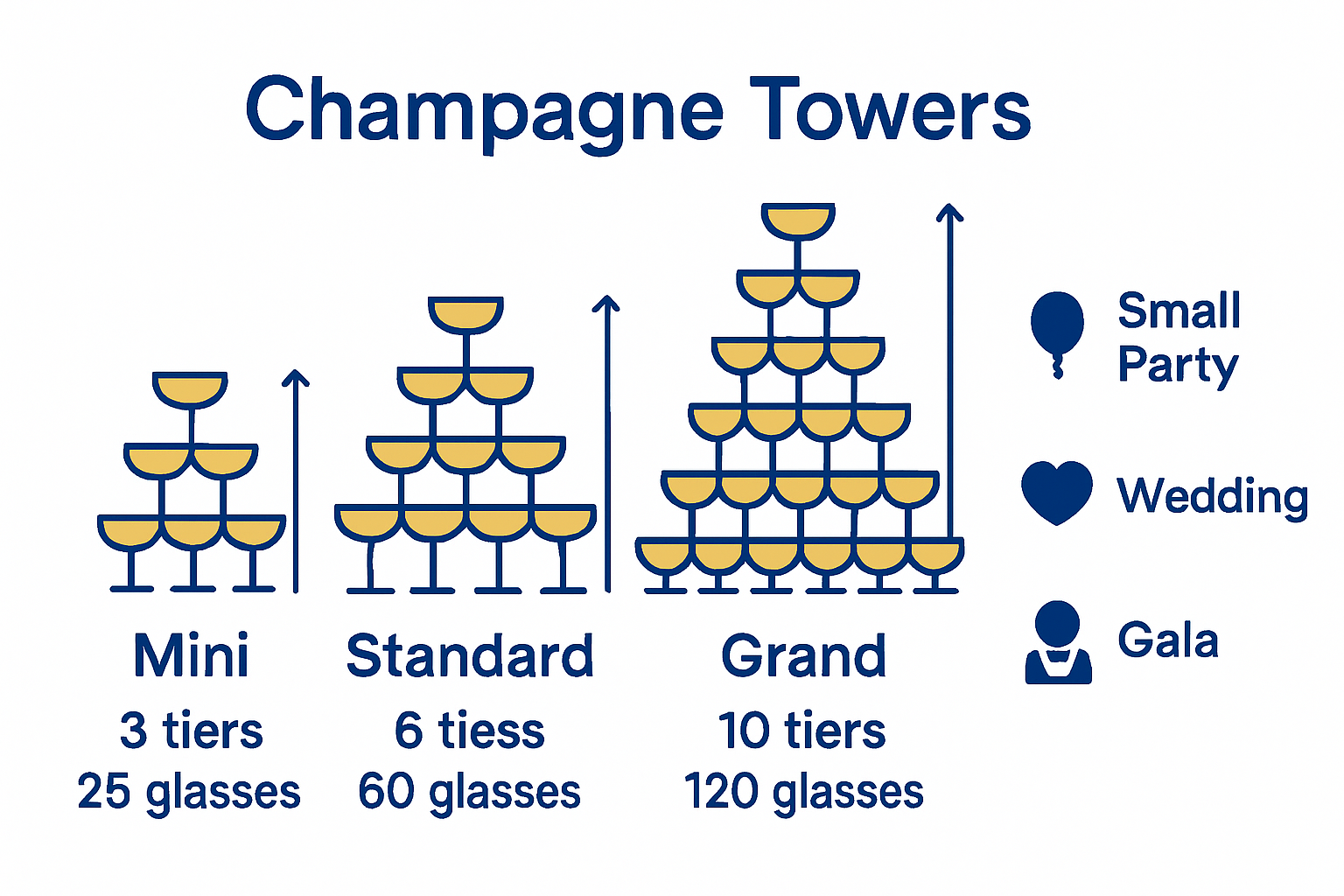
- Mini Tower: 3-4 tiers (25-45 glasses)
- Standard Tower: 5-7 tiers (60-100 glasses)
- Grand Tower: 8-10 tiers (120-200 glasses)
Each size offers a unique visual impact, transforming a simple beverage service into a centrepiece that captivates guests and creates lasting memories of sophistication and celebration.
Popular Size Variations and Capacities
Champagne towers are not a one-size-fits-all spectacle, but rather a nuanced art form with multiple configurations designed to suit different event scales and aesthetic preferences. Architectural research from the Royal College of Art reveals that tower dimensions are critical in creating visual impact, with each size variation offering unique possibilities for event design.
The most common champagne tower configurations can be categorised into three primary sizes, each serving distinct purposes:
Petite Tower: 3 tiers, 15-30 glasses
- Perfect for intimate gatherings
- Typically used in small weddings or exclusive corporate events
- Requires precise structural engineering to maintain stability
Standard Tower: 5-7 tiers, 60-100 glasses
- Most popular for medium-sized events
- Ideal for weddings with 50-100 guests
- Creates dramatic visual centerpiece
Grand Tower: 8-10 tiers, 120-200 glasses
- Spectacular option for large corporate events
- Requires advanced technical planning
- Maximum visual drama and guest engagement
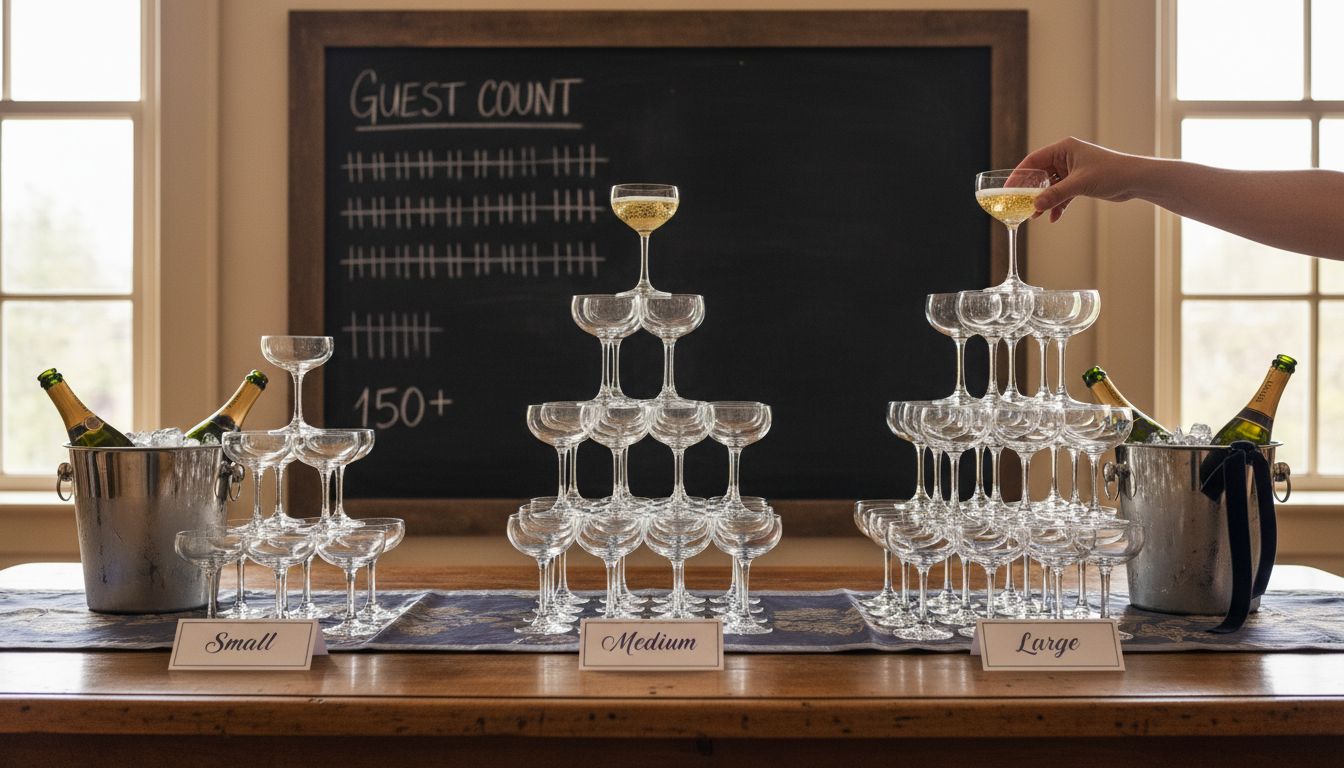
The selection of tower size depends on multiple factors including guest count, venue space, and desired theatrical presentation. Professional event designers understand that tower configuration is not merely about quantity, but about creating a memorable sensory experience that transforms beverage service into performance art.
Visual Impact and Event Suitability
Champagne towers are more than mere beverage displays – they are powerful visual narratives that transform event spaces through architectural drama and sensory choreography. Xiangfei Yan’s research at the Royal College of Art illuminates how these structures transcend functional drink service, becoming sophisticated sculptural experiences that communicate event sophistication and cultural elegance.
The visual impact of a champagne tower varies dramatically based on its configuration, with each size creating a distinct emotional and spatial atmosphere. Structural design principles reveal that tower height, glass arrangement, and cascading technique dramatically influence guest perception and event energy:
- Intimate Events: Small 3-tier towers create subtle, elegant moments
- Medium Gatherings: 5-7 tier towers generate dramatic focal points
- Large Celebrations: Grand 8-10 tier towers produce theatrical spectacles
Event planners must consider multiple factors when selecting a champagne tower, including venue architecture, guest expectations, and desired emotional response. A meticulously designed tower can transform a standard reception into an unforgettable experience, turning liquid refreshment into a performance art that captivates and delights attendees. Professional event configuration strategies recognize that these structures are not merely drink dispensers, but dynamic visual statements that reflect event sophistication and organisational creativity.
Customisation Options and Enhancements
Champagne towers represent far more than standard beverage service – they are canvases for creative expression and personalisation. Architectural research from the Royal College of Art reveals that customisation transforms these structures from simple drink dispensers into narrative experiences that reflect individual style and event character.
Customisation options span multiple dimensions, allowing event planners to craft truly unique visual statements:
Glass Selection
- Crystal champagne flutes for ultimate elegance
- Coloured glasses matching event colour schemes
- Personalised engraved glasses for weddings and corporate events
Decorative Enhancements
- Floral garlands between tower tiers
- Metallic or LED lighting effects
- Themed decorative elements reflecting event context
Professional event configuration strategies recognize that these enhancements are not merely aesthetic choices, but powerful communication tools. A carefully designed champagne tower can convey sophistication, celebrate brand identity, or commemorate special moments. The structural engineering behind these designs ensures that visual creativity does not compromise the tower’s fundamental stability and performance, allowing event hosts to balance artistic vision with technical precision.
Cost Considerations and Common Pitfalls
Champagne towers represent sophisticated event investments that require meticulous financial and technical planning. Architectural research from the Royal College of Art highlights the complex economic and structural challenges event organisers must navigate when creating these dramatic beverage displays.
The financial landscape of champagne towers involves several critical cost dimensions:
Glass Expenses
- Quality champagne glasses range £3-£25 per unit
- Replacement costs for breakages
- Potential rental versus purchase options
Tower Construction Costs
- Base tower hire: £250-£1,500
- Custom design surcharges
- Technical support and professional setup
Common pitfalls that can escalate expenses include:
- Underestimating glass quantity
- Neglecting professional installation
- Choosing inappropriate glass types
- Failing to account for potential breakages
Professional event configuration strategies emphasise the importance of comprehensive budgeting. The structural engineering behind these designs demands careful financial consideration to ensure both aesthetic excellence and economic efficiency. Experienced event planners understand that a champagne tower is not merely an expense, but a strategic investment in creating unforgettable moments.
Elevate Your Event with the Perfect Champagne Tower Size
Choosing the ideal champagne tower size for your event can feel overwhelming. Whether you struggle to balance guest numbers with visual impact or worry about structural stability and cost, understanding the distinctions between petite, standard, and grand towers is key. Our expert team at Champagne Tower Hire specialises in crafting bespoke champagne towers tailored exactly to your needs, ensuring flawless elegance and memorable moments.
Don’t leave your event details to chance. Explore our insights in the Uncategorized Archives – Champagne Tower Hire to deepen your understanding of champagne tower concepts and discover how our fully staffed setups and customisation options bring your vision to life. Take the next step now and make your celebration unforgettable by requesting an instant quote or consultation with us at Champagne Tower Hire. Your perfect champagne tower awaits.
Frequently Asked Questions
What are the different sizes of champagne towers?
Champagne towers typically range from compact mini towers with 3-4 tiers (25-45 glasses) to grand towers with 8-10 tiers (120-200 glasses). The sizes cater to various event scales, from intimate gatherings to large corporate celebrations.
How many guests can a standard champagne tower serve?
A standard champagne tower, which consists of 5-7 tiers, can serve between 60 to 100 glasses, making it ideal for medium-sized events, such as weddings with 50-100 guests.
What factors should be considered when planning a champagne tower?
When planning a champagne tower, event hosts should consider guest count, venue space, the desired visual impact, and the structural stability of the tower to ensure a flawless cascading experience.
How can I customise a champagne tower for my event?
Customisation options for champagne towers include selecting glass types (like crystal flutes or coloured glasses), adding decorative enhancements like floral garlands and lighting effects, and personalising glasses for specific events, allowing for a unique visual statement.


