

Setting up a champagne tower in a London venue demands more than just visual flair—it calls for rigorous planning and attention to safety. For wedding planners and luxury event organisers, balancing stunning centrepieces with guest protection is non-negotiable. With strict UK regulations governing temporary structures, understanding the core concepts behind tower assembly and risk management elevates your event and shields your reputation. Discover expert guidance for creating a breathtaking, safe champagne display.
Table of Contents
- Champagne Towers: Definition And Core Concepts
- Types Of Champagne Tower Structures
- Safety Protocols And Legal Requirements
- Staff Roles And Professional Setup Procedures
- Risks, Liabilities, And How To Prevent Accidents
Key Takeaways
| Point | Details |
|---|---|
| Champagne Tower Design | Towers must adhere to structural principles ensuring stability and safety, significantly impacting the overall event experience. |
| Sizing and Structure | Selecting the appropriate size and structure for the venue is crucial to prevent safety issues and enhance visual impact. |
| Safety Protocols | Compliance with UK safety regulations, including risk assessments and trained personnel, is essential to protect guests during events. |
| Professional Setup | Clear staff roles and documented procedures are vital for successful champagne tower service and to mitigate risks effectively. |
Champagne towers: definition and core concepts
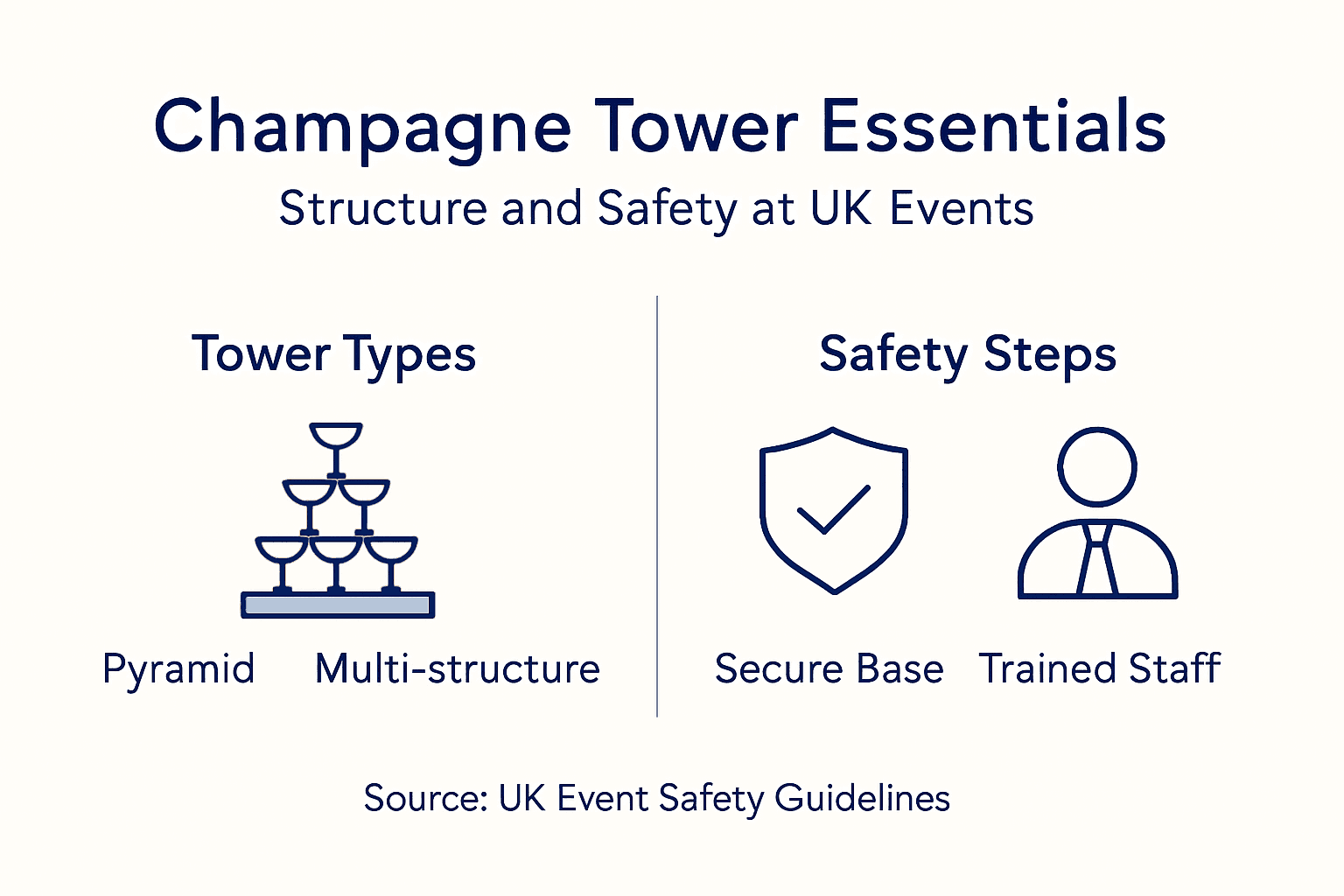
A champagne tower is a pyramid-shaped display constructed from stacked champagne or prosecco glasses, typically filled and arranged for celebratory toasts at weddings, corporate events, and luxury celebrations. The structure creates a striking visual centrepiece whilst serving a functional purpose—guests pour champagne into the top glass, which overflows into the glasses below, creating an elegant cascade effect.
These towers aren’t simply random stacks. They follow specific architectural principles that ensure stability, safety, and visual impact. Understanding champagne tower terminology helps you communicate your vision clearly with your event suppliers and ensures everyone’s on the same page regarding structure, size, and execution.
Core structural elements include:
- Base layer – The widest section supporting the entire tower’s weight
- Intermediate layers – Progressively smaller tiers creating the pyramid shape
- Top glass – The single glass where the pour begins
- Support frame – Internal structure (typically acrylic or metal) holding glasses securely
The number of glasses varies significantly based on your event size and venue. A small celebration might feature a 3-tier tower with around 20 glasses, whilst a large wedding could showcase a 5 or 6-tier display holding 100+ glasses.
Why towers matter for your event:
They transform a simple toast into a memorable moment. The visual spectacle of champagne cascading down creates Instagram-worthy content and sets a tone of sophistication and celebration. For wedding planners and luxury event organisers, towers demonstrate attention to detail and elevate the entire guest experience.
The most elegant towers balance visual drama with practical functionality—they must look stunning whilst remaining completely safe for your guests.
The tower’s impact depends on proper sizing for your venue. A tower that’s too small in a grand ballroom disappears, whilst one too large in an intimate space overwhelms the space and creates safety concerns. This is why selecting the appropriate champagne tower size for your specific event venue matters tremendously.
Most professional towers use either plastic or glass flutes, not traditional champagne coupes. The flute’s narrower opening prevents splashing during the pour, maintains proper presentation, and ensures the cascade works smoothly—critical details that separate amateur setups from professional displays.
Pro tip: When briefing your tower supplier, always confirm the glass type, number of glasses, and whether the frame is included in your hire—these specifications directly impact both safety and visual impact on the day.
Types of champagne tower structures
Champagne towers come in several distinct structural designs, each offering different visual impacts and practical benefits for your event. Understanding these variations helps you select the perfect style for your venue, guest count, and celebration aesthetic.
The traditional pyramid tower is the most recognisable design. It features stacked rows of glasses arranged in a symmetrical triangle, with wider bases and progressively narrower tiers towards the top. This classic structure creates the iconic cascading effect that guests expect and photograph beautifully. The pyramid design maximises visual impact whilst maintaining excellent stability when properly constructed.
Multi-structure displays offer flexibility for larger celebrations. Rather than a single tower, these setups feature multiple smaller pyramids arranged together, allowing you to cover more space and serve more guests simultaneously. This approach works exceptionally well for grand ballrooms or outdoor marquees where a single tower might feel proportionally small.
The tower frame types significantly affect both safety and appearance:
Here’s a quick comparison of champagne tower frame types and their recommended uses:
| Frame Type | Appearance | Best For |
|---|---|---|
| Acrylic | Transparent, sleek | Modern venues, minimal décor |
| Metal | Contemporary, robust | Large events, safety focus |
| Wooden | Warm, natural finish | Rustic, luxury settings |
| Custom-built | Bespoke, themed styling | High-profile branding, unique themes |
- Acrylic frames – Transparent, modern look that doesn’t distract from the glasses
- Metal stands – Sleek, structural support with a contemporary finish
- Wooden bases – Luxurious, natural aesthetic perfect for rustic-themed events
- Custom-built frames – Tailored designs matching your event’s specific theme or branding
Tiered variations change how dramatically the tower looks. A shallow 3-tier design works brilliantly in intimate spaces, whilst a towering 6 or 7-tier structure commands attention in vast venues. Examples of champagne towers for events demonstrate how different configurations create entirely different visual statements.
The most striking towers aren’t always the largest—they’re the ones proportionally matched to their venue and audience.
Some venues require bespoke or asymmetrical designs that break from traditional pyramid shapes. These custom structures might feature unusual angles, integrated lighting, or complementary floral arrangements. They demand specialised engineering but create absolutely unforgettable focal points.
Glass type also influences structure. Professional setups use plastic flutes for safety-conscious events or outdoor occasions, whilst crystal or premium glass elevates the luxury feel for black-tie affairs. Your choice affects both the structural weight and the overall visual elegance.
The foundation and stability system varies between designs. Some towers use weighted bases, others rely on internal bracing, and premium setups employ multiple safety mechanisms. This directly impacts how securely glasses sit and how smoothly the champagne cascades.
Pro tip: Match your tower structure to your venue’s architectural style—a modern metal frame complements contemporary spaces, whilst wooden bases enhance traditional ballrooms, ensuring your tower feels like an intentional design element rather than a hired prop.
Safety protocols and legal requirements
Champagne towers aren’t just decorative—they’re temporary structures that must comply with UK safety standards. As a wedding planner or event organiser, understanding these requirements protects your guests and your liability.

The UK enforces strict safety obligations for temporary structures. Work at Height Regulations 2005 establish baseline requirements for any elevated structure, including champagne towers. These regulations mandate that structures be erected by trained personnel, properly secured, and regularly inspected to prevent collapse or mishaps.
Your champagne tower setup must include several key safety elements:
- Secure, level base – The foundation prevents tipping and ensures stability on any venue floor
- Guardrails or barriers – These keep guests at safe distances during the pour
- Manufacturer-approved assembly – Only following original specifications ensures structural integrity
- Regular inspections – Checking for damage or instability throughout your event
Risk assessments are non-negotiable. Before your event, conduct a thorough evaluation of your specific venue, guest numbers, and champagne tower specifications. Document this assessment and share it with your supplier. This protects you legally and identifies potential hazards beforehand.
A thorough risk assessment isn’t bureaucracy—it’s your first line of defence against accidents and liability claims.
Trained personnel must handle setup and breakdown. Don’t attempt assembly yourself or allow untrained staff to manage the tower. Professional champagne tower suppliers have documented training and experience with safe assembly procedures that meet regulatory standards.
Venue-specific considerations matter tremendously. Sloped floors, outdoor conditions, wind exposure, and nearby foot traffic all affect safety. Discuss these factors explicitly with your supplier before booking. They’ll advise whether your venue suits champagne towers or recommend modifications.
Liability insurance is essential. Confirm your event liability policy covers champagne tower displays. Some policies require additional coverage for this specific element. Equally important: ensure your supplier carries comprehensive public liability insurance protecting guests against injury.
Guest proximity and crowd management directly impact safety. Create clear boundaries around the tower using velvet ropes or barriers. Train your staff to manage the viewing area and prevent guests from leaning on, touching, or interfering with the structure.
During the event, maintain constant supervision. Have a designated person responsible for monitoring the tower throughout service. They’ll spot potential issues immediately and can respond quickly if problems arise.
Pro tip: Request written safety documentation from your champagne tower supplier, including assembly specifications, inspection checklists, and emergency procedures—having this in writing protects both parties and demonstrates your professional approach to guest safety.
Staff roles and professional setup procedures
Successful champagne tower service depends entirely on clear role assignments and professional execution. Your team needs defined responsibilities so everyone knows their purpose and can respond to issues immediately.
The event organiser (typically you) holds overall accountability. You coordinate between suppliers, venues, and staff whilst ensuring safety protocols are in place. You’re ultimately responsible for guest experience and safety compliance throughout the evening.
The champagne tower technician is your most critical staff member. This professional assembles the tower, inspects it regularly, and manages the actual pouring process. They possess specialised training in structural stability, glass arrangement, and safe champagne service—skills that cannot be improvised.
Designate a safety officer for your event. This person monitors the tower throughout service, checks for instability or damage, manages guest proximity, and communicates hazards to staff. Assigning competent staff to specific roles prevents confusion and ensures rapid response to problems.
Key staff responsibilities include:
To help assess event readiness, here’s a summary of essential staff roles and their main tasks during champagne tower service:
| Staff Role | Core Responsibilities | Impact on Event Safety |
|---|---|---|
| Event Organiser | Oversees planning & compliance | Ensures legal and supplier alignment |
| Technician | Assembles, inspects, pours | Prevents structural mishaps |
| Safety Officer | Monitors hazards & boundaries | Guards guests against risks |
| Crowd Manager | Maintains guest distance | Reduces accident potential |
- Setup crew – Transport, position, and verify structural integrity before guests arrive
- Pour supervisor – Controls champagne flow and ensures glasses fill correctly without splashing
- Crowd management stewards – Maintain clear boundaries and prevent unauthorised access
- Breakdown team – Safely dismantle and pack the tower after service completes
Professional setup procedures follow strict sequences. Never skip steps or deviate from manufacturer specifications. The process typically includes:
- Inspect all components for damage before assembly begins
- Position the support frame on a perfectly level surface
- Arrange glasses according to the approved configuration
- Conduct stability tests before champagne is added
- Verify guardrails and barriers are securely positioned
- Brief all staff on emergency procedures and safety zones
Champagne tower service succeeds when every team member understands their specific responsibility and how it protects guest safety.
Site inductions must cover hazards and emergency procedures before service begins. Your entire team needs to understand what could go wrong and how to respond. This isn’t overcautious—it’s professional practice.
Communication during service is non-negotiable. Establish clear signals between your technician, safety officer, and crowd management staff. If the technician signals concern about stability, stewards immediately halt approaching guests. If weather conditions worsen, you pause service entirely.
Training cannot be skipped. Your staff must receive documented instruction covering champagne tower dynamics, their specific role, hazard recognition, and emergency responses. Professional suppliers provide this training as standard practice.
Pro tip: Conduct a full dress rehearsal of your champagne tower setup and service procedure at least one week before your event—this identifies gaps in staff understanding and allows time to correct procedures before your guests arrive.
Risks, liabilities, and how to prevent accidents
Champagne towers present specific risks that demand your attention. Understanding potential hazards and how to mitigate them protects your guests, your reputation, and your legal standing.
The primary risks centre on structural failure. A tower that tips, collapses, or shifts unexpectedly can injure guests, damage property, and create serious liability exposure. Additionally, broken glass poses cutting hazards, whilst champagne spillage creates slip risks nearby. Crowding around the tower during the pour increases injury potential.
Liability exposure is real and substantial. If a guest suffers injury from your champagne tower, you’re legally responsible unless you can demonstrate you took reasonable precautions. This is why conducting comprehensive event risk assessments matters enormously—documented assessments show you acted responsibly and form your legal defence.
Your liability chain includes:
- Direct liability – You’re responsible as the event organiser
- Supplier accountability – Your hired champagne tower company shares responsibility
- Venue responsibility – The venue owner may share liability depending on circumstances
- Insurance coverage gaps – Uninsured incidents leave you exposed financially
Temporary demountable structures require risk assessment and compliance under Work at Height Regulations and Construction (Design and Management) Regulations 2015. These aren’t optional guidelines—they’re legal requirements.
Prevent accidents through deliberate action:
- Select reputable suppliers with proven safety records and documented training
- Verify comprehensive public liability insurance covering champagne tower service
- Conduct detailed venue site inspections before booking
- Document all risk assessments and safety communications
- Restrict guest access with physical barriers during setup and service
- Maintain constant professional supervision throughout the display
- Brief all staff on emergency procedures and hazard communication
- Plan for weather contingencies, especially wind or heavy rain
Your best defence against liability isn’t hoping nothing goes wrong—it’s proving you anticipated risks and implemented reasonable controls.
Weather conditions demand particular attention. Wind can destabilise towers, whilst rain creates slipping hazards and electrical risks if your venue uses powered equipment. Have contingency plans to pause service or relocate the tower if conditions deteriorate.
Insurance verification is non-negotiable. Request proof of your supplier’s public liability coverage explicitly mentioning champagne tower service. Confirm your own event insurance covers this specific element. Don’t assume coverage—verify it in writing.
Documentation protects you legally. Keep records of risk assessments, supplier communications, insurance certificates, staff briefings, and any safety concerns raised during your event. This paper trail demonstrates professional responsibility if questions arise later.
Pro tip: Request your champagne tower supplier provide a written safety certificate and incident report form before your event—this simple document proves you required professional standards and creates accountability for safe delivery.
Ensure Your Champagne Tower Celebration Is Both Stunning and Safe
Creating an unforgettable champagne tower experience means balancing breathtaking elegance with absolute safety. This article highlights the critical challenge of compliance with UK safety standards and the importance of professional setup, risk assessment, and trained staff. You want your event to impress guests visually while guaranteeing structural stability and guest protection. The terminology and safety protocols discussed—such as choosing the right frame type, securing a level base, and maintaining crowd control—are essential to avoid liability and mishaps.
At Champagne Tower Hire, we specialise in delivering bespoke champagne tower displays that meet the highest safety and aesthetic standards. Whether you desire a glass or acrylic structure suited to your venue size or require fully staffed setups with trained technicians and safety officers, we ensure a flawless, worry-free experience. Explore our Event Ideas & Inspiration | Champagne Tower Hire Articles to see how precise planning and expert service come together to elevate your celebration.
Take the next step to transform your event with a champagne tower that embodies elegance and safety. Visit https://champagnetowerhire.co.uk today for an instant quote and discover how our experienced team can bring your vision to life with meticulous attention to detail and full compliance with UK event safety essentials.
Frequently Asked Questions
What are the essential safety protocols for champagne towers at events?
Establishing a secure, level base, using guardrails or barriers, ensuring manufacturer-approved assembly, and conducting regular inspections are key safety protocols for champagne towers.
How can I ensure my champagne tower is structurally safe for guests?
Only hire professional suppliers with proven safety records, ensure comprehensive public liability insurance is in place, conduct detailed risk assessments, and maintain constant supervision throughout the event.
What types of frames can be used for champagne towers, and how do they affect safety?
Champagne towers can have acrylic, metal, or wooden frames. Acrylic offers a sleek appearance, metal provides robust support, and wooden bases add a rustic touch, but all must meet safety standards to ensure stability and prevent accidents.
What should I include in a risk assessment for a champagne tower?
Your risk assessment should cover factors like venue conditions (e.g., sloped floors, outdoor exposure), crowd management, safety measures in place, potential hazards associated with glass and spillage, and emergency response protocols.


