

Champagne towers create unforgettable moments at upscale weddings and corporate functions, yet they pose significant stability and safety challenges when improperly managed. A single miscalculation during setup can result in shattered glassware, injured guests, and ruined celebrations. For event planners and hosts organising luxury functions across the UK, understanding comprehensive safety protocols is essential to protect attendees, staff, and your event’s reputation. This guide delivers a thorough, actionable checklist covering every aspect of champagne tower preparation, assembly, hazard prevention, and ongoing verification to ensure your display remains both stunning and secure throughout your 2026 event.
Table of Contents
- Preparing To Build A Champagne Tower Safely
- Step-By-Step Champagne Tower Assembly Instructions
- Common Champagne Tower Hazards And How To Prevent Them
- Verifying Champagne Tower Safety During The Event
- Champagne Tower Hire For Safe, Stunning Events
- Frequently Asked Questions
Key takeaways
| Point | Details |
|---|---|
| Preparation prevents accidents | Selecting stable locations and quality materials forms the foundation for safe champagne tower displays. |
| Assembly sequence matters | Following precise step-by-step construction reduces collapse risk and maintains structural integrity. |
| Hazard awareness protects guests | Identifying common risks like glass breakage and spillage allows proactive prevention measures. |
| Continuous monitoring ensures safety | Regular inspections throughout your event detect issues before they escalate into incidents. |
Preparing to build a champagne tower safely
Successful champagne tower displays begin long before the first glass is stacked. Proper selection of location and materials is foundational for preventing accidents and ensuring your tower remains stable throughout the event. Your preparation phase determines whether your display becomes a centrepiece or a liability.
Start by identifying a perfectly flat, stable surface that can support the tower’s weight without flexing or vibrating. Avoid areas near dance floors, speaker systems, or high-traffic corridors where movement could destabilise the structure. The surface must be level within 2 millimetres across its entire footprint, as even slight angles compound through multiple tiers and create dangerous instability.
Lighting plays a crucial role in both aesthetics and safety. Ensure adequate illumination allows staff to monitor the tower and guests to navigate safely around it. Position spotlights to highlight the display without creating glare that obscures structural issues or spills.
Environmental factors require careful assessment, particularly for outdoor events. Temperature fluctuations affect champagne viscosity and carbonation, whilst wind can destabilise tall structures. Humidity impacts glass surfaces, potentially creating slippery conditions. For outdoor setups, plan contingencies including windbreaks and temperature-controlled storage for spare bottles.
Your materials checklist should include:
- Perfectly level base platform rated for the tower’s total weight
- Clean, defect-free coupe or flute glasses inspected individually
- Sufficient champagne or prosecco chilled to optimal serving temperature
- Food-safe stabilising supports if required for larger towers
- Protective barriers or stanchions to establish safety zones
- Absorbent mats and cleaning supplies for immediate spill response
- Backup glassware to replace any damaged pieces
| Preparation element | Safety requirement | Verification method |
|---|---|---|
| Surface stability | Flat within 2mm, no flex | Spirit level, weight test |
| Glass quality | No chips, cracks, or defects | Visual inspection, light test |
| Environmental control | Temperature 4-7°C, low wind | Thermometer, wind gauge |
| Safety zone | 1.5m clearance all sides | Physical measurement |
Pro Tip: Create a detailed catering checklist specific to your venue, documenting every measurement and material specification so your team can replicate successful setups at future events.
Designate restricted access zones around your setup area during construction. Only trained personnel should approach the tower during assembly and service. Clear signage prevents well-meaning guests from interfering with the display before it’s ready.
Step-by-step champagne tower assembly instructions
Once preparation is complete, following precise assembly steps minimises accident risk whilst creating an elegant display. Rushing this process or skipping verification checks invites disaster, so allocate sufficient time for methodical construction.
- Position your base platform and verify it’s perfectly level using a spirit level in multiple directions.
- Place the bottom tier glasses in a symmetrical pattern, ensuring each glass sits flat with no rocking.
- Build outward from the centre, maintaining consistent spacing between glasses.
- Add the second tier by carefully positioning glasses in the valleys created by the base layer.
- Continue upward, reducing the number of glasses per tier according to your planned pyramid structure.
- Place the apex glass last, ensuring it sits securely and level.
- Step back and visually inspect the entire structure for alignment and stability.
- Gently test stability by applying light pressure to the base tier corners.
- Position champagne bottles at pouring stations before guests arrive.
- Conduct a final safety check 30 minutes before the planned pour.
The pouring process requires equal care and attention. Begin by filling the top glass slowly, allowing champagne to cascade naturally down through lower tiers. Pour at a controlled rate that prevents overflow whilst maintaining the visual effect. Many planners underestimate the volume required; a standard six-tier tower consumes approximately 20-25 bottles.
Pro Tip: Chill your champagne to 4-6°C before pouring to reduce foam and maintain better flow control through the tower tiers.
For larger towers exceeding six tiers, consider food-safe stabilising supports between layers. These transparent or decorative elements add structural integrity without compromising aesthetics. Modern event-safe adhesives can secure base-tier glasses to platforms, though this approach requires careful removal planning.
“The key to flawless champagne tower assembly lies in patience and precision. Each glass placement affects every tier above it, so methodical construction prevents cascading failures.” Event Safety Consultant, UK Hospitality Association
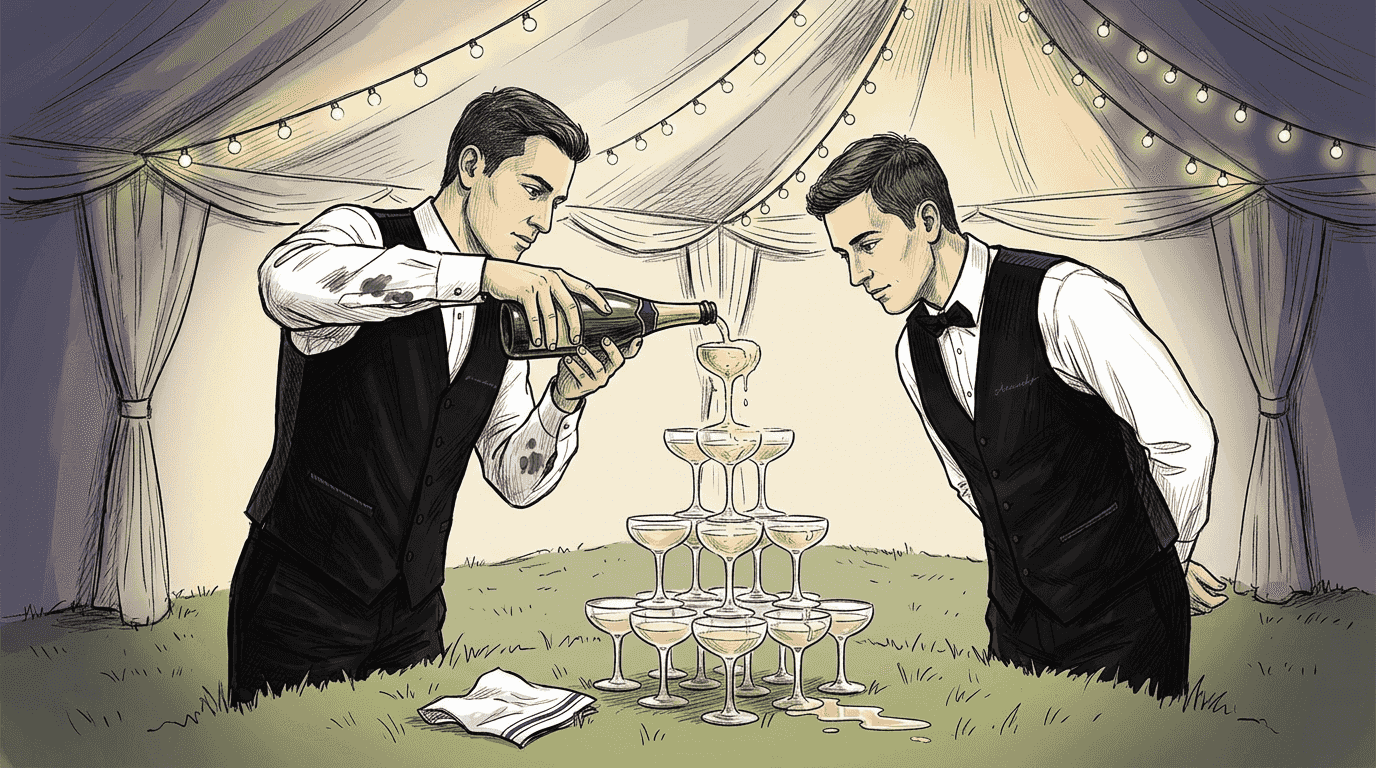
Monitor the tower continuously during the pour. Station a trained staff member on each side to watch for tilting, overflow, or structural issues. Having multiple observers ensures problems are caught immediately, before they escalate into accidents. Your event planning checklist should designate specific monitoring responsibilities to each team member.
Common champagne tower hazards and how to prevent them
Understanding typical risks allows you to implement targeted prevention strategies. Common hazards include glass breakage, tower collapse, and spillage that endanger guests and staff whilst disrupting your event’s flow.
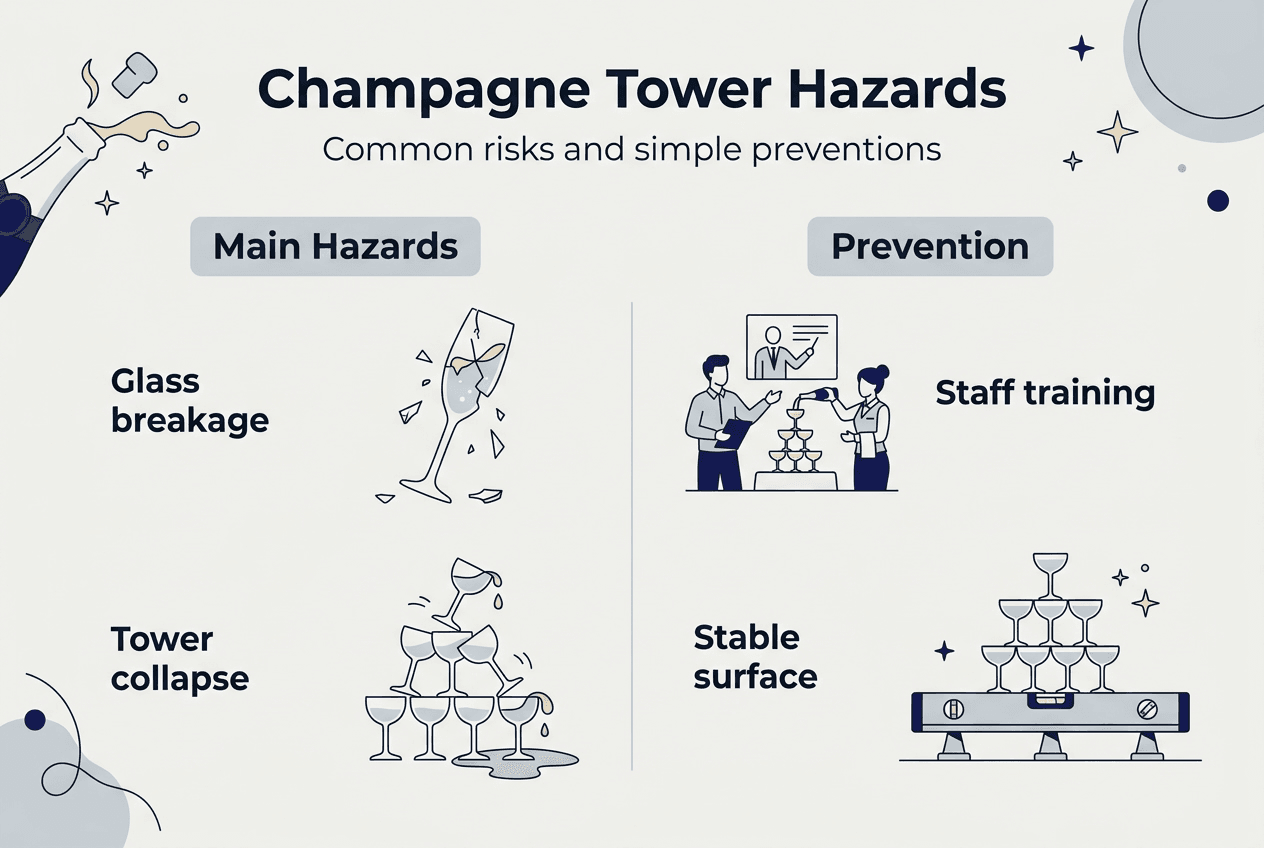
Glass breakage poses the most immediate danger. Defective glassware under pressure can shatter unexpectedly, sending shards into the crowd. Prevent this by inspecting every glass before assembly, holding each up to light to reveal hairline cracks invisible to casual observation. Reject any glass showing chips, scratches, or manufacturing flaws.
Structural collapse typically results from uneven surfaces, poor glass alignment, or external impacts. The cascading effect of a collapsing tower can injure multiple guests and create widespread panic. Prevent collapse by:
- Verifying surface stability before construction
- Building symmetrically with precise glass placement
- Establishing physical barriers preventing guest contact
- Positioning the tower away from dance floors and high-traffic areas
- Securing lower tiers if tower height exceeds six layers
Spillage creates immediate slip hazards and damages clothing, carpets, and venue furnishings. Champagne’s high carbonation makes it particularly prone to overflow during pours. Station staff with absorbent towels at the tower’s base to catch drips immediately. Place waterproof mats under the entire structure to contain spills and protect flooring.
Overcrowding around the display magnifies every risk. Excited guests pressing close can bump the structure, whilst photographers manoeuvring for shots may inadvertently destabilise glasses. Use elegant stanchions or floral arrangements to create a 1.5-metre safety zone around the tower. Position signage politely requesting guests maintain distance until service begins.
“Effective hazard prevention requires anticipating guest behaviour and environmental factors. Most accidents are predictable and preventable with proper planning.” Senior Event Coordinator, London Venue Management
Train all service staff on gentle handling techniques. Servers must understand that sudden movements near the tower create vibrations that can topple glasses. Demonstrate proper approach angles and pouring methods during pre-event briefings. Designate a tower captain responsible for coordinating all activity around the display.
Weather presents unique challenges for outdoor events. Wind gusts can topple even well-constructed towers, whilst temperature extremes affect champagne behaviour. For outdoor setups, monitor weather forecasts closely and prepare contingency plans including indoor backup locations or protective enclosures.
Verifying champagne tower safety during the event
Ongoing monitoring ensures your tower remains secure from setup through teardown. Regular checks throughout the event detect developing issues before they become emergencies, protecting guests and preserving your event’s success.
Designate a specific staff member as tower monitor, responsible for conducting systematic inspections every hour. This person should have clear authority to pause service or restrict access if safety concerns arise. Their sole focus during inspection periods should be the tower’s integrity, free from other event responsibilities.
Your hourly inspection checklist should verify:
- All glasses remain properly aligned and stable
- No cracks, chips, or damage have developed
- Liquid levels are appropriate and not overflowing
- The base platform shows no signs of flexing or tilting
- Safety barriers remain properly positioned
- No spills or wet areas exist around the tower perimeter
- Guest behaviour near the display remains appropriate
| Inspection interval | Key focus areas | Action triggers |
|---|---|---|
| Initial setup | Structural integrity, alignment | Any instability, misalignment |
| Hourly during event | Glass condition, liquid levels | Cracks, tilting, overflow |
| Post-pour | Spill containment, guest safety | Wet floors, crowding |
| Pre-teardown | Remaining stability | Weakened structure |
Pro Tip: Photograph the tower from multiple angles during initial setup, then compare these reference images during inspections to quickly identify any structural shifts or alignment changes.
Maintain cleaning equipment within immediate reach throughout the event. Position mop buckets, absorbent towels, and caution signs near the tower so staff can respond to spills within seconds. The faster you address liquid on floors, the lower your slip-and-fall risk.
Guest announcements can reinforce safety without dampening enthusiasm. A brief, elegant statement when unveiling the tower sets expectations: “Please enjoy this stunning display from a comfortable viewing distance whilst our staff manage service.” This approach frames safety as enhancing rather than restricting the experience.
Document any incidents, near-misses, or concerns in a dedicated event log. These records help you refine procedures for future events and demonstrate due diligence if questions arise later. Note timestamps, conditions, and actions taken for each entry.
As the event concludes, approach teardown with equal care. Champagne residue makes glasses slippery, whilst fatigue affects staff coordination. Dismantle the tower in reverse order of construction, working from top to bottom. Never rush this process regardless of venue pressure to clear the space.
Champagne tower hire for safe, stunning events
Whilst this comprehensive checklist equips you to understand champagne tower safety, professional champagne tower hire services eliminate the stress and liability of managing these complex displays yourself. Our award-winning team specialises in creating stunning, secure champagne towers for upscale weddings and corporate functions throughout the UK, handling every aspect from initial consultation through final teardown.
We maintain rigorous compliance with 2026 UK safety standards, providing fully trained staff who implement the exact protocols detailed in this guide. Our bespoke service includes custom-built towers sized perfectly for your venue, premium glassware inspected to exacting standards, and comprehensive insurance coverage for your peace of mind. From intimate gatherings to grand celebrations, we’ve perfected the art of luxury champagne tower setup that prioritises both elegance and safety.
Contact our team to discuss your event requirements and receive a tailored quote. We’ll handle the technical complexities whilst you focus on creating unforgettable moments for your guests.
Frequently asked questions
How do I choose a safe location for my champagne tower?
Select a flat, stable surface away from heavy foot traffic, dance floors, and speaker systems where vibrations could destabilise the structure. The location must be level within 2 millimetres and capable of supporting the tower’s full weight without flexing. Avoid uneven or slippery floors entirely, and ensure adequate lighting allows continuous monitoring. For comprehensive guidance on location selection and other safety factors, review our detailed champagne tower safety protocols.
What are the main risks during champagne tower setup?
The primary risks include glass breakage from defective glassware, structural collapse due to poor alignment or unstable surfaces, and spillage causing slip hazards for guests and staff. Additional concerns include overcrowding around the display, inadequate lighting obscuring problems, and environmental factors like temperature or wind affecting stability. Proper handling, thorough preparation, and following systematic safety checklists significantly reduce these risks whilst maintaining the tower’s visual impact.
How often should safety checks be done during the event?
Conduct formal inspections hourly throughout your event, with a designated staff member verifying structural integrity, glass condition, and liquid levels. Increase monitoring frequency during peak guest activity periods or if environmental conditions change. Immediate checks are required after any unusual sound, guest contact with the tower, or visible structural shift. Using standardised checklists ensures consistency across inspections and helps staff quickly identify developing issues. Our luxury setup guide provides detailed inspection protocols proven effective at high-profile UK events.


