

Planning a champagne tower for a wedding or corporate function seems simple until you realise the complexity involved. Beyond selecting beautiful glassware, you need precise guest profiling, safety planning, trained staff, and coordinated timing. This checklist equips UK event planners with the structured approach needed to deliver flawless, luxurious champagne displays that impress guests and run smoothly from setup to teardown.
Table of Contents
- Selection Criteria: Defining Event Requirements And Guest Profiles
- Choosing The Ideal Champagne Tower Style And Size
- Venue Logistics And Space Planning For Champagne Displays
- Staffing And Service Coordination For Flawless Champagne Presentation
- Beverage Inventory And Decorative Enhancements
- Scheduling Setup, Breakdown, And Cleanup
- Summary Comparison And Situational Recommendations
- Elevate Your Event With Expert Champagne Tower Hire
- Frequently Asked Questions
Key takeaways
| Point | Details |
|---|---|
| Guest profiling drives tower selection | Accurate demographic data determines appropriate tower size and style for your event. |
| Tower style impacts logistics | A 6-tier tower requires approximately 90 coupe glasses, affecting cost, setup time, and staffing needs. |
| Venue coordination prevents disruptions | Effective coordination between catering staff and venue management ensures safe placement and smooth operation. |
| Trained staff reduce service risks | Professional services provide pouring etiquette training to minimise spills and maintain elegance. |
| Detailed inventory avoids oversights | Comprehensive checklists covering glassware, garnishes, and cleanup supplies prevent embarrassing shortfalls. |
Selection criteria: defining event requirements and guest profiles
Before choosing a champagne tower, gather comprehensive guest and event data. Start by estimating total attendee numbers and the proportion likely to consume champagne. Corporate functions might see 70% participation, whilst weddings often reach 85% or higher.
Consider guest demographics carefully. Age ranges, professional backgrounds, and cultural preferences shape consumption patterns and presentation expectations. A corporate gala attracts different tastes than a millennial wedding celebration. Understanding these profiles helps you select appropriate tower scale and styling.
Venue capacity and layout fundamentally influence tower placement. Map available floor space, ceiling heights, and traffic flow patterns. Position your display where it commands attention without obstructing guest movement or creating safety hazards.
Align tower style with event formality and guest expectations. Black-tie weddings demand different aesthetics than relaxed garden parties. Your champagne tower size should match both venue constraints and event atmosphere.
Key data to collect:
- Confirmed guest count with demographic breakdown
- Venue floor plan with measurements and electrical access
- Event timeline including cocktail hour and reception phases
- Budget allocation for champagne service and staffing
- Dietary restrictions or beverage preferences affecting champagne selection
Cross-reference this information with a catering arrangements checklist to ensure nothing falls through the cracks. Thorough upfront planning prevents costly last-minute adjustments and disappointing service gaps.
Choosing the ideal champagne tower style and size
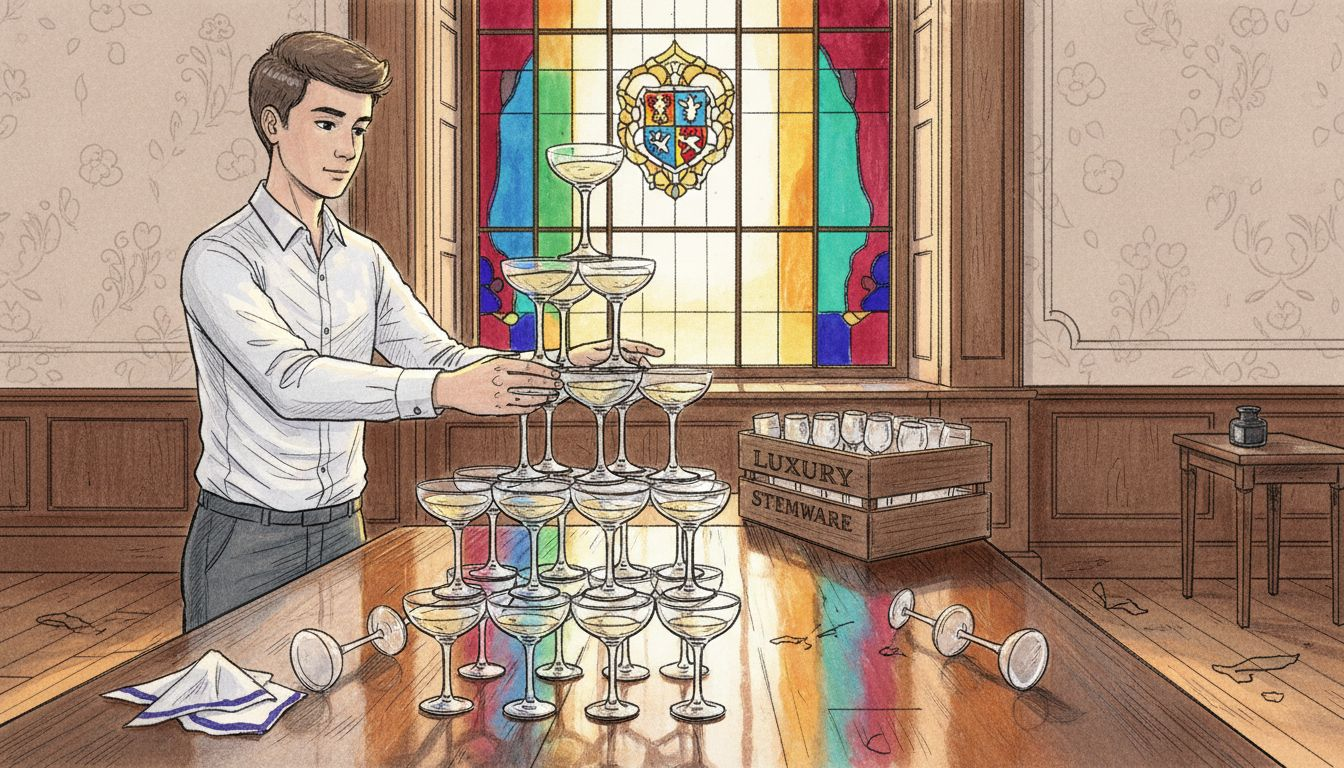
Champagne towers come in two primary designs: classic fountain style and pyramid structure. Fountains feature cascading tiers where champagne flows continuously from top to bottom, creating dynamic visual movement. Pyramids stack glasses in geometric patterns, offering static elegance and easier portion control.
A 6-tier tower requires approximately 90 coupe glasses, whilst a 4-tier needs around 30 glasses. This difference dramatically impacts setup complexity, champagne volume, and staffing requirements. Larger towers demand more assembly time and careful structural balancing.
| Tower Type | Tier Count | Glass Count | Setup Time | Best For |
|---|---|---|---|---|
| Pyramid 4-tier | 4 | 30 | 45 minutes | Intimate weddings under 50 guests |
| Pyramid 6-tier | 6 | 90 | 90 minutes | Corporate events 100-150 guests |
| Fountain 5-tier | 5 | 65 | 75 minutes | Medium weddings 75-100 guests |
| Fountain 7-tier | 7 | 140 | 120 minutes | Grand galas over 200 guests |
Setup complexity escalates with tier count. Each additional level requires precise glass alignment and structural stability checks. Professional packages typically include decorative enhancements like LED bases, mirror platforms, or floral accents that elevate presentation without compromising safety.
Match your selection to event scale and formality. Small garden weddings benefit from compact 4-tier pyramids that feel appropriately sized. Large corporate galas demand impressive 7-tier fountains that command attention in spacious ballrooms.
Pro Tip: Visit your champagne tower hire blog to see real event photos showing different tower styles in various venue settings. This visual reference helps you imagine your chosen design in your specific space.
Cost considerations include not just tower rental but champagne volume, glassware insurance, and staffing hours. A 90-glass tower consumes 12-15 bottles of champagne for initial filling, plus additional bottles for guest service. Factor these expenses into your overall catering budget.
Explore how to style champagne displays for guidance on coordinating tower aesthetics with your event theme. Cohesive styling creates memorable visual impact that guests photograph and share.
Compare champagne tower styles and sizes across multiple suppliers to understand market options and pricing structures. This research ensures you select the best value option for your specific requirements.
Venue logistics and space planning for champagne displays
Create detailed site maps showing your champagne tower location relative to guest tables, bars, and dance floors. Position the display where it attracts attention during key moments like toasts or photo opportunities, yet remains accessible for staff service.
Define safety zones extending at least one metre around the tower structure. Fragile glass towers cannot withstand bumps from guests or service trolleys. Mark these zones on your floor plan and communicate them clearly to all venue staff and vendors.
Coordinate with venue management about electrical requirements for lighting, floor load capacity for heavy towers, and access times for setup. Some historic venues restrict weight distribution or require protective flooring underlays.
Integrate tower placement with other event elements. If you have a sweetheart table, position the tower nearby for dramatic photos. For cocktail receptions, place it centrally where guests naturally congregate. Avoid positioning near high-traffic doorways or bathroom corridors.
Key logistics to arrange:
- Floor protection for spills and structural weight distribution
- Adequate lighting to showcase tower sparkle and champagne colour
- Clear sightlines from primary guest seating areas
- Easy staff access for pouring and glass replenishment
- Designated spill response stations with cleaning supplies
Plan spill zones with waterproof underlays and quick-access cleanup kits. Even perfectly executed service occasionally results in drips or overflows. Prepared staff can address these instantly without disrupting the elegant atmosphere.
Review your champagne tower timeline planning alongside venue access schedules. Some venues allow only limited setup windows, requiring efficient coordination between tower assembly and other decoration installation.
Confirm venue and vendor coordination protocols weeks before your event. Establish clear contact persons, delivery time slots, and emergency procedures. This preparation prevents day-of confusion and ensures seamless execution.
Staffing and service coordination for flawless champagne presentation
Recommended staff ratios vary by tower size and guest count. For events under 75 guests with a 4-tier tower, assign two trained pourers. Events exceeding 150 guests with 6-tier or larger towers require three to four dedicated staff members to maintain smooth service flow.
Professional champagne tower services provide trained staff who understand proper pouring techniques, glass handling etiquette, and spill prevention strategies. This specialised training ensures champagne cascades elegantly without splashing or overflowing.
Essential training topics for staff:
- Controlled pouring techniques that fill glasses evenly without splashing
- Guest interaction protocols maintaining upscale service standards
- Emergency spill response procedures with designated cleanup roles
- Timing coordination with event milestones like speeches or toasts
- Glass replacement procedures for damaged or lipstick-marked stemware
Synchronise service timing with your event flow. Begin tower assembly 90 minutes before the planned champagne service moment. Allow buffer time for unexpected delays in guest arrival or preceding programme elements.
Establish clear communication protocols between catering teams and event coordinators. Designate a point person who signals when to begin pouring, pause for speeches, or resume service. Radio communication works well for large venues where visual cues fail.
Pro Tip: Review champagne tower etiquette with your entire service team, not just pourers. Servers refilling glasses, photographers capturing the moment, and venue staff all contribute to seamless execution.
Mitigation strategies for common service challenges include positioning backup glassware nearby for quick replacements, stationing one staff member exclusively for spill watch, and rehearsing the initial cascade pour to ensure proper champagne distribution across tiers.
Experienced trained champagne tower staff anticipate potential issues before they become visible problems. Their expertise transforms champagne service from a logistical challenge into an elegant focal point that enhances your event’s sophistication.
Beverage inventory and decorative enhancements
Calculate champagne requirements using this formula: number of glasses multiplied by 150ml per serving, plus 20% buffer for spillage and refills. A 90-glass tower needs approximately 16 litres, equating to 22 standard 750ml bottles.
Inventory appropriate glassware styles and quantities. Coupe glasses create classic elegance for champagne towers, whilst flutes work better for individual service. Order 10% extra glasses beyond tower requirements to cover breakage and lipstick-stained replacements.
Essential serving equipment:
- Ice buckets maintaining champagne at 7-9°C throughout service
- Pourers or funnels for controlled champagne flow into tower
- Champagne stoppers preserving fizz in opened bottles
- Service trays for distributing filled glasses to guests
- Lint-free polishing cloths ensuring spotless glassware presentation
Detailed catering checklists prevent oversights in these seemingly minor items that collectively determine service quality. Missing ice buckets result in warm, flat champagne that disappoints sophisticated palates.
Suggest decorative garnishes that enhance visual appeal whilst remaining practical. Edible flowers like roses or pansies add romantic elegance to wedding towers. Fresh strawberries offer classic sophistication for corporate events whilst doubling as guest refreshments.
Upscale event catering requires specialised glassware and table settings such as charger plates beneath champagne service stations and folded cloth napkins for guest convenience. These details signal attention to quality that discerning guests notice and appreciate.
| Event Size | Champagne Bottles | Coupe Glasses | Backup Flutes | Garnishes | Napkins |
|---|---|---|---|---|---|
| 50 guests | 25 bottles | 35 coupes | 60 flutes | 2 dozen roses | 75 cloth |
| 100 guests | 45 bottles | 70 coupes | 120 flutes | 4 dozen roses | 150 cloth |
| 200 guests | 85 bottles | 140 coupes | 240 flutes | 8 dozen roses | 300 cloth |
Explore champagne display styling for creative ideas matching your event colour scheme and theme. Coordinated styling transforms functional champagne service into an Instagram-worthy centrepiece.
Consider champagne tower floral decorations that complement rather than overwhelm your display. Strategic floral placement around the tower base creates visual interest without interfering with pouring mechanics or guest access.
Reference comprehensive beverage and inventory checklists and specialised catering glassware requirements to ensure nothing essential escapes your planning process. Thoroughness here prevents embarrassing shortfalls during service.
Scheduling setup, breakdown, and cleanup
Allocate 90-120 minutes for tower assembly depending on tier count and complexity. This includes unpacking glassware, structural setup, quality checks, and decorative finishing touches. Build in 30-minute buffer periods for unexpected delays or last-minute adjustments.
Coordinate setup and cleanup schedules with venue management to avoid conflicts with other vendor access needs. Some venues enforce strict time windows that require precise coordination among florists, caterers, and entertainment providers.
Prepare contingency plans for spill cleanup with designated staff ready to respond instantly. Position cleanup kits containing absorbent towels, glass disposal bags, and floor cleaning solutions at strategic tower-adjacent locations.
Schedule breakdown after guests depart to minimise disturbance. Nothing disrupts event atmosphere faster than staff dismantling decorations whilst guests still celebrate. Plan tower teardown as the final cleanup task, allowing maximum visual impact throughout your event.
Recommended timeline sequence:
- Arrive at venue 2.5 hours before champagne service moment
- Inspect floor area and confirm safety zone clearance
- Unpack and inspect all glassware for chips or damage
- Assemble tower structure with careful tier alignment
- Add decorative elements like flowers or LED lighting
- Chill champagne to proper serving temperature
- Conduct final quality check 30 minutes before service
- Execute champagne pour at designated event moment
- Maintain service throughout cocktail hour or reception
- Begin careful tower disassembly after final guest departures
- Pack glassware with protective wrapping for transport
- Complete floor cleanup and venue restoration
Your champagne tower timeline planning should integrate seamlessly with broader event schedules. Share this timeline with all vendors to ensure everyone understands their role in supporting smooth champagne service.
Confirm scheduling coordination details in writing weeks before your event. Document who arrives when, which vendor has priority access during overlapping setup windows, and emergency contact procedures if delays occur.
Summary comparison and situational recommendations
This comparison clarifies key differences between champagne tower options to guide your final selection.
| Attribute | 4-Tier Pyramid | 6-Tier Pyramid | 5-Tier Fountain | 7-Tier Fountain |
|---|---|---|---|---|
| Glass count | 30 glasses | 90 glasses | 65 glasses | 140 glasses |
| Setup time | 45 minutes | 90 minutes | 75 minutes | 120 minutes |
| Champagne volume | 5-6 bottles | 15-16 bottles | 11-12 bottles | 22-24 bottles |
| Staff needed | 2 pourers | 3-4 pourers | 2-3 pourers | 4-5 pourers |
| Best for | Intimate weddings | Large corporates | Medium weddings | Grand galas |
| Visual impact | Elegant simplicity | Impressive scale | Dynamic flow | Spectacular drama |
Situational recommendations based on common UK event scenarios:
- Small garden weddings (under 50 guests): Choose 4-tier pyramids offering appropriate scale without overwhelming intimate venues. Their compact footprint suits outdoor spaces with limited flat surfaces.
- Corporate product launches (100-150 guests): Select 6-tier pyramids providing impressive visual statements that photograph well for marketing materials whilst maintaining manageable service logistics.
- Cocktail receptions (75-100 guests): Opt for 5-tier fountains creating dynamic visual interest and conversation starters during networking-focused events where champagne service extends over longer periods.
- Black-tie galas (200+ guests): Commission 7-tier fountains delivering the spectacular drama expected at premium formal events, ensuring your champagne display matches the occasion’s grandeur.
Tradeoffs between visual impact and budget require careful consideration. Larger towers create memorable focal points but demand higher champagne volumes, extended staff hours, and increased rental fees. Evaluate whether the enhanced visual drama justifies additional costs for your specific event goals.
Final checklist covering all planning categories:
- Guest demographics and consumption estimates confirmed
- Tower style and size selected matching event scale
- Venue layout mapped with safety zones defined
- Staffing levels and training protocols established
- Champagne, glassware, and garnish inventory completed
- Setup and breakdown timeline coordinated with venue
- Spill response procedures and cleanup supplies prepared
- Decorative enhancements ordered matching event theme
Consult your champagne tower size guide for additional sizing recommendations tailored to specific venue constraints or guest demographics not covered in this general comparison.
Elevate your event with expert champagne tower hire
Professional champagne tower services handle every detail from initial concept through final cleanup, eliminating stress whilst ensuring flawless execution. Expert teams bring specialized knowledge about tower stability, optimal champagne flow rates, and elegant service protocols that transform your vision into reality.
Explore luxury tower options at champagne tower hire UK where bespoke packages include custom sizing, trained staff, and coordinated styling that matches your event’s unique aesthetic. Professional providers understand the nuances that separate adequate champagne service from truly memorable experiences.
Access comprehensive guides on styling champagne displays and planning your champagne tower timeline to refine your vision before booking. These resources help you articulate precise requirements to service providers, ensuring alignment between expectations and delivery.
Book with confidence knowing experienced professionals manage complex logistics, allowing you to focus on enjoying your event rather than worrying about champagne tower mechanics.
Frequently asked questions
What size champagne tower is best for a wedding under 50 guests?
A 4-tier pyramid tower perfectly balances elegance with manageable scale for intimate weddings. It requires only 30 glasses and simpler setup procedures, fitting smaller venues without overwhelming the space or budget. This size creates visual impact whilst allowing efficient service by just two trained staff members, making it ideal for garden parties or boutique hotel receptions where space is limited. Consult the champagne tower size guide for specific recommendations matching your venue dimensions.
How many staff are needed to serve a 6-tier champagne tower at a corporate event?
Typically 3-4 trained staff members ensure smooth operation of larger towers at corporate functions. This staffing level allows one person to manage the initial cascade pour, two to distribute glasses to guests, and one to handle spill watch and glass replenishment throughout the service period. Adequate staffing prevents bottlenecks during peak service moments and maintains the polished presentation expected at upscale corporate events. Review champagne tower staffing recommendations for detailed ratio calculations based on guest count.
What are elegant decorative options for champagne tower displays?
Edible flowers like roses or orchids add romantic sophistication, whilst fresh strawberries provide classic elegance that guests can enjoy. LED or mirror bases create dramatic lighting effects that enhance photography and draw attention to your display. Choose decorations that complement rather than clutter, avoiding elements that risk toppling into glasses or interfering with champagne flow mechanics. Explore champagne tower decoration ideas for inspiration matching your event colour scheme and theme whilst maintaining practical service functionality.


