

Selecting the perfect centrepiece can make or break the atmosphere at a high-profile event. In luxury weddings and corporate gatherings across the United Kingdom, event planners know that a display is more than just decoration. A truly remarkable centrepiece becomes a focal point, subtly communicating themes and enhancing guest experiences. Discover how artful arrangement and thoughtful spatial awareness set exceptional displays apart, creating unforgettable moments while reflecting sophistication and hospitality.
Table of Contents
- Defining A Centrepiece Display And Its Purpose
- Types Of Centrepiece Displays For UK Events
- Key Characteristics Of Effective Displays
- Essential Design Principles And Requirements
- Costs, Practicalities, And Common Mistakes
Key Takeaways
| Point | Details |
|---|---|
| Centrepiece Design Purpose | Centrepiece displays enhance the atmosphere of events, serving aesthetic and functional roles while igniting conversations and memorable experiences. |
| Key Design Characteristics | Effective centrepieces harmonise with event themes, maintain balance and spatial awareness, and foster guest interactions. |
| Innovative Approaches | Contemporary designs utilise mixed materials and interactive elements, moving beyond traditional aesthetics to create dynamic focal points. |
| Cost Considerations | Pricing for centrepieces varies greatly based on complexity and materials, with practical planning essential to avoid overspending and ensure functionality. |
Defining a centrepiece display and its purpose
A centrepiece display is an artful arrangement strategically positioned to enhance the visual and emotional atmosphere of an event. These decorative focal points serve far more than mere aesthetic purposes – they communicate themes, spark conversations, and create memorable sensory experiences for guests.
Traditionally, centrepieces are significant decorative elements designed to capture attention while maintaining functional elegance. They represent a sophisticated intersection of design principles and cultural expression, carefully crafted to complement the surrounding environment without overwhelming it.
Key characteristics of exceptional centrepiece displays include:
- Harmonising with the event’s overall theme and colour palette
- Creating visual interest without obstructing guest interactions
- Reflecting the host’s personal style or event’s purpose
- Providing a conversation catalyst for guests
- Demonstrating thoughtful spatial awareness
Artistic composition plays a critical role in centrepiece design. Professionals understand that these displays must balance multiple design considerations – height, proportion, colour, and visual weight. A well-executed centrepiece transforms an ordinary space into something extraordinary, signalling hospitality and attention to detail.
An effective centrepiece commands attention while seamlessly integrating with the event’s broader aesthetic narrative.
The purpose extends beyond pure decoration. These displays communicate sophistication, mark significant moments, and create lasting impressions that guests will remember long after the event concludes.
Pro tip: When designing a centrepiece, always consider sight lines and ensure the display enhances rather than interrupts guest interactions.
Types of centrepiece displays for UK events
The United Kingdom’s event design landscape offers a remarkable diversity of centrepiece styles and configurations, enabling event planners to craft unique visual experiences tailored to specific occasions. From elegant corporate gatherings to romantic wedding receptions, the range of centrepiece options allows for extraordinary customisation and creative expression.
Traditional centrepiece displays in the UK typically encompass several distinctive categories:
- Floral Arrangements: Classic botanical displays featuring seasonal blooms
- Crystal Installations: Sophisticated glass and crystal-based designs
- Themed Centrepieces: Tailored displays reflecting specific event narratives
- LED and Illuminated Displays: Modern designs incorporating lighting elements
- Suspended Centrepieces: Innovative hanging arrangements that create vertical visual interest
Modern event design has expanded beyond conventional approaches, introducing increasingly innovative centrepiece concepts. Contemporary UK event professionals now experiment with unconventional materials, interactive elements, and multisensory experiences that transform traditional table decorations into dynamic focal points.
Exceptional centrepiece displays are not merely decorative elements but storytelling instruments that communicate event themes and create immersive atmospheres.
Specialised centrepiece styles such as steampunk-inspired designs, vintage recreations, and cocktail-themed displays demonstrate the incredible versatility available to event planners. These unique approaches allow hosts to personalise their events, ensuring each gathering feels distinctly memorable and true to its intended aesthetic.
Here’s a comparison of traditional and contemporary centrepiece display approaches for UK events:
| Design Approach | Materials Used | Guest Experience Focus | Adaptability |
|---|---|---|---|
| Traditional | Flowers, crystals, glass | Visual elegance | Limited |
| Contemporary | Mixed media, interactive | Sensory engagement | Highly adaptable |
Pro tip: Select a centrepiece that complements your venue’s architectural characteristics and matches the event’s overall colour palette for maximum visual impact.
Key characteristics of effective displays
Creating an exceptional centrepiece display requires strategic planning and an understanding of design principles that elevate visual impact. Professional event designers recognise that successful displays are more than mere decorative elements – they are carefully orchestrated visual experiences that communicate narrative and emotional depth.
The most compelling centrepiece displays share several critical characteristics:
- Visual Hierarchy: Establishing clear focal points and visual weight
- Proportional Balance: Ensuring the display complements, not overwhelms, the surrounding space
- Thematic Coherence: Aligning the design with the event’s overall aesthetic
- Structural Integrity: Maintaining durability throughout the event duration
- Interactive Potential: Creating displays that engage and intrigue guests
The technical aspects of display design demand meticulous attention. Height, width, and spatial positioning are crucial considerations that directly impact guest interactions and overall event atmosphere. Designers must craft displays that command attention without obstructing conversations or impeding movement between tables.
An exceptional centrepiece is a silent storyteller, communicating event mood and sophistication through strategic visual composition.
Contemporary event design emphasises flexibility and sensory engagement. Modern displays increasingly incorporate dynamic elements like subtle lighting, interactive components, or multi-dimensional structures that transform traditional decorative approaches into immersive experiences.
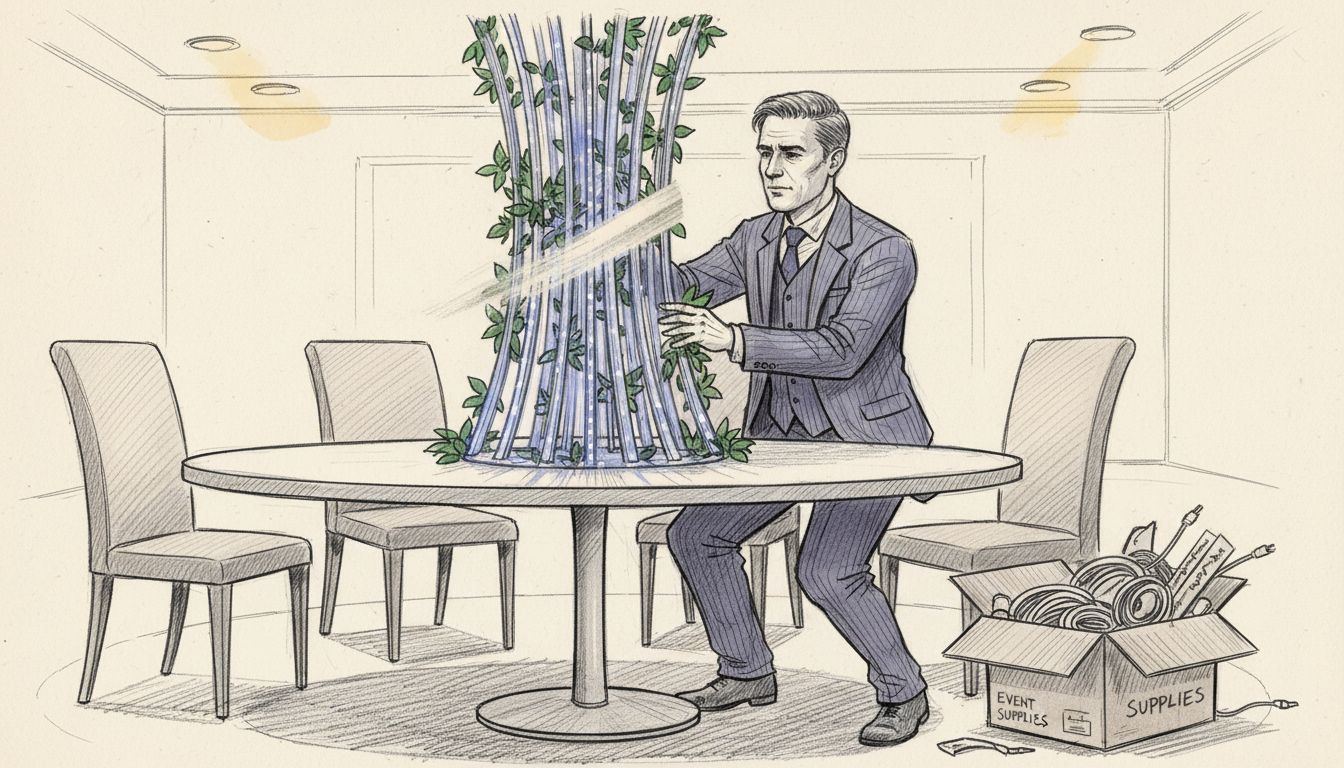
Pro tip: Always conduct a venue walk-through before finalising your centrepiece design to understand precise spatial constraints and lighting conditions.
Essential design principles and requirements
Designing exceptional centrepiece displays demands a sophisticated understanding of strategic spatial planning principles. Professional event designers must navigate a complex landscape of aesthetic considerations, technical constraints, and emotional resonance to create truly memorable visual experiences.
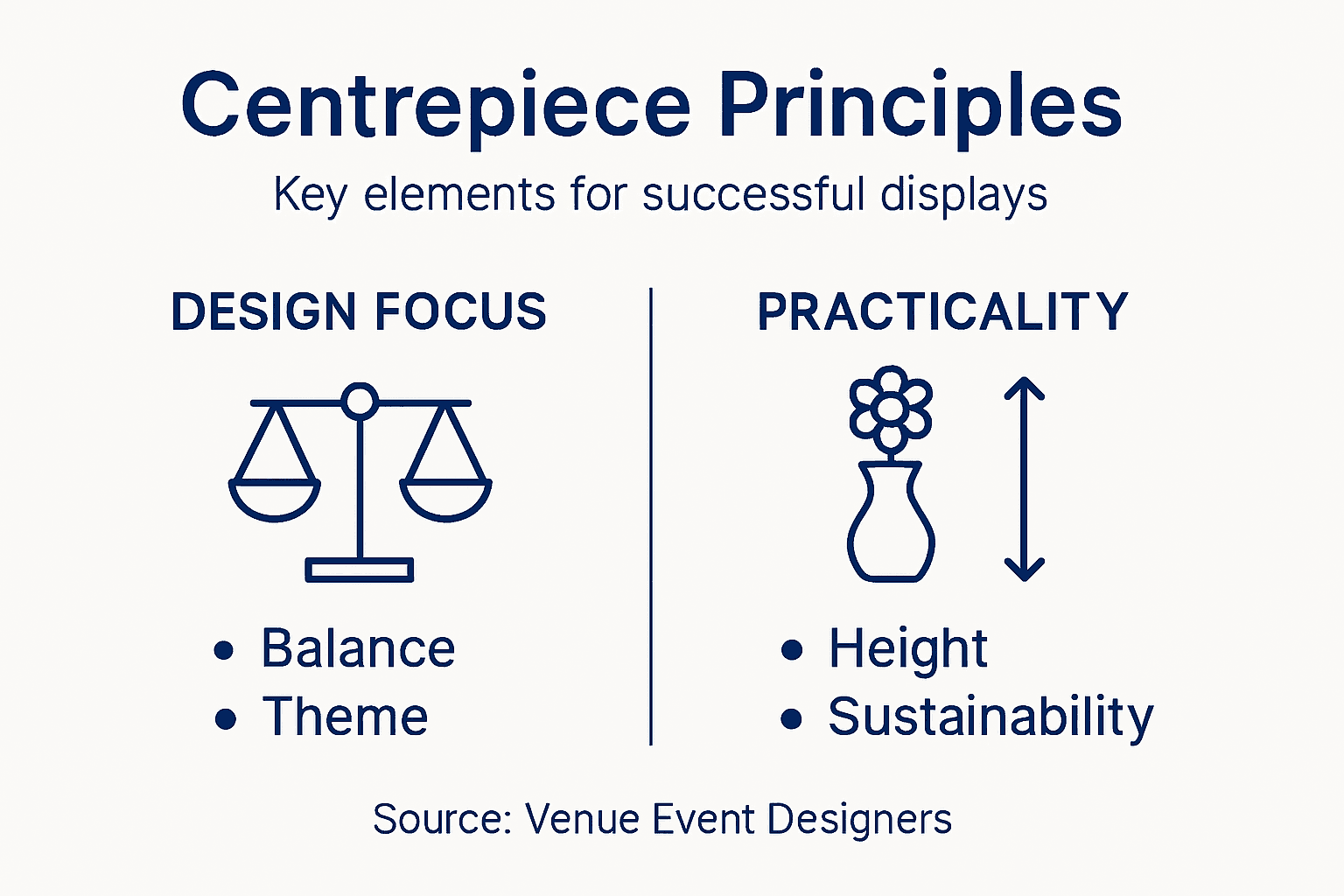
Critical design principles for centrepiece displays include:
- Spatial Awareness: Understanding venue dimensions and guest interaction zones
- Colour Theory: Selecting harmonious palettes that complement event themes
- Structural Mechanics: Ensuring stability and architectural integrity
- Environmental Adaptation: Accounting for lighting, airflow, and temperature variations
- Thematic Alignment: Reflecting the event’s conceptual narrative
The technical complexity of centrepiece design extends far beyond simple decorative placement. Each element must be carefully calculated to balance visual impact with functional practicality. Designers must consider multiple dimensions simultaneously – aesthetic appeal, guest comfort, venue constraints, and emotional atmosphere.
Exceptional design transforms a mere decorative element into a powerful narrative instrument that communicates sophistication and intentionality.
Contemporary centrepiece design increasingly emphasises sustainability and adaptability. Modern approaches integrate eco-friendly materials, modular construction techniques, and versatile design elements that can be repurposed or reimagined across different event contexts.
Pro tip: Develop a comprehensive venue reconnaissance strategy, measuring precise spatial dimensions and understanding ambient lighting conditions before finalising your centrepiece design.
Costs, practicalities, and common mistakes
Navigating the financial and logistical landscape of centrepiece displays requires careful planning and strategic decision-making. Wedding centrepiece pricing in the UK presents significant variation depending on design complexity, materials, and event scale.
Cost considerations and typical pricing ranges include:
- Budget Arrangements: £15-30 for simple designs with vases and LED candles
- Mid-Range Options: £50-150 for more intricate floral or thematic displays
- Luxury Installations: £200-500 for bespoke, elaborate centrepiece designs
- Additional Expenses: Table runners, specialised materials, custom fabrication
- Venue-Specific Costs: Potential additional fees for complex setup requirements
Common mistakes event designers frequently encounter can significantly impact budget and visual appeal. Inexperienced planners often underestimate venue constraints, fail to consider structural integrity, or select designs that compromise guest interaction and comfort.
Successful centrepiece design balances aesthetic ambition with practical restraint, recognising that beauty must never come at the expense of functionality.
Practical considerations extend beyond initial costs. Designers must account for transportation, setup time, material durability, and potential venue restrictions. Flame regulations, weight limitations, and venue-specific guidelines can dramatically influence design choices and overall budget.
Below is a summary of key factors influencing centrepiece costs and practical considerations in the UK:
| Factor | Impact on Budget | Planning Importance |
|---|---|---|
| Materials Quality | Higher costs for luxury | Essential for durability |
| Venue Restrictions | May require extra fees | Can limit design height |
| Delivery & Setup | Adds to total expenses | Needs advanced booking |
| Structural Stability | Avoids unexpected failures | Critical for safety |
Pro tip: Always request comprehensive quotes that include delivery, setup, and potential removal costs to avoid unexpected financial surprises.
Elevate Your Event Ambience with Stunning Centrepiece Displays
Capturing the perfect balance between beauty and functionality is a common challenge when planning exquisite centrepiece displays. As highlighted in the article, achieving visual hierarchy, thematic coherence, and ensuring displays do not obstruct guest interaction** are essential goals. When an event demands elegance paired with sophistication, a thoughtfully designed champagne tower can serve as a spectacular focal point that impresses guests and enriches the atmosphere.
Our bespoke champagne and prosecco tower hire service offers a flawless way to incorporate these key design principles into your event. Whether you seek a custom-built tower that complements your colour palette or a fully staffed setup ensuring smooth operation, our luxurious towers provide an interactive and memorable centerpiece. Discover how our expertly crafted displays harmonise with your event narrative and spatial needs by exploring our unique offerings in the Uncategorized Archives – Champagne Tower Hire. To start creating an unforgettable atmosphere with a champagne tower that commands attention and sophistication, visit our main site at https://champagnetowerhire.co.uk today. Secure your bespoke experience now and turn your centrepiece challenge into a celebration highlight.
Frequently Asked Questions
What is a centrepiece display and its purpose?
A centrepiece display is an artistic arrangement designed to enhance the atmosphere of an event, communicating themes and creating memorable experiences for guests. It serves not just as decoration, but also as a conversation starter and reflection of the host’s style.
What types of centrepiece displays are commonly used at events?
Common types of centrepiece displays include floral arrangements, crystal installations, themed centrepieces, LED displays, and suspended centrepieces. Each type can be customised to match the event’s theme and aesthetic.
What are some key characteristics of effective centrepieces?
Effective centrepieces should have visual hierarchy, proportional balance, thematic coherence, structural integrity, and interactive potential. These characteristics help to create a display that engages guests while enhancing the overall event atmosphere.
How do costs vary when planning for centrepieces?
Costs for centrepiece displays can range widely based on design complexity and materials used. Simple arrangements may cost £15-30, while more intricate designs can be between £50-150, and bespoke luxury installations may reach £200-500, depending on various factors like materials and venue-specific requirements.
Recommended
- 7 Inspiring Examples of Luxury Event Decor to Elevate Events – Champagne Tower Hire
- Role of Visual Displays at Weddings – Creating Luxury Moments
- Why Luxury Beverage Displays Matter for UK Events
- Multi-Tier Drink Display: Transforming UK Events
- Role of Venue in Wedding Photos – Impact and Insights
- Understanding Custom Lighting: A Comprehensive Guide –


