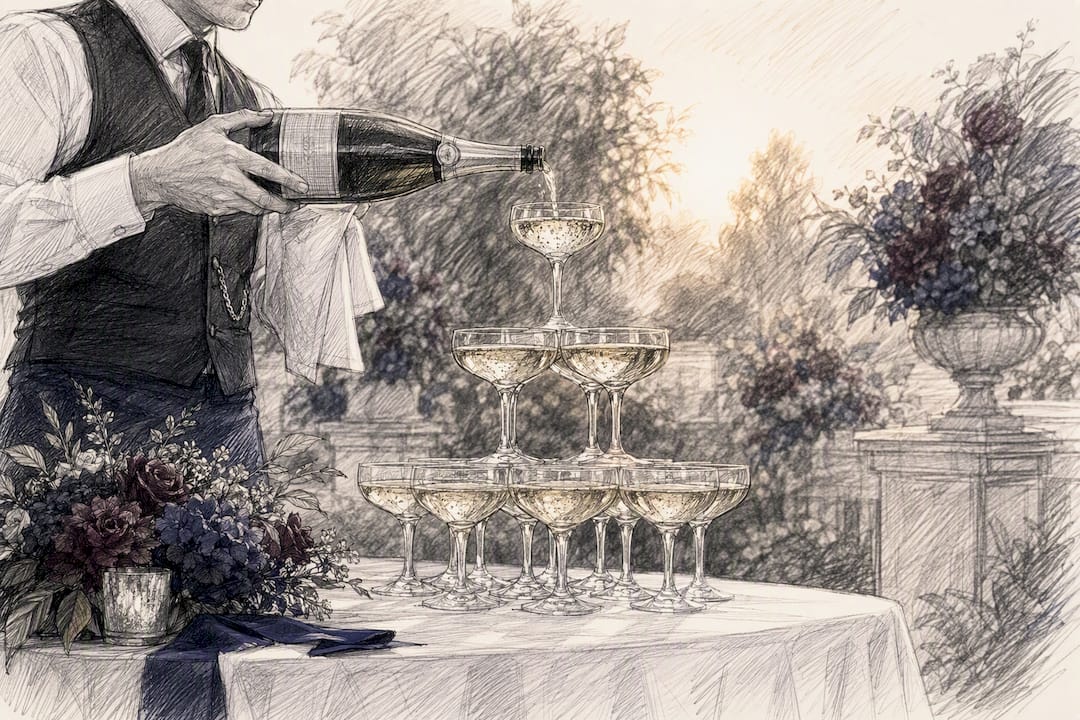
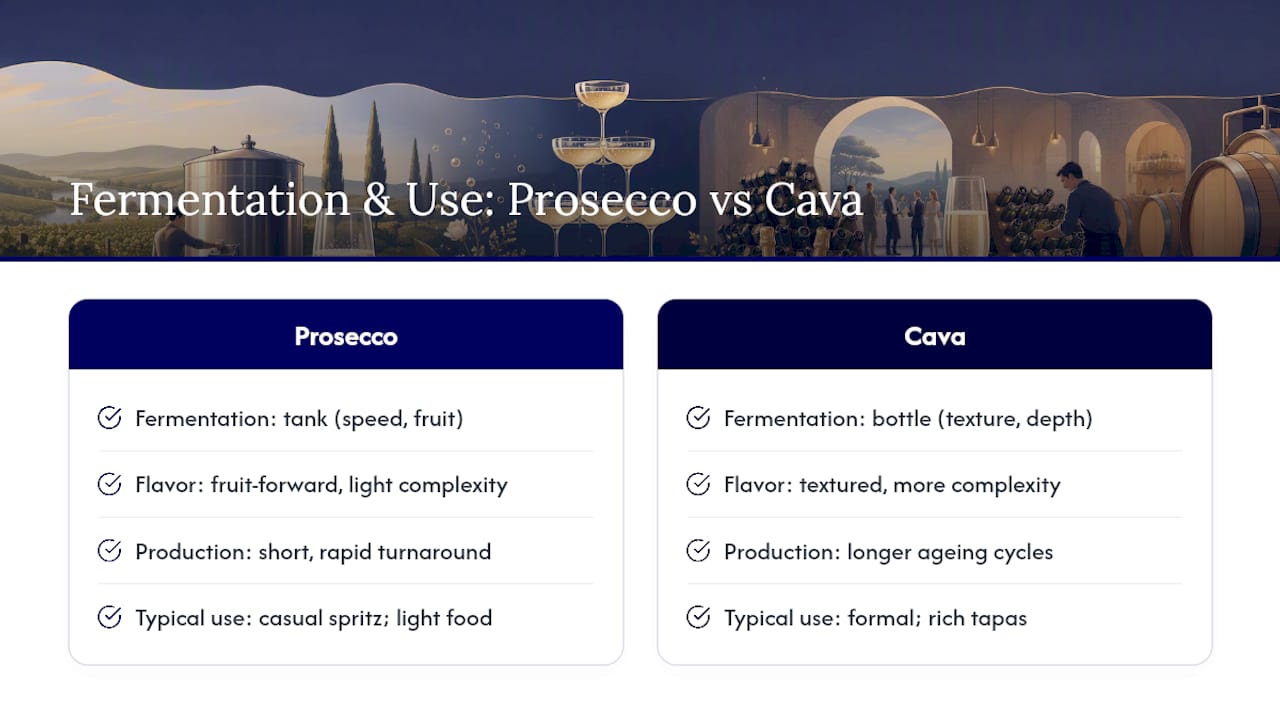
Prosecco is tank fermented and fruit forward; Cava is bottle fermented and lees aged, which gives it a toastier, more savoury character. Pick Prosecco when the mood is light and social. Pick Cava when there’s food on the table or you want a wine with more backbone.
- Best for spritzes and aperitifs: Prosecco, ideally labelled brut or extra dry
- Best for a food-led dinner: Cava Reserva or Gran Reserva
- Best value pick: a standard Cava, which often delivers traditional-method complexity at Prosecco prices
Check the label for the sweetness term (brut, extra dry) and, on Cava, the ageing tier (Reserva, Gran Reserva) before you buy. Both details tell you far more than the country of origin alone.
Key Takeaways
The right sparkling wine choice depends on production method, occasion and food pairing rather than any fixed quality hierarchy between Prosecco and Cava.
| Point | Details |
|---|---|
| Method drives everything | Tank fermentation gives Prosecco fresh fruit character; bottle fermentation gives Cava toasty complexity. |
| Check the sweetness label | Extra dry Prosecco is often sweeter than brut, so read the term rather than assume. |
| Ageing tiers signal quality | Cava Reserva (18 months), Gran Reserva (30 months) and Paraje Calificado (36 months) reward extra ageing. |
| Match wine to food | Prosecco suits aperitifs and light dishes; Cava’s structure handles richer, fried or savoury food. |
| Value sits with Cava Reserva | Traditional-method complexity often costs no more than standard Prosecco. |
Table of Contents
- Prosecco vs cava: how each wine is actually made
- What do the grape and region labels actually tell you?
- Prosecco vs cava taste: what’s actually in the glass?
- Is Cava sweeter than Prosecco, and what do the labels mean?
- Which food pairings suit Prosecco and which suit Cava?
- Cava vs prosecco: which offers better value and ageing potential?
- How to choose between prosecco and cava in 6 steps
- Editorial take: stop ranking, start matching
- Bring the choice to life with a styled drinks display
- Sources
Prosecco vs cava: how each wine is actually made
The method is the whole story. Prosecco goes through Charmat, or tank, fermentation: the second fermentation happens in large pressurised steel tanks rather than individual bottles, which locks in the grape’s primary fruit character. Cava does the opposite. It ferments a second time inside its own bottle, then rests on its spent yeast cells (the lees) for months, sometimes years, before disgorgement.
- Prosecco: primary fermentation, then a short tank-based second fermentation. Prosecco DOC rules set a minimum total production time of just 30 days for standard spumante, though premium “Charmat Lungo” styles can spend up to nine months in tank for extra depth.
- Cava: primary fermentation, then bottling with yeast and sugar for a second fermentation in the bottle itself, followed by lees ageing before disgorgement and dosage.
The pressure difference is measurable, not just theoretical. Traditional-method Cava typically reaches 5 to 6 atmospheres of pressure with a finer, more persistent mousse, while tank-method Prosecco usually sits around 2 to 4 atmospheres, producing a softer, frothier bead that dissipates faster in the glass.
What do the grape and region labels actually tell you?
Origin rules shape everything from body to ageing potential, and reading them correctly saves you from guessing at a shop shelf.
- Prosecco requires a minimum of 85% Glera grapes, with the rest made up of permitted local varieties. DOCG wines (from Conegliano Valdobbiadene or Asolo) outrank standard DOC, and within DOCG, Cartizze and the various Rive designations mark the most prized vineyard sites.
- Cava is built from Macabeo, Xarel·lo and Parellada, with Chardonnay and Pinot Noir also permitted. Its hierarchy runs from standard DOP Cava through Reserva and Gran Reserva to Paraje Calificado, the single-vineyard classification reserved for the most distinguished sites.
- A vintage year or a named producer on either bottle usually signals more careful winemaking than an unbranded supermarket blend.
Prosecco vs cava taste: what’s actually in the glass?
Sensory differences follow production logic almost exactly, so once you know the method, you can predict the flavour before you pour.
- Prosecco tends toward pear, green apple, melon and white flowers, with an immediate, perfumed lift and a softer, quicker-fading froth.
- Cava offers lemon, brioche, toasted almond and a savoury edge, courtesy of extended contact with the lees. Its bubbles are finer and last longer in the glass.
- Sweeter styles mute the toastier, more savoury notes in Cava and amplify the fruit in Prosecco, so a bone-dry brut will always taste “cleaner” than an extra dry version of the same wine.
Pro Tip: If you’re comparing the two side by side, taste the Prosecco first. Its lighter, more delicate fruit gets flattened if you taste it straight after Cava’s bready intensity.
Is Cava sweeter than Prosecco, and what do the labels mean?
Not necessarily, and this is where most buyers get caught out. Sweetness is set by dosage at the final stage, independent of the production method, so you have to read the label rather than assume.
- Cava’s ageing tiers are legally defined: standard Cava needs nine months minimum on lees, Reserva 18 months, Gran Reserva 30 months, and Paraje Calificado 36 months. Longer ageing means more toast, more depth, and usually a drier finish.
- Prosecco’s sweetness scale runs from brut through extra dry to dry, and confusingly, “extra dry” Prosecco is often sweeter than “brut” Prosecco. It’s a naming quirk carried over from historical Champagne terminology rather than a logical scale.
- Look for the sweetness term on the front label and the ageing tier (if Cava) on the back label, near the producer’s name.
Which food pairings suit Prosecco and which suit Cava?
Matching the wine to the plate is where the production differences earn their keep.
- Prosecco works well as an aperitivo, in a Bellini or Aperol Spritz, alongside salads, brunch dishes and lighter fish. Its soft mousse and upfront fruit don’t fight delicate flavours.
- Cava handles fried food, tapas, richer seafood, roasted vegetables and full dinner courses with more confidence. The firmer bubble structure and savoury, bready notes cut through fat and salt far better than a fruit-forward wine can.
- Serve both chilled to around 6 to 8°C in a tall flute or tulip glass, which preserves the bead and concentrates the aroma. A wide coupe glass looks glamorous but loses the fizz within minutes.
If you’re planning drinks service for a wedding or reception, the choice between a Prosecco display and a Champagne alternative often comes down to exactly this kind of occasion-led thinking.
Cava vs prosecco: which offers better value and ageing potential?
Supermarket shelves put both wines in a similar price band, which makes the value question worth asking properly.
- Cava frequently delivers traditional-method complexity at prices that match or undercut equivalent Prosecco, particularly at Reserva level, where the lees ageing adds real depth for modest extra cost.
- Paying a premium for Prosecco makes sense with DOCG Cartizze or the newer Metodo Classico Prosecco styles, both of which use bottle fermentation and command a noticeably higher price than standard tank-method bottles.
- Ageing potential splits cleanly along production lines. Cava Reserva, Gran Reserva and Paraje Calificado can improve for a year or two after purchase; almost all Prosecco is made to be drunk within its first year or two, while the fruit is still fresh.
How to choose between prosecco and cava in 6 steps
Run through this before you buy, and the decision takes less time than reading the label twice.
- Occasion: casual gathering, spritz bar or toast? Lean Prosecco. Seated meal or formal toast with food? Lean Cava.
- Sweetness: check brut, extra dry or dry on Prosecco; check the same terms plus the ageing tier on Cava.
- Food match: light and fresh dishes favour Prosecco; fried, rich or umami-heavy dishes favour Cava.
- Budget: similar price points overlap, so compare tier against tier, not bottle against bottle.
- Ageing intent: buying to drink this week or to lay down? Only Cava Reserva and above rewards the wait.
- Serving plan: flutes chilled to 6 to 8°C for either, poured just before guests arrive.
Worked example, spritz reception: a standard brut Prosecco, served over ice with soda and a citrus garnish, suits a drinks reception where guests are mingling rather than eating a full meal.
Worked example, seated dinner: a Cava Reserva, poured alongside a starter course and kept going through the main, gives guests something with enough structure to stand up to the food.
Editorial take: stop ranking, start matching
The conventional advice on Prosecco versus Cava treats it as a quality contest, with Cava cast as the “serious” wine and Prosecco as the lightweight. That framing misses the point entirely. Both are protected designations built for different jobs, and the research on production method backs this up cleanly: tank fermentation is designed for speed and fruit, bottle fermentation for texture and complexity. Neither is trying to be the other.
Where most buying guides fall short is treating the sweetness labels as self-explanatory. The extra dry versus brut paradox catches out experienced drinkers, not just beginners, and it’s the single easiest label mistake to avoid once you know it exists.
If there’s one thing to prioritise, it’s matching the wine to what’s actually happening at the event rather than to a perceived pecking order. A beautifully aged Cava Gran Reserva poured at a casual spritz hour is wasted. A simple Prosecco poured beside a rich tapas spread will get overwhelmed. Get the occasion right first, and the “better” wine question mostly answers itself.
— Darren Flynn
Bring the choice to life with a styled drinks display
Knowing your Prosecco from your Cava matters most once you’re planning the actual event, and that’s where presentation decides how guests remember the moment. Champagne Tower Hire builds bespoke glass tower displays for weddings, corporate functions, PR launches and private celebrations across the UK, styled to whichever sparkling wine suits your occasion and guest list.
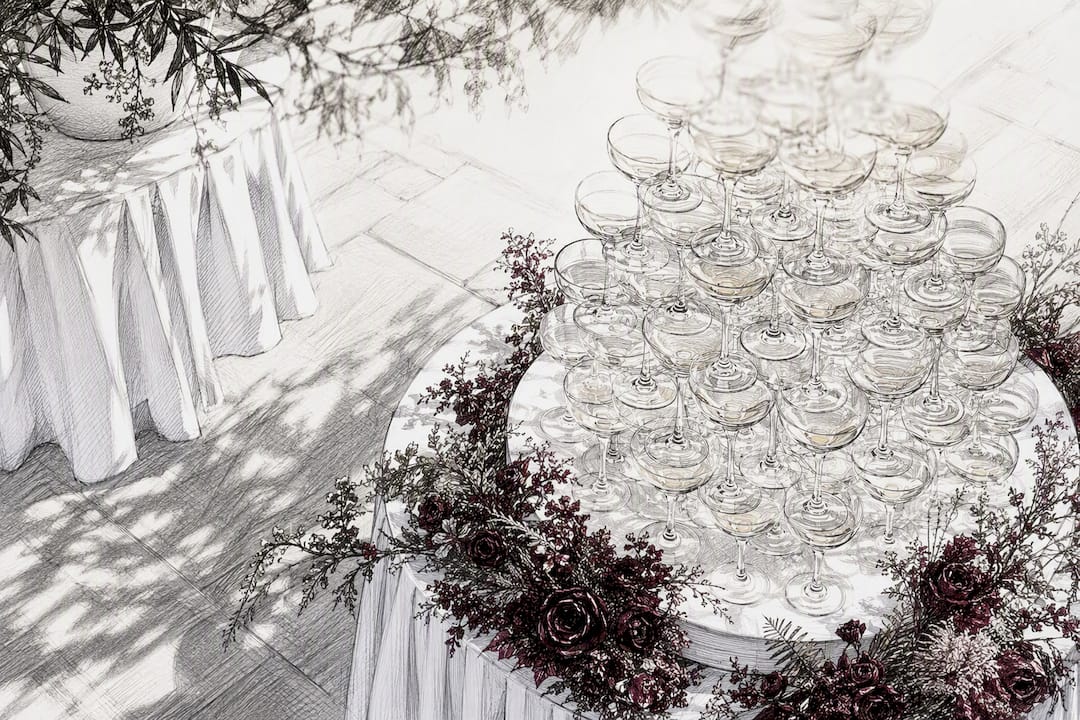
Whether you’re leaning toward a light, celebratory Prosecco fountain for a drinks reception or want a more considered Cava-led display for a seated dinner, our staffed installation and service handles the detail so you don’t have to. Explore our wedding champagne tower hire page for reception-specific guidance, or get in touch to discuss tower sizes, staffing and styling for your event.
Sources
- Champagne vs. Prosecco vs. Cava — how to know the difference | Glass & Vine
- Differences between Champagne, Prosecco, Cava and … | Provender Brown
- Cava vs Prosecco — WineWiki by Wine with Seth